

Mossy Rose Gall Wasp
Diplolepis rosae
The Mossy Rose Gall Wasp is a tiny insect that makes special homes called galls on rose bushes. These galls look like little green balls and help protect the wasp's eggs inside.
Lebensraum: Gardens and Rose bushes
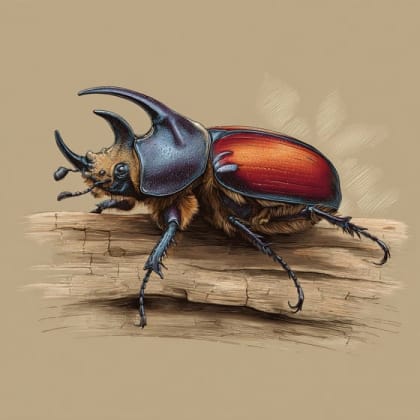
The Mossy Rose Gall Wasp is a tiny, dark-bodied insect, typically black or dark brown, with a small head and prominent antennae. Its body is compact, and its transparent wings fold over its back, giving it a delicate appearance. It's visually distinct from other wasps by its connection to the unique mossy galls it creates.
Kategorie
InsektenSeltenheit
Common
Gefahr
1/5 · Sehr gering
Snaps
Mach den ersten Snap!
Each gall is a nursery, hiding baby wasps inside safe from hungry birds.
Even though they make galls, these wasps are mostly harmless to rose bushes!
Some galls have many tiny rooms, housing dozens of wasp larvae at once!
The fuzzy 'mossy rose' gall it makes can be red or green, like a tiny pincushion!
Mossy Rose Gall Wasp can trigger complex plant growth because injected chemicals hijack rose plant cells, creating a protective home.
Mossy Rose Gall Wasp has the ability to reproduce without a male, allowing it to quickly create new generations of gall-makers.
Mossy Rose Gall Wasp larvae have a safe home because the plant gall provides a thick, protective barrier against predators and weather.
Adults may sip nectar; larvae eat the nourishing plant tissue found within their galls.
Altersunterschiede: Adult wasps may forage for nectar, while larvae consume nutrients directly from the rose gall tissue.
Rosa canina
Lays eggs in rose buds, creating the unique mossy galls.
Torymus bedeguaris
Its larvae parasitically develop inside the Mossy Rose Gall Wasp larvae.
%2C_Parc_de_Woluw%C3%A9%2C_Brussels_(13042792905).jpg&width=800)
Parus major
May peck open galls to access and eat the wasp larvae.
Einzelgänger leben den größten Teil ihres Lebens allein und interagieren mit Artgenossen nur zur Paarung oder zur Aufzucht der Jungen.
Dieses Merkmal kennzeichnet Lebewesen, deren Ernährung vollständig oder hauptsächlich aus pflanzlichem Material besteht.
Beschreibt eine Beziehung zwischen zwei verschiedenen Arten, die eng zusammenleben, was oft einer oder beiden zugutekommt.
Bezieht sich auf Arten, die deutlich kleiner sind als der Durchschnitt oder das Typische ihrer Art.

Beschreibt eine Art, deren Anwesenheit und Rolle einen unverhältnismäßig großen Einfluss auf ihre Umwelt haben.

Dieses Lebensraummerkmal weist auf Arten hin, die in städtischen und vorstädtischen Umgebungen mit Menschen zusammenleben können und von Menschen geschaffene Strukturen sowie Grünflächen nutzen.

Beschreibt Organismen, die Pollen übertragen und so die Befruchtung und Fortpflanzung von Pflanzen ermöglichen.
Noch keine Alternativnamen vorhanden.
Gefahr
1/5 · Sehr gering
It's best to look at insects from a distance and not touch them.
6-8 mm
3-4 mm
7-14 Tage
Adults may sip nectar; larvae eat the nourishing plant tissue found within their galls.
Gardens and Rose bushes
Foraging
6
Zoome hinein, um Cluster aufzulösen und zu sehen, wo dieses Objekt fotografiert wurde.
Neueste Snaps erscheinen hier, wenn neue Beobachtungen hinzukommen.