






Moustached Monkey
Cercopithecus cephus
Moustached monkeys are playful and curious creatures with long tails and a unique mustache! They love to swing through trees and are often found in groups, making them fun to watch.
Lebensraum: Forests
The Moustached Monkey has a greenish-brown body with a distinctive white crescent-shaped 'mustache' above its dark muzzle. It also features a white stripe on its thighs, making it easily recognizable in the forest canopy.
Kategorie
SäugetiereSeltenheit
Common
Gefahr
2/5 · Gering
Snaps
Mach den ersten Snap!
Males often have brighter blue scrota, which signals their health to females.
These monkeys can live in large family groups with up to 30 members!
They use specific alarm calls, sounding different for eagles versus leopards.
Young Moustached Monkeys learn vital jungle survival skills by watching their elders.
Moustached Monkey can leap great distances between trees thanks to its strong limbs and agile body.
Moustached Monkey uses a variety of calls to warn its group of danger or find family members.
Moustached Monkey has excellent binocular vision that helps it spot tiny fruits and insects in dense foliage.
These monkeys enjoy a varied menu of fruits, leaves, and tasty insects from the forest.
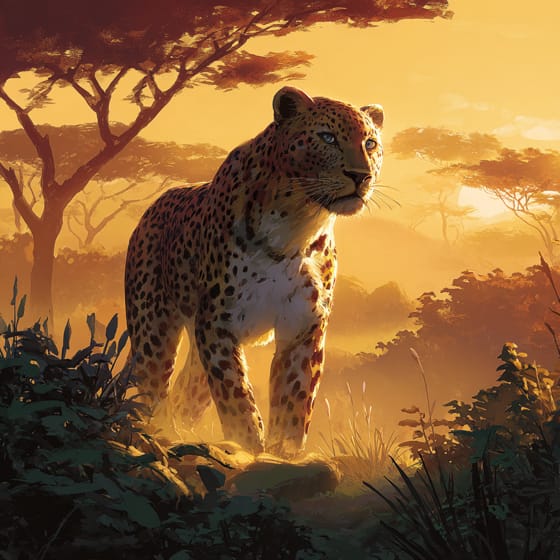
Panthera pardus
A primary predator of monkeys in its habitat.
%2C_at_Ndumo_Nature_Reserve%2C_KwaZulu-Natal%2C_South_Africa_(28947411865).jpg&width=800)
Stephanoaetus coronatus
A powerful bird of prey hunting monkeys from above.
Ficus exasperata
Helps disperse seeds of fig trees throughout the forest.
Pelzig beschreibt Tiere, die eine dichte Schicht aus weichen Haaren oder Fell besitzen.
Soziale Tiere leben in organisierten Gruppen und kooperieren, um ihr Überleben zu sichern, beispielsweise bei der Nahrungssuche, Verteidigung und Aufzucht der Jungen.
Dieses Merkmal kennzeichnet Organismen, deren Ernährung sowohl pflanzliche als auch tierische Bestandteile umfasst.
Baumbewohnende Tiere leben hauptsächlich in Bäumen und nutzen diese als Unterschlupf, Nahrungsquelle und zum Schutz vor Raubtieren.

Waldlebensräume sind terrestrische Lebensräume, die von dichtem Baumbestand dominiert werden und eine große Vielfalt an Pflanzen- und Tierarten beherbergen.

Tagaktive Tiere sind hauptsächlich bei Tageslicht aktiv und ruhen oder schlafen in der Regel nachts.
Noch keine Alternativnamen vorhanden.
Gefahr
2/5 · Gering
Always watch monkeys from a distance and never try to feed them.
40-50 cm
3-5 kg
18-22 Jahre
35 km/h
These monkeys enjoy a varied menu of fruits, leaves, and tasty insects from the forest.
Forests
Foraging
1
Zoome hinein, um Cluster aufzulösen und zu sehen, wo dieses Objekt fotografiert wurde.
Neueste Snaps erscheinen hier, wenn neue Beobachtungen hinzukommen.




.jpg&width=800)











