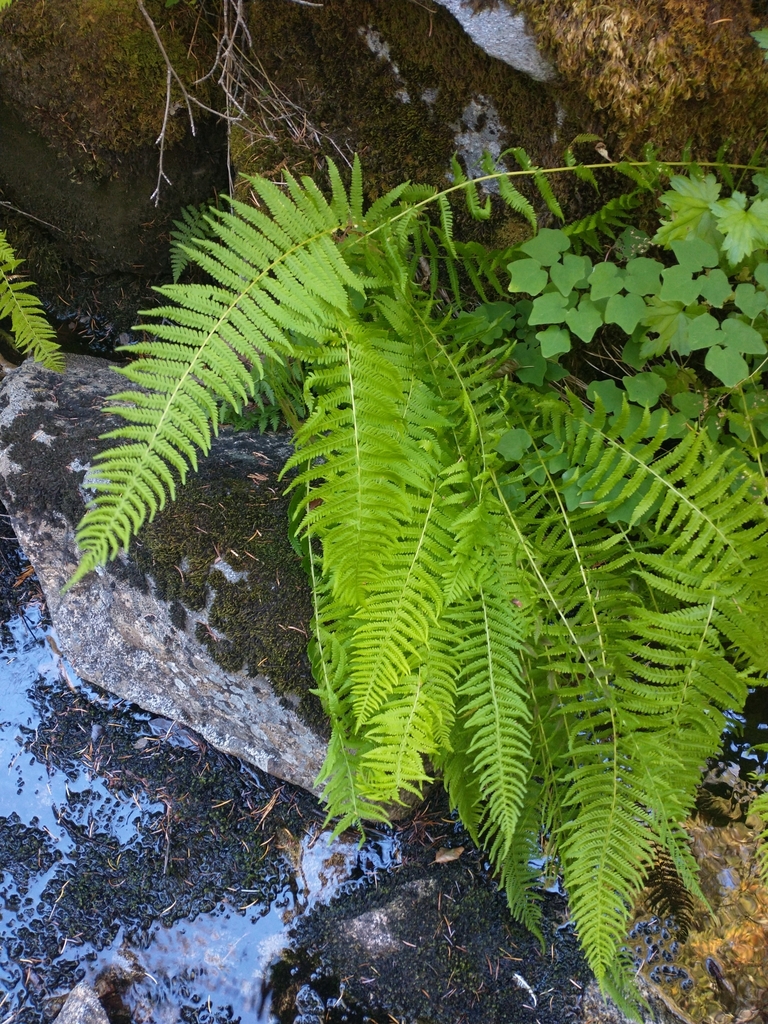





Nevada marsh fern
Amauropelta nevadensis
The Nevada marsh fern is a lovely green plant that grows in wet places. It has soft, feathery leaves that look like tiny fans and can be found in marshy areas.
Lebensraum: Wetlands
The Nevada marsh fern has delicate, bright green fronds that grow upright, forming a graceful cluster. Its lacy leaves are divided into many small leaflets, giving it a soft, feathery appearance, distinct from broader-leaved ferns.
Kategorie
PflanzenSeltenheit
Common
Gefahr
1/5 · Sehr gering
Snaps
Mach den ersten Snap!
Ferns are ancient plants, older than dinosaurs! They've been on Earth for millions of years.
Instead of seeds, this fern uses tiny dust-like spores to reproduce, which are carried by the wind!
Its fronds unfurl from tightly coiled 'fiddleheads' in spring, looking like a tiny scroll.
Many small marsh creatures find shelter and shade under the wide fronds of this friendly fern.
Nevada marsh fern can release tiny spores from its fronds to create new ferns without needing seeds or flowers.
Nevada marsh fern has roots adapted to waterlogged soil, allowing it to thrive where other plants might drown.
Nevada marsh fern can spread underground using rhizomes, letting it quickly colonize new areas in its marshy home.
Odocoileus hemionus
Fronds provide occasional forage for grazing deer.
Deroceras reticulatum
Slugs may browse on its tender young fiddleheads and fronds.
Hyla regilla
Wet fronds create cool, moist hiding spots for small frogs.
Zierpflanzen werden hauptsächlich wegen ihres ästhetischen Reizes angebaut und verschönern Landschaften und Gärten mit ihrem attraktiven Laub, ihren Blüten oder ihrer Form.
Grasartige Pflanzen sind krautige Pflanzen, die echten Gräsern optisch ähneln und typischerweise lange, schmale Blätter haben.
Schattenverträgliche Pflanzen sind an das Wachstum und Gedeihen in Bereichen mit wenig Licht angepasst und benötigen weniger direkte Sonneneinstrahlung.
Dieses Lebensraummerkmal kennzeichnet Arten, die in Feuchtgebieten vorkommen. Dies sind Landflächen, die dauerhaft oder saisonal mit Wasser gesättigt sind, darunter Marschland, Sümpfe und Moore.

Beschreibt Organismen, die totes organisches Material abbauen und Nährstoffe in das Ökosystem zurückführen.

Der Status 'Stark gefährdet' bedeutet, dass eine Art in naher Zukunft einem sehr hohen Risiko ausgesetzt ist, in freier Wildbahn auszusterben.
Noch keine Alternativnamen vorhanden.
Gefahr
1/5 · Sehr gering
Don't touch plants without asking an adult first, as some can be prickly or cause allergies.
20-70 cm
20-50 cm
Nein
Keine
Mehrjährig
Wetlands
Zoome hinein, um Cluster aufzulösen und zu sehen, wo dieses Objekt fotografiert wurde.
Neueste Snaps erscheinen hier, wenn neue Beobachtungen hinzukommen.













.jpg&width=800)