

New Jersey Tea
ceanothus americanus
New Jersey Tea, scientifically known as Ceanothus americanus, is a captivating native shrub valued for its ecological significance and historical utility. This resilient plant is a true American classic, often found brightening dry, open landscapes with its frothy white flower clusters. Beyond its visual appeal, it plays a vital role in its ecosystem, supporting various wildlife and enriching soil. Its deep roots and ability to thrive in challenging conditions make it a symbol of enduring natural beauty and adaptability in North America's diverse habitats.
Lebensraum: New Jersey Tea is commonly found in dry, open woodlands, forest edges, savannas, prairies, and sandy or rocky slopes, preferring well-drained soils and full sun to partial shade.
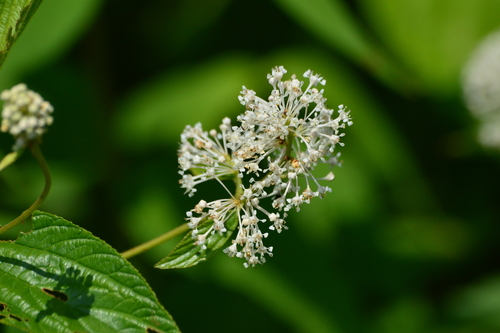
New Jersey Tea is an upright, deciduous shrub typically growing to a height of 60 to 120 centimeters. It features slender, reddish-brown stems and ovate, finely toothed leaves that are dark green and glossy on top, with a slightly hairy underside. The most striking feature is its abundant, small, fragrant white flowers, which are borne in dense, conical clusters (panicles) at the tips of new growth, creating a cloud-like appearance in late spring to early summer.
Kategorie
PflanzenSeltenheit
Common
Gefahr
1/5 · Sehr gering
Snaps
Mach den ersten Snap!
During the American Revolution, its dried leaves were used as a caffeine-free tea substitute, giving the plant its common name.
It is a crucial host plant for the larvae of several butterfly and moth species, including the Mottled Duskywing and Spring Azure.
New Jersey Tea is a valuable 'nurse crop' in restoration efforts, as its nitrogen-fixing capabilities help improve soil fertility for other plants.
The seeds are contained in a three-lobed capsule that explosively dehisces (splits open) when ripe, flinging seeds a short distance.
This plant hosts symbiotic Frankia bacteria in its root nodules, which convert atmospheric nitrogen into a usable form, enriching the soil for itself and surrounding vegetation.
New Jersey Tea possesses a remarkably deep taproot system, extending up to several meters, allowing it to access deep water sources and withstand prolonged periods of drought.
It exhibits pyrogenic adaptations, including vigorous resprouting from a woody root crown after fire and seeds that require fire scarification to germinate, making it a pioneer species in fire-prone ecosystems.
As a plant, New Jersey Tea produces its own food through photosynthesis, converting sunlight, carbon dioxide, and water into energy. It absorbs essential nutrients and water from the soil.
Odocoileus virginianus
Foliage is browsed by
Bombus spp.
Flowers provide nectar and pollen for
Frankia spp.
Root nodules host nitrogen-fixing bacteria
Meleagris gallopavo
Seeds are a food source for
Für dieses Objekt sind noch keine Merkmal-Badges vergeben.
Noch keine Alternativnamen vorhanden.
Sammlungen für dieses Objekt erscheinen hier, wenn weitere Themen hinzugefügt werden.
Gefahr
1/5 · Sehr gering
Noch keine besonderen Sicherheitshinweise.
Der einfachste Weg, New Jersey Tea zu bestimmen, ist die Verwendung der Naturführer-App Snappit.
60-120 cm
1-5 kg
10-20 Jahre
As a plant, New Jersey Tea produces its own food through photosynthesis, converting sunlight, carbon dioxide, and water into energy. It absorbs essential nutrients and water from the soil.
New Jersey Tea is commonly found in dry, open woodlands, forest edges, savannas, prairies, and sandy or rocky slopes, preferring well-drained soils and full sun to partial shade.
Foraging
Zoome hinein, um Cluster aufzulösen und zu sehen, wo dieses Objekt fotografiert wurde.
Neueste Snaps erscheinen hier, wenn neue Beobachtungen hinzukommen.