






Northern Wheatear
Oenanthe oenanthe
The Northern Wheatear is a small bird with a beautiful, colorful plumage. It loves to hop around on the ground and can be found in open areas like fields and mountains.
Lebensraum: Grasslands
The Northern Wheatear has a distinctive white rump and tail with an inverted black 'T' pattern. Males sport a blue-grey back, black wings, and a prominent black eye mask, while females are duller brown. Their slender build and upright stance on the ground are characteristic.
Kategorie
VögelSeltenheit
Common
Gefahr
1/5 · Sehr gering
Snaps
Mach den ersten Snap!
Males have a distinctive black "mask" across their eyes, making them look mysterious!
Their name "Wheatear" means "white arse" in Old English, for its bright white rump!
These tiny birds are champions of migration, some flying from Arctic Canada to Africa!
They often nest in old burrows dug by rabbits or other small animals for safety!
Northern Wheatears can fly vast distances, even across oceans, because this helps them find the best food and breeding sites.
Northern Wheatears can quickly dart to catch flying insects because this helps them find prey in open, rocky areas.
Northern Wheatears can nest in abandoned burrows or rock crevices because this helps protect their eggs and chicks.
Northern Wheatears mostly eat insects and other small creepy crawlies they find on the ground.
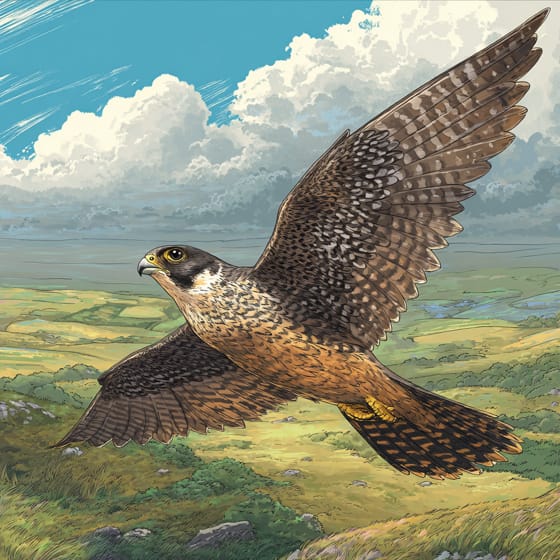
Falco columbarius
Swift aerial predator of small birds
Felis catus
Opportunistic predator, especially near settlements

Carabus violaceus
Common ground beetle prey item
Oryctolagus cuniculus
Uses abandoned rabbit burrows for nesting
Gefiedert beschreibt Tiere, hauptsächlich Vögel, die ein Federkleid besitzen.
Soziale Tiere leben in organisierten Gruppen und kooperieren, um ihr Überleben zu sichern, beispielsweise bei der Nahrungssuche, Verteidigung und Aufzucht der Jungen.
Singende Tiere erzeugen komplexe Lautäußerungen, oft um Partner anzulocken, ihr Revier zu verteidigen oder innerhalb ihrer Art zu kommunizieren.
Farbenfroh beschreibt Organismen oder Objekte, die eine große Vielfalt an leuchtenden und deutlich erkennbaren Farben aufweisen.

Grasland-Lebensräume sind terrestrische Biome, die von Gräsern und krautigen Pflanzen dominiert werden und einer Vielzahl von Weidetieren als Lebensraum dienen.

Dieses Merkmal kennzeichnet Organismen, deren Nahrung hauptsächlich aus Insekten und anderen kleinen Wirbellosen besteht.

Tagaktive Tiere sind hauptsächlich bei Tageslicht aktiv und ruhen oder schlafen in der Regel nachts.

Wandertiere unternehmen saisonale Wanderungen von einer Region in eine andere, meist als Reaktion auf Klimaänderungen oder Nahrungsverfügbarkeit.
Noch keine Alternativnamen vorhanden.
Gefahr
1/5 · Sehr gering
Enjoy watching birds from a distance and don't try to touch them.
14.5-16.5 cm
26-32 cm
0.017-0.03 kg
2-5 Jahre
45 km/h
Northern Wheatears mostly eat insects and other small creepy crawlies they find on the ground.
Grasslands
Foraging
Zoome hinein, um Cluster aufzulösen und zu sehen, wo dieses Objekt fotografiert wurde.
Neueste Snaps erscheinen hier, wenn neue Beobachtungen hinzukommen.











_(6035460183).jpg&width=800)


