Orange Earthtongue
microglossum rufum
The Orange Earthtongue is a fascinating fungus that looks like a little orange tongue sticking out of the ground! Kids love to spot it in forests because of its bright color and unique shape.
Lebensraum: Forests, grassy areas, and woodlands.
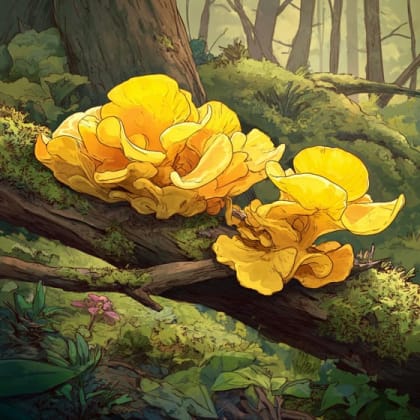
The Orange Earthtongue has a slender, tongue- or club-shaped fruiting body, vividly colored from bright orange to reddish-orange. Its surface is smooth or finely velvety, tapering to a paler, sometimes fuzzy base. It lacks gills and has no distinct cap.
Kategorie
PilzeSeltenheit
Common
Gefahr
1/5 · Sehr gering
Snaps
Mach den ersten Snap!
It's sometimes called a 'jelly baby' fungus for its soft, slightly gelatinous texture!
Its vibrant orange color intensifies after rain, making it easier to spot.
Scientists once thought it was super rare, but now find it more often than before!
This fungus often grows in small groups, looking like tiny orange flames on the ground.
Orange Earthtongue can break down dead plant matter because of special enzymes that help them return nutrients to the soil.
Orange Earthtongue has millions of tiny spores that help them spread far and wide on air currents, colonizing new areas.
Orange Earthtongue can visually signal its presence because its bright color stands out against drab forest floors.
Quercus alba
breaks down decaying leaves for nutrients.
Fagus grandifolia
thrives on its fallen leaf litter.
Acer rubrum
decomposes its dead leaves on the forest floor.
Einzelgänger leben den größten Teil ihres Lebens allein und interagieren mit Artgenossen nur zur Paarung oder zur Aufzucht der Jungen.
Farbenfroh beschreibt Organismen oder Objekte, die eine große Vielfalt an leuchtenden und deutlich erkennbaren Farben aufweisen.
Waldlebensräume sind terrestrische Lebensräume, die von dichtem Baumbestand dominiert werden und eine große Vielfalt an Pflanzen- und Tierarten beherbergen.
Beschreibt Organismen, die totes organisches Material abbauen und Nährstoffe in das Ökosystem zurückführen.
Gefahr
1/5 · Sehr gering
Do not touch or eat fungi you find in the wild, as some can be harmful.
2-7 cm
inedible
Forests, grassy areas, and woodlands.
soil
Late summer to late fall
White
Zoome hinein, um Cluster aufzulösen und zu sehen, wo dieses Objekt fotografiert wurde.
Neueste Snaps erscheinen hier, wenn neue Beobachtungen hinzukommen.