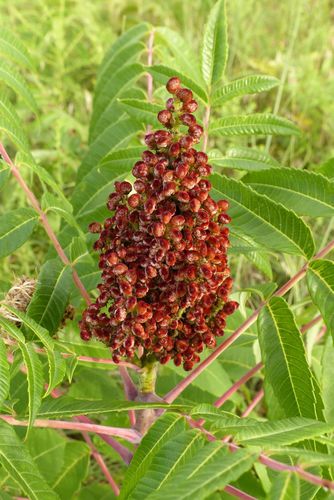
Plume Poppy
macleaya cordata
The Plume Poppy is a tall and graceful plant that grows in gardens and forest edges. Its feathery flower heads sway gently in the breeze, creating a beautiful sight for little explorers.
Lebensraum: Plume Poppy typically grows in gardens, woodland edges, and disturbed areas.
The Plume Poppy is a tall, architectural plant featuring striking, deeply lobed leaves that are grey-green above and silvery-white underneath. It produces dramatic, feathery plumes of tiny, cream-white flowers that stand high above its foliage.
Kategorie
PflanzenSeltenheit
Common
Gefahr
1/5 · Sehr gering
Snaps
Mach den ersten Snap!
Despite its common name, the Plume Poppy isn't a true poppy; it belongs to a different plant family!
Its unique, flattened seed pods look like tiny, silvery hearts and rattle in the breeze when dry.
Some people call it 'Tree Poppy' because it grows so tall, almost like a small tree!
These majestic plants are incredibly fast growers, often shooting up several feet in a single season!
Plume Poppy can spread underground using rhizomes, helping it quickly colonize new areas and form large clumps.
Plume Poppy has a bright orange sap that deters hungry critters, protecting its leaves from being eaten.
Its tall, feathery plumes of flowers reach high, making it easy for pollinators to spot them from afar.
Apis mellifera
attracted to its nectar
Bombus terrestris
visits flowers for pollen
Syrphus ribesii
feeds on nectar and pollen
Farbenfroh beschreibt Organismen oder Objekte, die eine große Vielfalt an leuchtenden und deutlich erkennbaren Farben aufweisen.
Dieses Merkmal kennzeichnet Lebewesen, deren Ernährung vollständig oder hauptsächlich aus pflanzlichem Material besteht.
Waldlebensräume sind terrestrische Lebensräume, die von dichtem Baumbestand dominiert werden und eine große Vielfalt an Pflanzen- und Tierarten beherbergen.
Tagaktive Tiere sind hauptsächlich bei Tageslicht aktiv und ruhen oder schlafen in der Regel nachts.

Beschreibt Organismen, die Pollen übertragen und so die Befruchtung und Fortpflanzung von Pflanzen ermöglichen.
Gefahr
1/5 · Sehr gering
Noch keine besonderen Sicherheitshinweise.
150-300 cm
60-120 cm
0.5-1 cm
Sommer
Nein
Leicht
Mehrjährig
Insekten
Zoome hinein, um Cluster aufzulösen und zu sehen, wo dieses Objekt fotografiert wurde.
Neueste Snaps erscheinen hier, wenn neue Beobachtungen hinzukommen.