


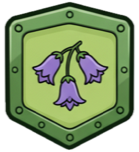



Rampion
Campanula rapunculus
Rampion is a beautiful flower with lovely bell-shaped blooms. It grows in gardens and fields, and its leaves can even be eaten in salads!
Lebensraum: Gardens and fields
The Rampion has tall, slender stems and narrow, wavy-edged basal leaves. Its delicate, bell-shaped flowers are typically pale blue to violet-purple, arranged in loose clusters. These flowers hang downwards, adding a graceful touch to its appearance.
Kategorie
PflanzenSeltenheit
Common
Gefahr
1/5 · Sehr gering
Snaps
Mach den ersten Snap!
Its delicate blue flowers are edible, adding a splash of color to your salad!
Its scientific name, Rapunculus, means 'little turnip' because of its edible root!
Rampion is a relative of the popular garden campanula, often called bellflowers!
Rampion roots were a popular vegetable in medieval Europe, enjoyed raw or cooked!
Rampion has a thick, turnip-like taproot that stores energy, helping it survive winter and regrow in its second year.
Its nodding, bell-shaped flowers protect delicate pollen from rain, ensuring it stays dry for visiting insect pollinators.
Rampion's leaves and roots are edible, providing a nutritious snack for animals and historically, humans to survive.
Apis mellifera
Visits flowers for nectar and pollen.
Bombus terrestris
An important pollinator, collecting nectar and pollen.
Capreolus capreolus
Deer graze on the plant's leaves and stems.

Helix aspersa
Snails can feed on the foliage and young shoots.
Blütenpflanzen sind alle Pflanzen, die als Teil ihres Fortpflanzungszyklus Blüten bilden.
Glockenförmige Blüten besitzen Blütenblätter, die verwachsen oder so angeordnet sind, dass sie eine becher- oder glockenähnliche Struktur bilden.
Frühlingsblüher bilden ihre Blüten im Frühjahr und kündigen oft das Ende des Winters und den Beginn neuen Wachstums an.
Beschreibt Pflanzen, die für eine Vielzahl von bestäubenden Organismen besonders attraktiv und nützlich sind.

Essbare Pflanzen sind diejenigen Pflanzenteile, die für den menschlichen Verzehr als unbedenklich gelten.
Gefahr
1/5 · Sehr gering
Always check with an adult before picking flowers or eating plants.
30-100 cm
15-30 cm
1-2 cm
Sommer
Ja
Keine
Zweijährig
Insekten
Zoome hinein, um Cluster aufzulösen und zu sehen, wo dieses Objekt fotografiert wurde.
Neueste Snaps erscheinen hier, wenn neue Beobachtungen hinzukommen.
















_Geum_urbanum_-_Habit.jpg&width=800)
