


Red Clover
Trifolium pratense
Red clover is a pretty flower with bright pinkish-red blooms. It grows in fields and meadows, attracting bees and butterflies. It's not just beautiful; it also helps the soil stay healthy!
Lebensraum: Grasslands
The Red Clover has distinctive globe-shaped flower heads, usually a vibrant reddish-purple or pink, that stand out in fields. Its unique leaves grow in groups of three, often marked with a pale, V-shaped chevron, making it easy to identify.
Kategorie
PflanzenSeltenheit
Common
Gefahr
1/5 · Sehr gering
Snaps
Mach den ersten Snap!
Finding a four-leaf clover is super rare and brings good luck!
In some cultures, red clover flowers are used to make healthy herbal teas!
Its leaves fold up at night, as if sleeping, and unfold again at dawn!
Red Clover is a favorite snack for many animals, from deer to rabbits!
Red Clover can host special bacteria in its roots that create natural fertilizer, making the soil super healthy for other plants.
Red Clover has deep roots that help it find water and nutrients far underground, making it tough in dry conditions.
Red Clover has bright, nectar-rich flowers that attract busy bees, which helps spread its seeds to new places.
Bombus terrestris
Its long tongue can reach deep nectar.
Rhizobium leguminosarum
These bacteria fix nitrogen in its roots.

Microtus agrestis
These small rodents often graze on its leaves.
Apis mellifera
An important nectar source for honey production.
Cervus elaphus
Deer frequently browse its nutritious foliage.
Blütenpflanzen sind alle Pflanzen, die als Teil ihres Fortpflanzungszyklus Blüten bilden.
Beschreibt Organismen, die in der Lage sind, atmosphärischen Stickstoff in für Pflanzen nutzbare Verbindungen umzuwandeln.
Zweijährige Pflanzen vollenden ihren Lebenszyklus in zwei Vegetationsperioden, wobei sie im ersten Jahr normalerweise Laub bilden und im zweiten blühen und Samen tragen.
Heilpflanzen besitzen chemische Verbindungen, die für therapeutische Zwecke zur Behandlung von Krankheiten oder zur Erhaltung der Gesundheit eingesetzt werden können.

Beschreibt Pflanzen, die für eine Vielzahl von bestäubenden Organismen besonders attraktiv und nützlich sind.

Essbare Pflanzen sind diejenigen Pflanzenteile, die für den menschlichen Verzehr als unbedenklich gelten.

Grasland-Lebensräume sind terrestrische Biome, die von Gräsern und krautigen Pflanzen dominiert werden und einer Vielzahl von Weidetieren als Lebensraum dienen.

Dieses Merkmal der menschlichen Nutzung beschreibt Arten, die von Menschen für landwirtschaftliche Zwecke angebaut oder domestiziert werden, einschließlich Nutzpflanzen und Nutztieren.

Beschreibt Organismen, die Pollen übertragen und so die Befruchtung und Fortpflanzung von Pflanzen ermöglichen.
Noch keine Alternativnamen vorhanden.
Gefahr
1/5 · Sehr gering
Always check with an adult before picking flowers.
20-80 cm
30-60 cm
1.5-3 cm
Late spring to fall
Ja
Keine
Zweijährig
Insekten
Zoome hinein, um Cluster aufzulösen und zu sehen, wo dieses Objekt fotografiert wurde.
Neueste Snaps erscheinen hier, wenn neue Beobachtungen hinzukommen.

Quebec, CA
Hier kann man sehen Waldmurmeltier, Ringschnabelmöwe und östliches Grauhörnchen.
Führer anzeigen →
_(16639600986).jpg)
New York, US
Hier kann man sehen White Mulberry, Striped Greenhouse Slug und Tree-Of-Heaven.
Führer anzeigen →
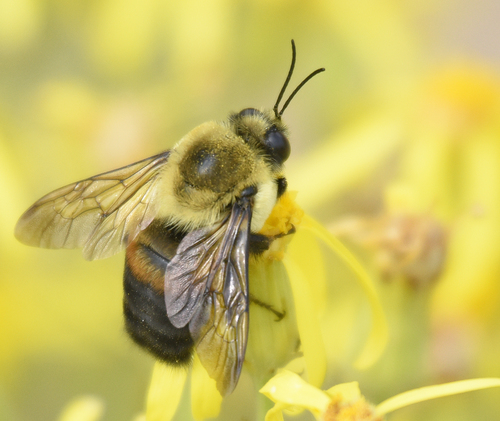
New York, US
Hier kann man sehen Brown-Belted Bumble Bee und östliches Grauhörnchen.
Führer anzeigen →
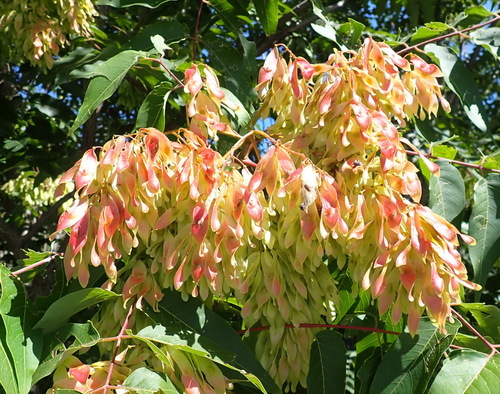
New York, US
Hier kann man sehen Tree-Of-Heaven, Spotted Lanternfly und Felsentaube.
Führer anzeigen →

Washington, US
Hier kann man sehen Gartenkreuzspinne, Ente und Fringed Willowherb.
Führer anzeigen →

New York, US
Hier kann man sehen Common Mugwort und White Snakeroot.
Führer anzeigen →




.jpg&width=800)