.jpg&width=800)





Red Crossbill
Loxia curvirostra
The Red Crossbill is a special bird known for its unique crossed beak. This helps it crack open pine cones to eat the seeds inside. They are often found in forests and are very social birds.
Lebensraum: Forests
The Red Crossbill has a unique beak where the upper and lower mandibles cross, a key identifier. Males are mostly brick-red with darker wings and tail, while females have yellowish-olive bodies. This unusual bill helps them stand out from other birds.
Kategorie
VögelSeltenheit
Common
Gefahr
1/5 · Sehr gering
Snaps
Mach den ersten Snap!
Crossbills can breed in winter's cold, raising chicks when snow still covers the ground!
Did you know Red Crossbills sometimes hang upside down like bats to get to tricky seeds?
Each type of Crossbill has its own unique call, like different secret codes!
They are "nomads of the sky," traveling far to find the best cone crops each year!
Red Crossbills have the ability to nest and breed almost any time of year when there's plenty of food, helping their babies thrive.
Red Crossbills can develop different bill shapes adapted to efficiently open specific conifer cones, helping them specialize.
They mostly munch on seeds from pine, spruce, and fir cones, using their unique beak to get them out!
Pinus strobus
Relies on its cones for seeds, a key food source.
Picea glauca
Feeds heavily on the seeds found within its cones.
Accipiter gentilis
A swift forest hawk that actively preys on smaller birds.
Gefiedert beschreibt Tiere, hauptsächlich Vögel, die ein Federkleid besitzen.
Soziale Tiere leben in organisierten Gruppen und kooperieren, um ihr Überleben zu sichern, beispielsweise bei der Nahrungssuche, Verteidigung und Aufzucht der Jungen.
Singende Tiere erzeugen komplexe Lautäußerungen, oft um Partner anzulocken, ihr Revier zu verteidigen oder innerhalb ihrer Art zu kommunizieren.
Dieses Merkmal kennzeichnet Lebewesen, deren Ernährung vollständig oder hauptsächlich aus pflanzlichem Material besteht.

Waldlebensräume sind terrestrische Lebensräume, die von dichtem Baumbestand dominiert werden und eine große Vielfalt an Pflanzen- und Tierarten beherbergen.

Tagaktive Tiere sind hauptsächlich bei Tageslicht aktiv und ruhen oder schlafen in der Regel nachts.
Noch keine Alternativnamen vorhanden.
Gefahr
1/5 · Sehr gering
Enjoy watching birds from a distance, and don't try to touch or catch them.
13-18 cm
27-31 cm
0.025-0.045 kg
2-7 Jahre
45 km/h
They mostly munch on seeds from pine, spruce, and fir cones, using their unique beak to get them out!
Forests
Foraging
Zoome hinein, um Cluster aufzulösen und zu sehen, wo dieses Objekt fotografiert wurde.
Neueste Snaps erscheinen hier, wenn neue Beobachtungen hinzukommen.

Pennsylvania, US
Hier kann man sehen Grey Alder, Sensitive Fern und Interrupted Clubmoss.
Führer anzeigen →
.jpg)
South Dakota, US
Hier kann man sehen Least Chipmunk und Rocky Mountains Ponderosa Pine.
Führer anzeigen →
South Dakota, US
Hier kann man sehen Dickhornschaf und Narrow-Leaved Purple Coneflower.
Führer anzeigen →

Ontario, CA
Hier kann man sehen Kardinalslobelie, Canadian Bunchberry und Twinflower.
Führer anzeigen →

British Columbia, CA
Hier kann man sehen Salal, Evergreen Huckleberry und Douglasie.
Führer anzeigen →
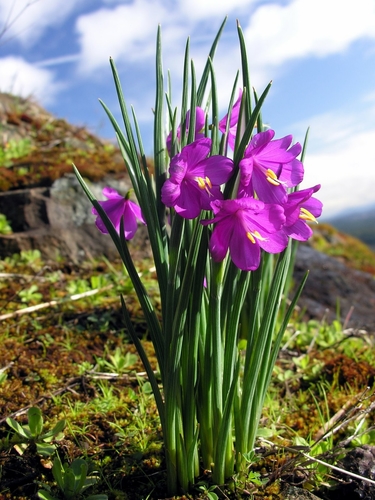
British Columbia, CA
Hier kann man sehen Grasswidow, Broad-Leaved Stonecrop und Rustyhair Saxifrage.
Führer anzeigen →