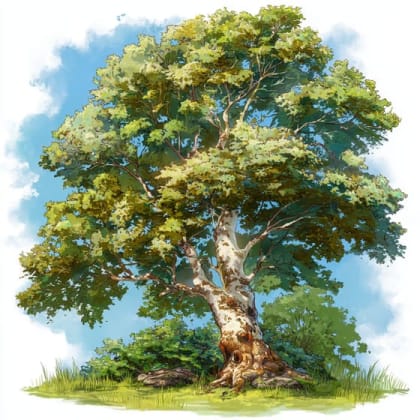
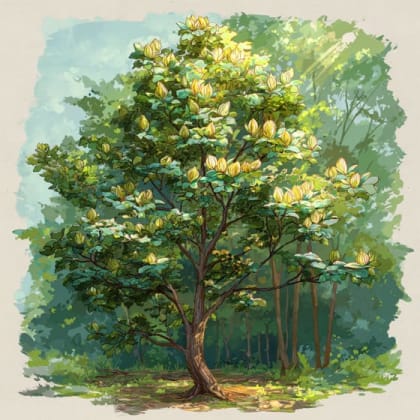
Red Horse Chestnut
Aesculus ×carnea Hayne
The Red Horse Chestnut is known for its bright red flowers that attract lots of bees and butterflies. It’s a beautiful tree to see!
Lebensraum: Parks and gardens
The Red Horse Chestnut has striking, deep pink to reddish-pink flowers, often with a yellow blotch, that bloom in upright clusters. Its large, dark green palmate leaves spread like fingers, and its fruit is a lightly spiny green capsule containing poisonous brown seeds, known as conkers.
Kategorie
BäumeSeltenheit
Common
Gefahr
1/5 · Sehr gering
Snaps
Mach den ersten Snap!
Each big leaf is made of 5 to 7 leaflets, spreading out like fingers!
It's a special hybrid tree, a mix of two different horse chestnut species!
Its 'conkers' were once used by kids in a popular autumn game in Europe!
Unlike many nuts, its seeds are poisonous, so definitely don't try to eat them!
Red Horse Chestnut has bright, red-pink flowers that act like neon signs, attracting buzzing pollinators from afar.
Red Horse Chestnut can produce toxic 'conkers' that deter animals from eating its valuable seeds, protecting its offspring.
Red Horse Chestnut possesses traits from two parent trees, giving it extra strength to thrive and resist diseases.
Apis mellifera
Visits flowers for nectar and pollen.
Bombus terrestris
Important pollinator of its vibrant flowers.
Turdus merula
Nests among its branches for protection.
Laubabwerfende Pflanzen werfen regelmäßig all ihre Blätter ab, typischerweise im Herbst oder in Trockenzeiten.
Blütenbüschel sind Blütenstände, bei denen einzelne Blüten dicht beieinander an einem gemeinsamen Stängel angeordnet sind.
Frühlingsblüher bilden ihre Blüten im Frühjahr und kündigen oft das Ende des Winters und den Beginn neuen Wachstums an.
Schattenverträgliche Pflanzen sind an das Wachstum und Gedeihen in Bereichen mit wenig Licht angepasst und benötigen weniger direkte Sonneneinstrahlung.

Duftende Blüten verströmen ein angenehmes Aroma, oft um Bestäuber anzulocken oder zur Abwehr.

Laubbäume sind Bedecktsamer, die sich durch flache, breite Blätter auszeichnen, welche in gemäßigten Klimazonen typischerweise jährlich abgeworfen werden.

Dieses Lebensraummerkmal weist auf Arten hin, die in städtischen und vorstädtischen Umgebungen mit Menschen zusammenleben können und von Menschen geschaffene Strukturen sowie Grünflächen nutzen.

Beschreibt Organismen, die Pollen übertragen und so die Befruchtung und Fortpflanzung von Pflanzen ermöglichen.
Noch keine Alternativnamen vorhanden.
Gefahr
1/5 · Sehr gering
Do not pick or eat anything you find. Some plants and mushrooms can be harmful.
15-25 m
8-12 m
Nein
50-100 cm
150-200 Jahre
Parks and gardens
Spiny capsule (conker)
Mittel
Zoome hinein, um Cluster aufzulösen und zu sehen, wo dieses Objekt fotografiert wurde.
Neueste Snaps erscheinen hier, wenn neue Beobachtungen hinzukommen.




_in_Shinjuku_Gyoen%2C_Tokyo%2C_Japan_-_20110404-01.jpg&width=800)