Renia Moths
renia
Renia moths are beautiful insects that come in many colors and patterns! They are nocturnal, which means they come out at night when it’s dark and quiet.
Lebensraum: Renia moths live in gardens, forests, and meadows.
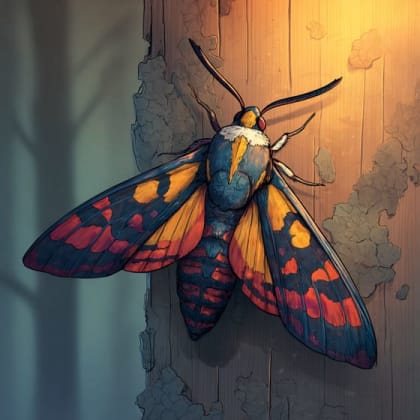
The Renia Moths has a robust, fuzzy body, often mottled in shades of brown, grey, or yellowish-brown. Their wings feature intricate patterns that resemble dried leaves or bark, providing excellent camouflage. A distinctive feature is their long, protruding labial palps, giving them a 'snout-like' appearance.
Kategorie
InsektenSeltenheit
Common
Gefahr
0/5 · Keine bekannte Gefahr
Snaps
Mach den ersten Snap!
Many Renia species spend their caterpillar stage munching on dead leaves!
Some Renia moths have unique "snouts" called palps that are longer than their heads!
Their fuzzy bodies can collect pollen, making them secret nocturnal plant helpers!
These clever moths often perch head-down on tree trunks to look like broken twigs!
Renia Moths can blend seamlessly with tree bark and dried leaves because of their intricate wing patterns that helps them avoid predators.
Renia Moths has extremely long, upturned labial palps that helps them detect odors and vibrations in their environment.
Renia Moths can hear high-frequency sounds, like bat echolocation, because of special "ears" that helps them detect danger.
Adult Renia moths often sip nectar from flowers, while their caterpillars munch on decaying leaves and detritus.
Altersunterschiede: Larvae feed primarily on decaying leaves and plant detritus, while adults usually sip nectar from flowers.
Myotis lucifugus
Moths are a key food source for nocturnal bats.
Passer domesticus
Birds prey on adult moths and their caterpillars.
Solidago canadensis
Adult moths visit flowers, transferring pollen.
Quercus alba
Larvae feed on oak leaves, supporting their development.
Einzelgänger leben den größten Teil ihres Lebens allein und interagieren mit Artgenossen nur zur Paarung oder zur Aufzucht der Jungen.
Farbenfroh beschreibt Organismen oder Objekte, die eine große Vielfalt an leuchtenden und deutlich erkennbaren Farben aufweisen.
Getarnt beschreibt Organismen, die über eine Färbung oder Musterung verfügen, durch die sie mit ihrer Umgebung verschmelzen.
Nachtaktive Tiere sind hauptsächlich in den Nachtstunden aktiv und ruhen oder schlafen normalerweise tagsüber.

Beschreibt Organismen, die Pollen übertragen und so die Befruchtung und Fortpflanzung von Pflanzen ermöglichen.
Gefahr
0/5 · Keine bekannte Gefahr
Noch keine besonderen Sicherheitshinweise.
25-40 mm
15-25 mm
7-14 Tage
12 km/h
Adult Renia moths often sip nectar from flowers, while their caterpillars munch on decaying leaves and detritus.
Renia moths live in gardens, forests, and meadows.
Foraging
6
Zoome hinein, um Cluster aufzulösen und zu sehen, wo dieses Objekt fotografiert wurde.
Neueste Snaps erscheinen hier, wenn neue Beobachtungen hinzukommen.