.jpg&width=800)





Round-leaved Violet
Viola rotundifolia
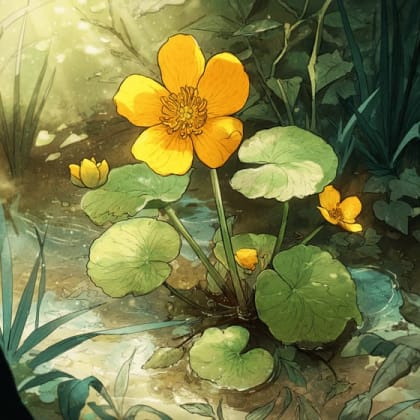
The Round-leaved Violet is a pretty flower with round leaves and purple petals. It loves to grow in shady places and can often be found in gardens and forests.
Lebensraum: Forests
The Round-leaved Violet is a low-growing plant with distinctive, nearly circular leaves that lie flat on the ground. Its small, bright yellow flowers, often streaked with purple, bloom singly on short stalks, making it stand out from its purple-flowered relatives.
Kategorie
PflanzenSeltenheit
Common
Gefahr
1/5 · Sehr gering
Snaps
Mach den ersten Snap!
Its seeds come with a tasty snack that ants love to carry home!
Some of its flowers never open, staying hidden and self-pollinating!
The plant's perfectly round leaves make it easy to identify!
This violet's bright yellow petals are like sunshine on the forest floor!
Round-leaved Violet has hidden flowers that never open but still produce seeds, a clever backup for reproduction!
Round-leaved Violet's seeds have a special fatty treat that encourages ants to carry them far away for dispersal.
Round-leaved Violet often keeps its leaves green through winter, staying ready to photosynthesize when spring arrives.
Bombus impatiens
Main pollinator of its open flowers.
Myrmica rubra
Disperses seeds by carrying them away.
Speyeria cybele
Its caterpillars feed on the leaves.
Odocoileus virginianus
Browses on the leaves and flowers.
Blütenpflanzen sind alle Pflanzen, die als Teil ihres Fortpflanzungszyklus Blüten bilden.
Frühlingsblüher bilden ihre Blüten im Frühjahr und kündigen oft das Ende des Winters und den Beginn neuen Wachstums an.
Schattenverträgliche Pflanzen sind an das Wachstum und Gedeihen in Bereichen mit wenig Licht angepasst und benötigen weniger direkte Sonneneinstrahlung.
Duftende Blüten verströmen ein angenehmes Aroma, oft um Bestäuber anzulocken oder zur Abwehr.

Beschreibt Pflanzen, die für eine Vielzahl von bestäubenden Organismen besonders attraktiv und nützlich sind.

Essbare Pflanzen sind diejenigen Pflanzenteile, die für den menschlichen Verzehr als unbedenklich gelten.

Waldlebensräume sind terrestrische Lebensräume, die von dichtem Baumbestand dominiert werden und eine große Vielfalt an Pflanzen- und Tierarten beherbergen.
Noch keine Alternativnamen vorhanden.
Gefahr
1/5 · Sehr gering
Always look but don't pick flowers unless an adult says it's okay.
5-15 cm
10-20 cm
1-2 cm
Early spring to early summer
Ja
Keine
Mehrjährig
Insekten
Zoome hinein, um Cluster aufzulösen und zu sehen, wo dieses Objekt fotografiert wurde.
Neueste Snaps erscheinen hier, wenn neue Beobachtungen hinzukommen.




.jpg)