.jpg&width=800)





Saltlover
Halogeton glomeratus
Saltlover is a special plant that loves salty soils! It has small, round leaves and can grow in places where most plants can't. This makes it a tough little survivor in nature.
Lebensraum: Desert
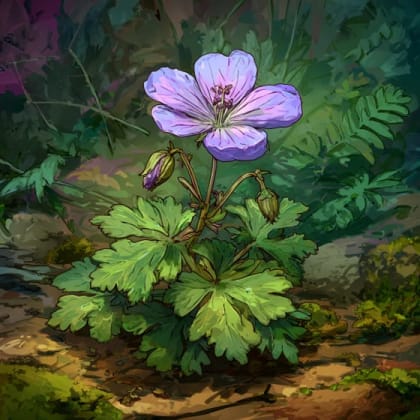
The Saltlover is a bushy annual plant with small, cylindrical, fleshy leaves that often end in a stiff bristle. Its tiny, green flowers are clustered in the leaf axils, and the plant can develop reddish tones as it matures, making it stand out.
Kategorie
PflanzenSeltenheit
Common
Gefahr
1/5 · Sehr gering
Snaps
Mach den ersten Snap!
Animals like sheep can get very sick, or even die, if they eat too much of this plant!
Its scientific name, Halogeton, literally means 'salt neighbor' because it thrives near salty places.
Saltlover is an invasive weed in parts of the world, rapidly taking over rangelands!
This plant can make the soil around it even saltier when it dies, harming other plants!
Saltlover can absorb and store high levels of salt in its tissues, allowing it to thrive in salty soils where most other plants cannot.
Saltlover has thick, fleshy leaves that help it store water, an adaptation crucial for survival in arid environments.
Saltlover produces high levels of oxalates, a chemical defense that makes it toxic to grazing animals, protecting it from being eaten.
Saltlover can break off at the base and tumble in the wind, scattering its seeds far and wide to colonize new areas.
Ovis aries
Toxic when consumed, causing kidney damage.
Bos taurus
Can cause illness if eaten in large amounts.
Coleophora halogetonella
Larvae feed on seeds and foliage of the plant.
Blütenpflanzen sind alle Pflanzen, die als Teil ihres Fortpflanzungszyklus Blüten bilden.
Blütenbüschel sind Blütenstände, bei denen einzelne Blüten dicht beieinander an einem gemeinsamen Stängel angeordnet sind.
Salztolerante Pflanzen können unter Bedingungen mit erhöhtem Salzgehalt in Boden oder Wasser bestehen und wachsen.
Trockenheitstolerante Pflanzen können unter Bedingungen mit begrenzter Wasserverfügbarkeit überleben und gedeihen.

Wüstenlebensräume sind trockene Regionen, die durch extrem geringen Niederschlag und oft extreme Temperaturen gekennzeichnet sind und eine spezialisierte Flora und Fauna beherbergen.
Noch keine Alternativnamen vorhanden.
Gefahr
1/5 · Sehr gering
Don't eat any plants you find outside unless a grown-up says it's safe!
10-50 cm
10-40 cm
0.1-0.3 cm
Late Summer to Fall
Nein
Hoch
Einjährig
Wind
Zoome hinein, um Cluster aufzulösen und zu sehen, wo dieses Objekt fotografiert wurde.
Neueste Snaps erscheinen hier, wenn neue Beobachtungen hinzukommen.