.jpg&width=800)





Scalyhead Sculpin
artedius harringtoni
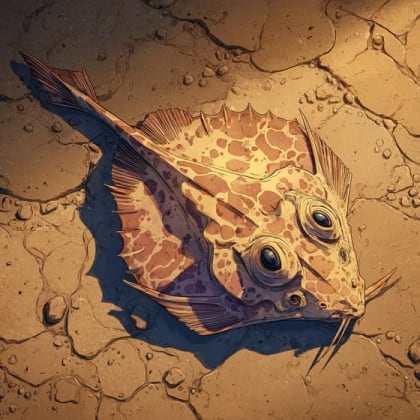
The Scalyhead Sculpin is a small fish with a unique, bumpy head that helps it blend in with the rocky ocean floor. These little creatures love to hide in crevices and are often seen darting around in their underwater homes!
Lebensraum: Cold coastal waters and rocky ocean floors
The Scalyhead Sculpin has a broad head covered in spiny plates, giving it a bumpy appearance. Its body is mottled brown, green, and red, perfect for blending into rocky seafloors. Large pectoral fins resemble fans, aiding in bottom movement.
Kategorie
FischeSeltenheit
Common
Gefahr
1/5 · Sehr gering
Snaps
Mach den ersten Snap!
Wow! Many sculpins have 'whiskers' called cirri on their heads, helping them feel around!
Wow! Their eyes are on top of their heads, perfect for spotting prey from below!
Wow! They can gulp air and survive briefly out of water during low tide!
Wow! They guard their sticky eggs until they hatch, a very protective parent move!
Scalyhead Sculpin can change colors and patterns to perfectly match rocky or algal surroundings, helping them hide from predators and ambush prey.
Scalyhead Sculpin has large, fan-like pectoral fins that help them 'walk' and perch on the seafloor, instead of constantly swimming.
Scalyhead Sculpin has a head covered in sharp, bony spines that provide excellent protection, making them tricky for predators to swallow.
Tiny predators, they feast on small crustaceans and other invertebrates found on the seafloor.
Gammarus oceanicus
A favorite crunchy meal found among the rocks.
Nereis vexillosa
Snaps up these wriggling worms from crevices.
Ophiodon elongatus
A larger, predatory fish that hunts sculpins.
Ardea herodias
Wades in shallow water to snatch up these fish.
Getarnt beschreibt Organismen, die über eine Färbung oder Musterung verfügen, durch die sie mit ihrer Umgebung verschmelzen.
Dieses Merkmal kennzeichnet Organismen, deren Ernährung vollständig oder hauptsächlich aus tierischem Gewebe besteht.
Aquatische Lebensräume umfassen Umgebungen, in denen Organismen überwiegend im Wasser leben, darunter Ozeane, Flüsse, Seen und Feuchtgebiete.
Marine Lebensräume umfassen alle Salzwasserumgebungen der Ozeane der Erde und beherbergen eine immense Vielfalt an Wasserlebewesen.
Gefahr
1/5 · Sehr gering
Noch keine besonderen Sicherheitshinweise.
10-14 cm
0.05-0.1 kg
3-5 Jahre
Tiny predators, they feast on small crustaceans and other invertebrates found on the seafloor.
2 km/h
Cold coastal waters and rocky ocean floors
Ambush
150 m
Zoome hinein, um Cluster aufzulösen und zu sehen, wo dieses Objekt fotografiert wurde.
Neueste Snaps erscheinen hier, wenn neue Beobachtungen hinzukommen.