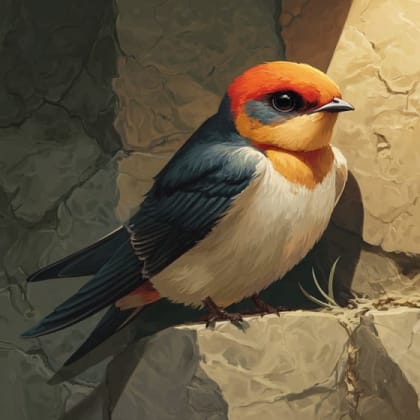
Siberian Crane
Leucogeranus leucogeranus
The Siberian Crane is a beautiful bird with long legs and a striking white body. They are known for their graceful dance and can be found in wetlands during migration.
Lebensraum: Wetlands
The Siberian Crane is easily recognized by its pure white plumage, except for distinctive black primary feathers visible in flight. It has a striking featherless red patch on its face extending from its bill to behind its eyes. Its long legs and neck are also white.
Kategorie
VögelSeltenheit
Rare
Gefahr
1/5 · Sehr gering
Snaps
Mach den ersten Snap!
Baby cranes learn to fly in just 70-75 days after hatching.
Chicks have fuzzy reddish-brown down, not white like their parents.
Only about 4,000 Siberian Cranes are left in the wild today.
They're sometimes called "Snow Cranes" because of their pure white feathers!
Siberian Cranes can fly thousands of kilometers each year because they must travel between their frozen breeding grounds and warmer winter wetlands.
Siberian Cranes have a strong, serrated bill that helps them probe deep into mud and water to find buried plant tubers and creatures.
Siberian Cranes can produce a loud, far-reaching call because their unique windpipe coils within their breastbone, amplifying their voice.
They eat aquatic plants, tubers, insects, and small animals found in wetlands.
Vulpes vulpes
Preys on crane eggs and chicks.
Lutra lutra
Can consume crane eggs or young chicks.
Potamogeton pectinatus
Cranes dig up and consume its tubers.
Cyprinus carpio
Young carp are sometimes caught.
Typha latifolia
Provides nesting cover and food (rhizomes).
Gefiedert beschreibt Tiere, hauptsächlich Vögel, die ein Federkleid besitzen.
Soziale Tiere leben in organisierten Gruppen und kooperieren, um ihr Überleben zu sichern, beispielsweise bei der Nahrungssuche, Verteidigung und Aufzucht der Jungen.
Luftbewohnende Tiere verbringen einen erheblichen Teil ihres Lebens in der Luft und nutzen den Flug für verschiedene Aktivitäten wie Jagd, Wanderungen oder Nestbau.
Farbenfroh beschreibt Organismen oder Objekte, die eine große Vielfalt an leuchtenden und deutlich erkennbaren Farben aufweisen.

Dieses Merkmal kennzeichnet Lebewesen, deren Ernährung vollständig oder hauptsächlich aus pflanzlichem Material besteht.

Dieses Lebensraummerkmal kennzeichnet Arten, die in Feuchtgebieten vorkommen. Dies sind Landflächen, die dauerhaft oder saisonal mit Wasser gesättigt sind, darunter Marschland, Sümpfe und Moore.

Dieses Merkmal kennzeichnet Organismen mit einer außergewöhnlich langen Lebensspanne im Vergleich zu anderen ihrer Art.

Wandertiere unternehmen saisonale Wanderungen von einer Region in eine andere, meist als Reaktion auf Klimaänderungen oder Nahrungsverfügbarkeit.

Der Status 'Stark gefährdet' bedeutet, dass eine Art in naher Zukunft einem sehr hohen Risiko ausgesetzt ist, in freier Wildbahn auszusterben.
Gefahr
1/5 · Sehr gering
Always watch birds from a distance and do not disturb their nests.
115-140 cm
210-230 cm
4.9-8.6 kg
20-40 Jahre
60 km/h
They eat aquatic plants, tubers, insects, and small animals found in wetlands.
Wetlands
Foraging
Zoome hinein, um Cluster aufzulösen und zu sehen, wo dieses Objekt fotografiert wurde.
Neueste Snaps erscheinen hier, wenn neue Beobachtungen hinzukommen.