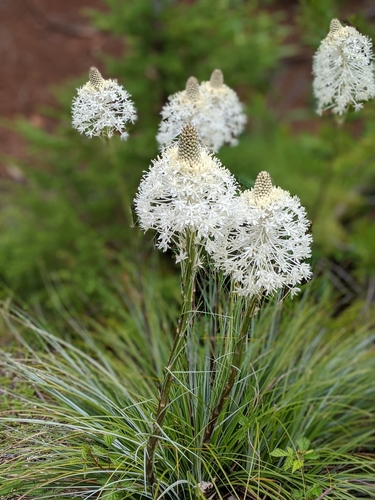
Sickletop Lousewort
Pedicularis racemosa
Sickletop Lousewort is a unique flower that grows in the mountains. Its pretty blooms can be pink or purple, and they have a special shape that looks like a little sickle!
Lebensraum: Mountain regions
The Sickletop Lousewort has reddish-purple stems with deeply cut, fern-like leaves. Its distinctive tubular flowers are curved like a sickle, ranging from white to pinkish-purple, arranged in a loose cluster. This unique shape helps distinguish it from other alpine plants.
Kategorie
PflanzenSeltenheit
Common
Gefahr
1/5 · Sehr gering
Snaps
Mach den ersten Snap!
Its unique flower shape perfectly fits the heads of its favorite pollinators, like a key in a lock!
The name 'Lousewort' came from an old belief that grazing animals eating it would get lice. (It's not true!)
This plant uses a hidden superpower: it can secretly connect to other plants underground to share resources.
You can often spot these tough flowers growing high up on mountain slopes, even among rocks and evergreen trees!
Sickletop Lousewort can tap into the roots of nearby plants to steal water and nutrients, helping it thrive in tough mountain soil.
The Sickletop Lousewort has adaptations that help it grow in cold, rocky mountain environments where many other plants struggle.
Sickletop Lousewort has perfectly curved flowers that guide specific bumblebees, ensuring efficient pollination and successful reproduction.
Bombus mixtus
Transfers pollen between flowers

Abies lasiocarpa
Steals nutrients from its roots
Cervus canadensis
Browses occasionally on leaves
Pelzig beschreibt Tiere, die eine dichte Schicht aus weichen Haaren oder Fell besitzen.
Blütenpflanzen sind alle Pflanzen, die als Teil ihres Fortpflanzungszyklus Blüten bilden.
Frühlingsblüher bilden ihre Blüten im Frühjahr und kündigen oft das Ende des Winters und den Beginn neuen Wachstums an.
Beschreibt Pflanzen, die für eine Vielzahl von bestäubenden Organismen besonders attraktiv und nützlich sind.

Dieses Lebensraummerkmal kennzeichnet Arten, die in Bergregionen vorkommen, welche sich durch große Höhen, steile Hänge und unterschiedliche Klimazonen auszeichnen.

Der Status 'Stark gefährdet' bedeutet, dass eine Art in naher Zukunft einem sehr hohen Risiko ausgesetzt ist, in freier Wildbahn auszusterben.
Noch keine Alternativnamen vorhanden.
Gefahr
1/5 · Sehr gering
Always look but don't pick flowers, as they help nature and the animals around them.
15-60 cm
10-30 cm
1-2 cm
Summer to early fall
Nein
Leicht
Mehrjährig
Insekten
Zoome hinein, um Cluster aufzulösen und zu sehen, wo dieses Objekt fotografiert wurde.
Neueste Snaps erscheinen hier, wenn neue Beobachtungen hinzukommen.