






Sitka Bumble Bee
Bombus sitkensis
The Sitka Bumble Bee is a fuzzy little insect that loves to buzz around flowers. They help plants grow by spreading pollen, making them super important for nature!
Lebensraum: Forests
The Sitka Bumble Bee has a fuzzy body with bright yellow and black stripes, often featuring a striking reddish-orange band near the tip of its abdomen. Its head and thorax are usually mostly yellow, making it quite colorful and distinct from other bees.
Kategorie
InsektenSeltenheit
Common
Gefahr
2/5 · Gering
Snaps
Mach den ersten Snap!
A queen Sitka Bumble Bee starts an entire new colony all by herself each spring!
Bumble bees have five eyes, two big ones and three tiny ones in the middle!
Each bumble bee has a unique scent, like a secret family password, for its nest!
They use their long tongues like straws to sip sweet nectar from deep flowers!
Sitka Bumble Bee can vibrate its flight muscles to shake pollen from flowers, helping them collect more food faster.
Sitka Bumble Bee has a fuzzy coat and can shiver its muscles to generate heat, allowing it to fly in cooler temperatures.
Sitka Bumble Bee has a special honey stomach to carry nectar back to its nest, providing food for the whole colony.
They drink nectar for energy and eat pollen for protein from many types of flowers!

Epilobium angustifolium
Helps fireweed reproduce in its subalpine habitats.

Pica hudsonia
Magpies may prey on foraging bees or their nests.
Bombus insularis
Cuckoo bumble bees lay eggs in Sitka Bee nests, using their workers.

Lupinus arcticus
Relies on its nectar and pollen for food and colony growth.
Pelzig beschreibt Tiere, die eine dichte Schicht aus weichen Haaren oder Fell besitzen.
Soziale Tiere leben in organisierten Gruppen und kooperieren, um ihr Überleben zu sichern, beispielsweise bei der Nahrungssuche, Verteidigung und Aufzucht der Jungen.
Beschreibt Pflanzen, die für eine Vielzahl von bestäubenden Organismen besonders attraktiv und nützlich sind.
Dieses Merkmal kennzeichnet Lebewesen, deren Ernährung vollständig oder hauptsächlich aus pflanzlichem Material besteht.

Waldlebensräume sind terrestrische Lebensräume, die von dichtem Baumbestand dominiert werden und eine große Vielfalt an Pflanzen- und Tierarten beherbergen.

Beschreibt eine Art, deren Anwesenheit und Rolle einen unverhältnismäßig großen Einfluss auf ihre Umwelt haben.

Tagaktive Tiere sind hauptsächlich bei Tageslicht aktiv und ruhen oder schlafen in der Regel nachts.

Beschreibt Organismen, die Pollen übertragen und so die Befruchtung und Fortpflanzung von Pflanzen ermöglichen.
Noch keine Alternativnamen vorhanden.
Gefahr
2/5 · Gering
Be gentle and watch from a distance; bees are busy and just want to collect pollen.
25-40 mm
12-20 mm
20-45 Tage
15 km/h
They drink nectar for energy and eat pollen for protein from many types of flowers!
Forests
Foraging
6
Zoome hinein, um Cluster aufzulösen und zu sehen, wo dieses Objekt fotografiert wurde.
Neueste Snaps erscheinen hier, wenn neue Beobachtungen hinzukommen.
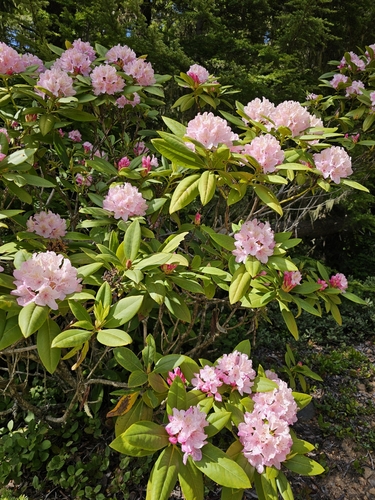
British Columbia, CA
Hier kann man sehen Pacific Rhododendron, Vanilla Leaf und Pacific Trillium.
Führer anzeigen →
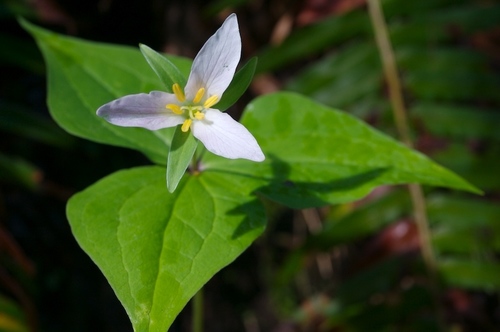
British Columbia, CA
Hier kann man sehen Pacific Trillium, Western Redcedar und Vanilla Leaf.
Führer anzeigen →












