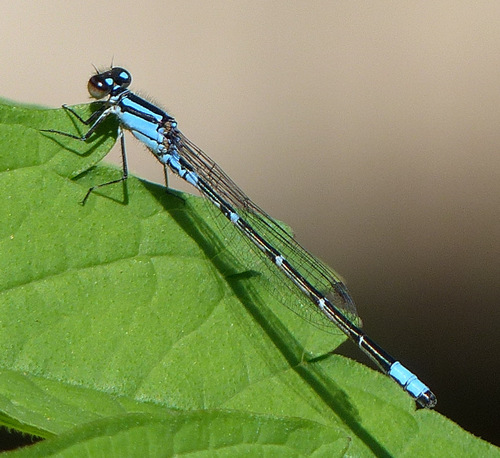


Skimming Bluet
enallagma geminatum
The Skimming Bluet (Enallagma geminatum) is a delicate and fascinating damselfly known for its incredibly low flight patterns over calm waters. Unlike many of its bright blue relatives, this species displays an unusually dark, mostly black abdomen, which makes its bright blue tail segments pop vibrantly against the water. These agile insects are tiny, energetic predators that spend the majority of their lives underwater as fiercely carnivorous nymphs before emerging for a brief, glorious adult stage. Watching a Skimming Bluet is a test of observation; they hover just millimeters above the water's surface, weaving expertly between lily pads and floating debris. They are an essential part of wetland ecosystems, helping to control mosquito and gnat populations while providing a food source for larger insects, fish, and birds. Their presence is an excellent indicator of a healthy, thriving aquatic habitat.
Lebensraum: Typically found around calm, slow-moving or stagnant waters such as ponds, lakes, and marshes, particularly those with abundant floating vegetation like water lilies.
The Skimming Bluet is a very small damselfly, typically measuring under 3 centimeters long. Adult males are distinguished by a predominantly black abdomen with striking, vivid blue rings and patches, particularly on segments 8 and 9 near the tip of the tail. Their thorax is striped with pale blue and black. Females are thicker-bodied and polymorphic, presenting in duller shades of tan, olive green, or pale blue, which helps camouflage them from predators. Like all damselflies, their large compound eyes are widely separated on the sides of their head, and at rest, they hold their clear, delicately veined wings folded together above their back.
Kategorie
InsektenSeltenheit
Common
Gefahr
1/5 · Sehr gering
Snaps
Mach den ersten Snap!
After mating, the male often remains attached to the female while she lays eggs underwater, acting as a 'guard' to prevent rival males from swooping in and mating with her.
During mating, the male uses claspers at the end of his tail to grab the female behind her head, forming a heart-shaped 'mating wheel' as they fly together.
They get their name from their signature flight style: they hover and fly so close to the water that they appear to be 'skimming' directly on the surface tension.
Unlike most of their bright-blue relatives in the 'bluet' genus, male Skimming Bluets have mostly black abdomens, making them visually unique among their peers.
They possess an incredible ability to fly just millimeters above the water's surface without getting trapped by surface tension, allowing them to hunt and mate in a unique micro-habitat.
During their nymph stage, they breathe underwater using three leaf-like gills located at the end of their abdomen, which double as paddles for swimming.
Their large, widely spaced compound eyes grant them a near 360-degree field of vision, making them incredibly effective at spotting tiny prey and evading predators.
Both nymphs and adults are voracious predators, with adults snatching small flying insects from the air and nymphs ambushing small aquatic invertebrates.
Altersunterschiede: Nymphs are strictly aquatic predators feeding on zooplankton and small insect larvae; adults transition to an aerial diet, targeting tiny flying insects.
Nymphaea odorata
Provides essential resting spots and egg-laying substrate for the damselfly.
Erythemis simplicicollis
Larger dragonfly species that frequently preys on smaller damselflies, including bluets.
Anopheles quadrimaculatus
A primary prey source for adult Skimming Bluets hunting over the water.
Für dieses Objekt sind noch keine Merkmal-Badges vergeben.
Noch keine Alternativnamen vorhanden.
Sammlungen für dieses Objekt erscheinen hier, wenn weitere Themen hinzugefügt werden.
Gefahr
1/5 · Sehr gering
Noch keine besonderen Sicherheitshinweise.
Der einfachste Weg, Skimming Bluet zu bestimmen, ist die Verwendung der Naturführer-App Snappit.
2 cm
2-3 cm
0.00002-0.00005 kg
0-1 Jahre
10 km/h
Both nymphs and adults are voracious predators, with adults snatching small flying insects from the air and nymphs ambushing small aquatic invertebrates.
Typically found around calm, slow-moving or stagnant waters such as ponds, lakes, and marshes, particularly those with abundant floating vegetation like water lilies.
Zoome hinein, um Cluster aufzulösen und zu sehen, wo dieses Objekt fotografiert wurde.
Neueste Snaps erscheinen hier, wenn neue Beobachtungen hinzukommen.
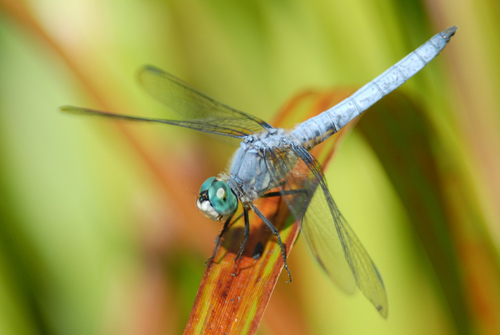
New Jersey, US
Hier kann man sehen Blauer Sonnenzeiger und östliche Teich-Segellibelle.
Führer anzeigen →

Ohio, US
Hier kann man sehen östliche Teich-Segellibelle und Doppelstreifen-Azurjungfer.
Führer anzeigen →




.JPG&width=800)











_I.jpg&width=800)

