






Small-Flower Beardtongue
penstemon procerus
The Small-Flower Beardtongue is a beautiful plant with tiny, colorful flowers that attract bees and butterflies! It grows in sunny places and adds splashes of color to gardens and wild areas.
Lebensraum: Dry, rocky areas and open fields with plenty of sunlight.
The Small-Flower Beardtongue has slender stems topped with clusters of tiny, tubular flowers, typically vibrant blue, purple, or sometimes pink. Each delicate bloom measures less than two centimeters, forming dense spikes that make it distinct from other beardtongues with larger flowers.
Kategorie
PflanzenSeltenheit
Common
Gefahr
0/5 · Keine bekannte Gefahr
Snaps
Mach den ersten Snap!
It thrives in tough, rocky mountain soils where many other plants struggle to grow!
Its bright blooms can carpet entire high-altitude meadows with a sea of purple and blue!
Some Native American tribes used this plant for traditional medicinal purposes, like treating coughs.
The 'beardtongue' name comes from a fuzzy, sterile stamen resembling a tiny tongue inside each flower.
Small-Flower Beardtongue has tough roots that can survive harsh winters and dry spells, helping it regrow year after year.
Its small, brightly colored flowers clustered on tall stalks act as a clear signal, efficiently attracting tiny bees and hoverflies.
This plant produces many tiny seeds that can lie dormant for years, waiting for the perfect conditions to sprout and grow.
Bombus bifarius
Collects nectar and pollen from its tubular flowers

Archilochus alexandri
Sips nectar, aiding in pollen transfer between plants
Odocoileus hemionus
Browses on the leaves and stems, especially new growth
Apis mellifera
Visits flowers for nectar, contributing to reproduction
Farbenfroh beschreibt Organismen oder Objekte, die eine große Vielfalt an leuchtenden und deutlich erkennbaren Farben aufweisen.
Grasland-Lebensräume sind terrestrische Biome, die von Gräsern und krautigen Pflanzen dominiert werden und einer Vielzahl von Weidetieren als Lebensraum dienen.
Dieses Merkmal kennzeichnet Lebewesen, deren Ernährung vollständig oder hauptsächlich aus pflanzlichem Material besteht.
Tagaktive Tiere sind hauptsächlich bei Tageslicht aktiv und ruhen oder schlafen in der Regel nachts.

Beschreibt Organismen, die Pollen übertragen und so die Befruchtung und Fortpflanzung von Pflanzen ermöglichen.
Gefahr
0/5 · Keine bekannte Gefahr
Noch keine besonderen Sicherheitshinweise.
10-50 cm
15-30 cm
0.8-1.5 cm
Late spring to mid-summer
Nein
Keine
Mehrjährig
Insekten
Zoome hinein, um Cluster aufzulösen und zu sehen, wo dieses Objekt fotografiert wurde.
Neueste Snaps erscheinen hier, wenn neue Beobachtungen hinzukommen.

British Columbia, CA
Hier kann man sehen Subalpine Larch, Arrowleaf Senecio und Moss Campion.
Führer anzeigen →
British Columbia, CA
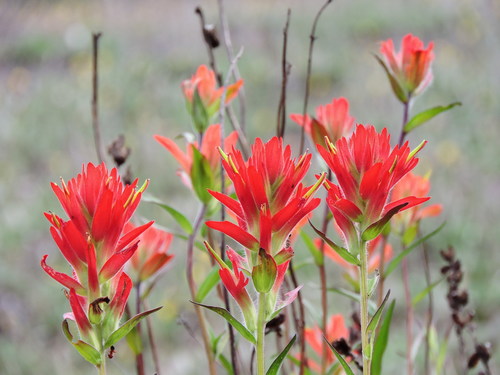
Hier kann man sehen Giant Red Paintbrush, Lupines und Broadleaf Arnica.
Führer anzeigen →


















_Viola_arvensis_-_White_flower.jpg&width=800)
