






Small-Flowered Buttercup
ranunculus abortivus
The Small-Flowered Buttercup is a cheerful little flower that brightens up fields and meadows. Its small yellow blooms are like tiny suns shining in the grass!
Lebensraum: Wet meadows, fields, and along stream banks.
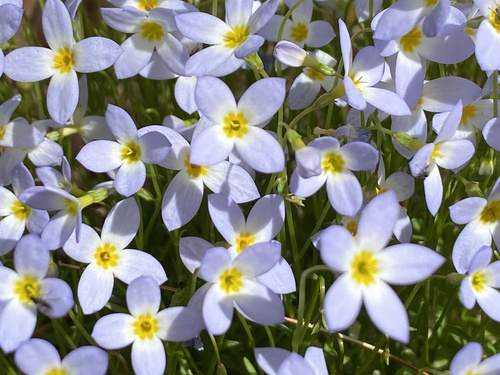
The Small-Flowered Buttercup has small, dull yellow to yellowish-green flowers, often with petals so tiny they seem absent. Its basal leaves are rounded or kidney-shaped, distinct from the deeply lobed upper stem leaves. Unlike other buttercups, its flowers lack a glossy sheen.
Kategorie
PflanzenSeltenheit
Common
Gefahr
1/5 · Sehr gering
Snaps
Mach den ersten Snap!
Despite its common name, some people call it the 'Kidney-Leaf Buttercup' due to its unique leaf shape!
If you crush its leaves, they give off a peppery smell, a hint of its chemical defenses!
Its tiny, pale flowers are often overlooked compared to its showier, golden buttercup cousins!
This plant can spread through both seeds and small plantlets that grow from its roots!
Small-Flowered Buttercup can change its leaf shape dramatically as it matures, from rounded to deeply lobed, helping it adapt to light.
Small-Flowered Buttercup has sap containing protoanemonin that can irritate skin, protecting it from being eaten by animals.
Small-Flowered Buttercup can survive in cold early spring conditions, allowing it to grow and bloom before many other plants.
Apis mellifera
visits flowers for nectar
Bombus impatiens
collects pollen from blooms
Agriolimax reticulatus
young leaves are a food source
Puccinia ranunculi
causes rust disease
Farbenfroh beschreibt Organismen oder Objekte, die eine große Vielfalt an leuchtenden und deutlich erkennbaren Farben aufweisen.
Grasland-Lebensräume sind terrestrische Biome, die von Gräsern und krautigen Pflanzen dominiert werden und einer Vielzahl von Weidetieren als Lebensraum dienen.
Dieses Merkmal kennzeichnet Lebewesen, deren Ernährung vollständig oder hauptsächlich aus pflanzlichem Material besteht.
Tagaktive Tiere sind hauptsächlich bei Tageslicht aktiv und ruhen oder schlafen in der Regel nachts.

Beschreibt Organismen, die Pollen übertragen und so die Befruchtung und Fortpflanzung von Pflanzen ermöglichen.
Gefahr
1/5 · Sehr gering
Noch keine besonderen Sicherheitshinweise.
10-60 cm
0.5-1 cm
Spring_early_summer
Nein
Leicht
Mehrjährig
Insekten
Wet meadows, fields, and along stream banks.
Zoome hinein, um Cluster aufzulösen und zu sehen, wo dieses Objekt fotografiert wurde.
Neueste Snaps erscheinen hier, wenn neue Beobachtungen hinzukommen.









.jpg&width=800)





