

Snout And Bark Beetles
curculionoidea
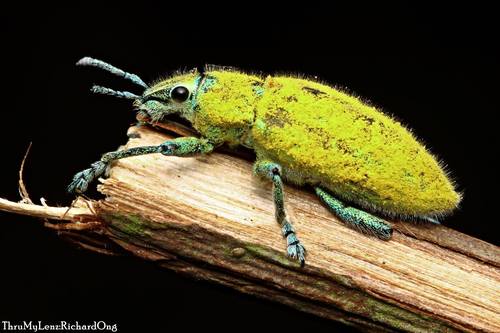
Snout and bark beetles, belonging to the superfamily Curculionoidea, represent one of the most astonishingly diverse lineages of life on Earth, containing over 97,000 known species. Commonly referred to as weevils, these insects are instantly recognizable by their distinctive elongated snouts, which they use to feed on plants and bore holes for their eggs. From tiny leaf-miners to large forest dwellers, they play complex roles in global ecosystems as primary herbivores, seed predators, and nutrient recyclers.
Lebensraum: They are found globally in almost every terrestrial environment where vascular plants grow, especially in forests, woodlands, grasslands, and agricultural fields.
These beetles exhibit a vast range of shapes and sizes, usually spanning from 1 millimeter to several centimeters. Their defining visual characteristic is the rostrum, a snout-like projection of the head, with tiny mouthparts at the end and characteristic elbowed antennae branching off the sides. While many species are cryptically colored in dull browns, grays, and blacks to blend in with bark, soil, or leaf litter, some tropical varieties boast vibrant, iridescent metallic greens, blues, and golds.
Kategorie
InsektenSeltenheit
Common
Gefahr
1/5 · Sehr gering
Snaps
Mach den ersten Snap!
Some historical weevil species are highly famous agricultural pests, such as the Boll Weevil, which caused billions of dollars in damage to cotton crops in the Americas.
The superfamily Curculionoidea is so massive that it contains more species than all birds, mammals, and reptiles combined.
Their unique elbowed antennae are an evolutionary adaptation that prevents them from getting damaged when the beetle inserts its snout into deep crevices.
Their elongated snout features specialized chewing mouthparts at the tip, allowing them to bore deep into tough seeds, stems, and wood to feed or deposit eggs safely.
When startled, many snout beetles will tuck their legs and antennae tightly against their body and drop to the ground, perfectly mimicking a lifeless seed or dirt clod.
Certain bark beetles carry fungal spores in specialized body pockets to inoculate trees, cultivating fungal gardens that serve as food for their larvae.
The vast majority of snout and bark beetles are strict herbivores, consuming plant tissue, wood, seeds, and pollen, though some specialize in eating symbiotic fungi.
Quercus robur
The beetles consume and burrow into acorns, suppressing seedling recruitment but aiding in organic breakdown.
Dryobates pubescens
Woodpeckers actively forage under bark to prey upon beetle larvae burrowing in the wood.
Beauveria bassiana
This natural entomopathogenic fungus infects and kills various weevil species in the soil.
Für dieses Objekt sind noch keine Merkmal-Badges vergeben.
Noch keine Alternativnamen vorhanden.
Sammlungen für dieses Objekt erscheinen hier, wenn weitere Themen hinzugefügt werden.
Gefahr
1/5 · Sehr gering
Noch keine besonderen Sicherheitshinweise.
Der einfachste Weg, Snout And Bark Beetles zu bestimmen, ist die Verwendung der Naturführer-App Snappit.
1+ cm
1+ cm
0.001+ kg
1+ Jahre
1 km/h
The vast majority of snout and bark beetles are strict herbivores, consuming plant tissue, wood, seeds, and pollen, though some specialize in eating symbiotic fungi.
They are found globally in almost every terrestrial environment where vascular plants grow, especially in forests, woodlands, grasslands, and agricultural fields.
Zoome hinein, um Cluster aufzulösen und zu sehen, wo dieses Objekt fotografiert wurde.
Neueste Snaps erscheinen hier, wenn neue Beobachtungen hinzukommen.








.jpg&width=800)



