






Sooty Grouse
Dendragapus fuliginosus
The Sooty Grouse is a large bird that loves to live in the forests of the western United States. They have beautiful dark feathers and are known for their unique calls that sound like a soft whistle.
Lebensraum: Forests
The Sooty Grouse is a robust, chicken-like bird with a short, stout beak. Males are mostly dark bluish-gray with a bright yellow comb over each eye and a purple-red air sac on their throat. Females are mottled brown and gray, providing excellent camouflage in their forest habitat.
Kategorie
VögelSeltenheit
Common
Gefahr
1/5 · Sehr gering
Snaps
Mach den ersten Snap!
Male Sooty Grouse puff out air sacs on their neck to make loud "hoots" during courtship!
Their diet changes so much that young grouse can't eat the same foods as their parents!
They can survive freezing winters by burrowing into the snow for warmth and shelter!
Unlike many birds, female Sooty Grouse often nest directly on the forest floor, well hidden.
Sooty Grouse can produce a deep, low-frequency hooting call using special throat sacs that carries far through dense forests.
Sooty Grouse has intricately patterned plumage that helps them blend perfectly into the forest floor or tree bark, avoiding predators.
Sooty Grouse can launch into a rapid, powerful flight from a standstill, quickly escaping danger by bursting through trees.
Sooty Grouse can digest tough conifer needles, a unique ability that allows them to find food even in harsh winter conditions.
Sooty Grouse mainly munch on conifer needles, buds, and berries, especially in winter!
Altersunterschiede: Young grouse eat insects and greens; adults switch almost entirely to conifer needles.
Bubo virginianus
Predator of eggs, chicks, and adult grouse.
Canis latrans
Hunts grouse on the forest floor, especially nests.
Pseudotsuga menziesii
Needles are a primary winter food source for grouse.

Vaccinium parvifolium
Berries are an important summer and fall food for grouse.
Gefiedert beschreibt Tiere, hauptsächlich Vögel, die ein Federkleid besitzen.
Soziale Tiere leben in organisierten Gruppen und kooperieren, um ihr Überleben zu sichern, beispielsweise bei der Nahrungssuche, Verteidigung und Aufzucht der Jungen.
Singende Tiere erzeugen komplexe Lautäußerungen, oft um Partner anzulocken, ihr Revier zu verteidigen oder innerhalb ihrer Art zu kommunizieren.
Getarnt beschreibt Organismen, die über eine Färbung oder Musterung verfügen, durch die sie mit ihrer Umgebung verschmelzen.

Dieses Merkmal kennzeichnet Lebewesen, deren Ernährung vollständig oder hauptsächlich aus pflanzlichem Material besteht.

Waldlebensräume sind terrestrische Lebensräume, die von dichtem Baumbestand dominiert werden und eine große Vielfalt an Pflanzen- und Tierarten beherbergen.

Tagaktive Tiere sind hauptsächlich bei Tageslicht aktiv und ruhen oder schlafen in der Regel nachts.
Gefahr
1/5 · Sehr gering
Enjoy watching birds from a distance and don't try to catch them.
40-58 cm
65-75 cm
0.8-1.4 kg
3-8 Jahre
80 km/h
Sooty Grouse mainly munch on conifer needles, buds, and berries, especially in winter!
Forests
Foraging
Zoome hinein, um Cluster aufzulösen und zu sehen, wo dieses Objekt fotografiert wurde.
Neueste Snaps erscheinen hier, wenn neue Beobachtungen hinzukommen.

Washington, US
Hier kann man sehen Westlicher Zaunleguan und Maultierhirsch.
Führer anzeigen →

British Columbia, CA
Hier kann man sehen Canada Jay, Pink Mountainheath und Yellow-Pine Chipmunk.
Führer anzeigen →

British Columbia, CA
Hier kann man sehen Western Rattlesnake Plantain und Fairy-Slipper.
Führer anzeigen →
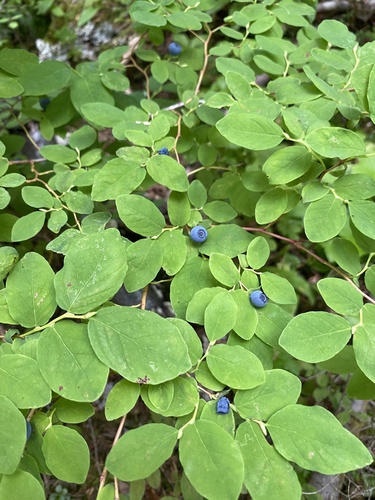
British Columbia, CA
Hier kann man sehen Oval-Leaf Blueberry und Columbia Lily.
Führer anzeigen →

British Columbia, CA
Hier kann man sehen White Pasqueflower und Columbian Ground Squirrel.
Führer anzeigen →

Washington, US
Hier kann man sehen Cascade Oregon-Grape, Douglasie und Salal.
Führer anzeigen →




.jpg&width=800)








