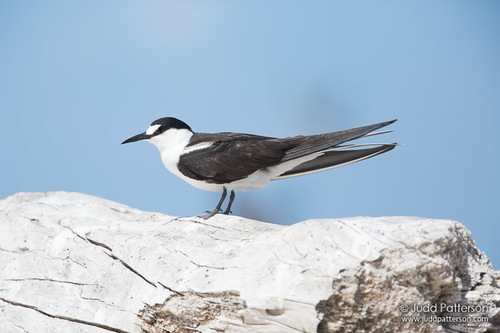


Sooty Tern
onychoprion fuscatus
The Sooty Tern (Onychoprion fuscatus) is an extraordinary pelagic seabird celebrated for its incredible lifestyle of near-continuous flight. Spending up to ten years at sea without ever touching land or swimming on the ocean surface, this highly aerial bird is a true master of the skies. It only returns to dry land to breed, forming gargantuan colonies on isolated tropical islands that are filled with deafening, constant chatter. Because their feathers lack the waterproof oils found in other seabirds, Sooty Terns must live a life aloft, sleeping on the wing and catching food mid-air. They play an important role in oceanic ecosystems, acting as indicator species for the health of pelagic fish populations.
Lebensraum: Typically found over warm, pelagic waters of tropical and subtropical oceans, nesting exclusively on remote sandy beaches, coral cays, and oceanic islands.
This medium-sized, elegant seabird is easily recognized by its striking contrast of jet-black upperparts and pure white underparts. It features a distinctive deeply forked tail, long narrow wings, and a prominent white patch on its forehead that contrasts sharply with its black cap and bill. Its legs and webbed feet are also entirely black. In flight, the Sooty Tern exhibits a graceful, buoyant motion, making its crisp black-and-white patterns highly visible against the blue ocean backdrop.
Kategorie
VögelSeltenheit
Common
Gefahr
1/5 · Sehr gering
Snaps
Mach den ersten Snap!
Because their feathers are not waterproof, Sooty Terns will waterlog and drown if they rest on the sea for too long.
Juvenile Sooty Terns leave their breeding islands and spend up to five continuous years wandering the open ocean before returning to land.
Sailors historically nicknamed them 'Wideawake Terns' due to the relentless, 24-hour screeching of their nesting colonies.
Capable of remaining airborne for several years at a time, landing only when it is time to breed.
Utilizes unihemispheric sleep to rest one half of its brain at a time while maintaining flight.
Adept at catching small fish and squid directly from the ocean surface without submerging its non-waterproof feathers.
Feeds primarily on small schooling fish and squid that are forced to the ocean surface by large predatory marine life.
Altersunterschiede: Chicks are fed regurgitated, partially digested fish and squid brought back by parents.
Thunnus albacares
Yellowfin Tuna drive baitfish to the surface, creating an easy feeding opportunity for the terns.
Exocoetus volitans
Preys on juvenile flying fish leaping from the water surface.
Fregata minor
Steals freshly caught fish from adult terns and preys on vulnerable chicks in the breeding colonies.
Für dieses Objekt sind noch keine Merkmal-Badges vergeben.
Noch keine Alternativnamen vorhanden.
Sammlungen für dieses Objekt erscheinen hier, wenn weitere Themen hinzugefügt werden.
Gefahr
1/5 · Sehr gering
Noch keine besonderen Sicherheitshinweise.
Der einfachste Weg, Sooty Tern zu bestimmen, ist die Verwendung der Naturführer-App Snappit.
36+ cm
82+ cm
0.15+ kg
15+ Jahre
55 km/h
Feeds primarily on small schooling fish and squid that are forced to the ocean surface by large predatory marine life.
Typically found over warm, pelagic waters of tropical and subtropical oceans, nesting exclusively on remote sandy beaches, coral cays, and oceanic islands.
Zoome hinein, um Cluster aufzulösen und zu sehen, wo dieses Objekt fotografiert wurde.
Neueste Snaps erscheinen hier, wenn neue Beobachtungen hinzukommen.
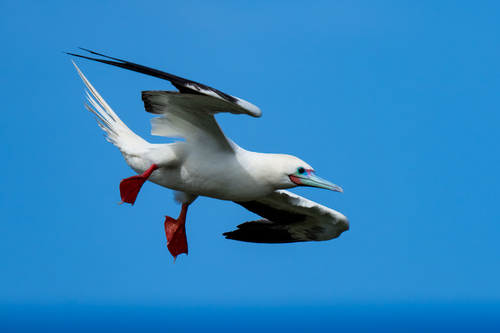
Hawaii, US
Hier kann man sehen Typical Boobies, Red-Tailed Tropicbird und Yellow ʻilima.
Führer anzeigen →
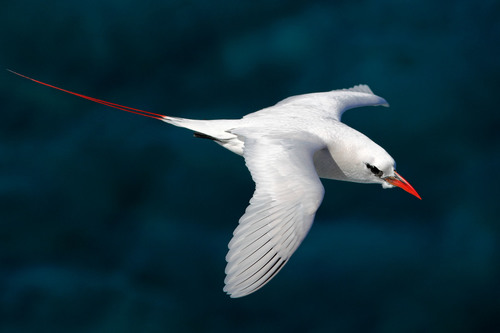
Hawaii, US
Hier kann man sehen Red-Tailed Tropicbird, Typical Boobies und Yellow ʻilima.
Führer anzeigen →














%2C_Uitkerke%2C_Belgium_(16366736689).jpg&width=800)
