

Southern Flying Squirrel
Glaucomys volans
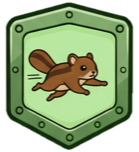
The Southern Flying Squirrel is a small, cute animal that glides through the trees. With its big eyes and fluffy tail, it loves to play and explore at night!
Lebensraum: Forests
The Southern Flying Squirrel has soft, dense fur that is brownish-grey on its back and sides, contrasting with a pure white belly. It features large, dark eyes for nocturnal vision and a flattened, bushy tail. A distinct loose flap of skin, called a patagium, extends between its front and hind limbs.
Kategorie
SäugetiereSeltenheit
Common
Gefahr
1/5 · Sehr gering
Snaps
Mach den ersten Snap!
Southern Flying Squirrels sometimes eat birds' eggs or even baby birds for protein!
These tiny gliders steer themselves by moving their wrists and ankles while airborne!
They huddle together in tree holes during winter to stay warm, sometimes 20 squirrels!
They use their bushy tail like a parachute or rudder for incredible mid-air control!
Southern Flying Squirrels can glide gracefully between trees thanks to a special skin membrane, allowing agile, controlled flight.
It has large, dark eyes that collect maximum light, helping it navigate and find food easily in the dark of night.
Southern Flying Squirrels are incredibly nimble climbers, able to cling to bark and make quick maneuvers in the forest canopy.
An omnivore, it enjoys nuts, seeds, fruits, and even insects.
Bubo virginianus
A frequent nocturnal predator of flying squirrels.
Procyon lotor
Nocturnal predator that raids nests in tree cavities.
Quercus alba
Relies on acorns from oak trees as a major food source.
Dryocopus pileatus
Often uses abandoned woodpecker holes for nesting and shelter.
Pelzig beschreibt Tiere, die eine dichte Schicht aus weichen Haaren oder Fell besitzen.
Soziale Tiere leben in organisierten Gruppen und kooperieren, um ihr Überleben zu sichern, beispielsweise bei der Nahrungssuche, Verteidigung und Aufzucht der Jungen.
Gleitende Tiere bewegen sich durch die Luft, indem sie sich abstoßen und den Flug mit speziellen Körperstrukturen aufrechterhalten, ohne mit den Flügeln zu schlagen.
Dieses Merkmal kennzeichnet Lebewesen, deren Ernährung vollständig oder hauptsächlich aus pflanzlichem Material besteht.

Waldlebensräume sind terrestrische Lebensräume, die von dichtem Baumbestand dominiert werden und eine große Vielfalt an Pflanzen- und Tierarten beherbergen.

Nachtaktive Tiere sind hauptsächlich in den Nachtstunden aktiv und ruhen oder schlafen normalerweise tagsüber.
Noch keine Alternativnamen vorhanden.
Gefahr
1/5 · Sehr gering
If you see a flying squirrel, watch quietly from a distance. They are shy and like to be left alone.
21-26 cm
20-25 cm
0.05-0.08 kg
3-6 Jahre
40 km/h
An omnivore, it enjoys nuts, seeds, fruits, and even insects.
Forests
Foraging
Zoome hinein, um Cluster aufzulösen und zu sehen, wo dieses Objekt fotografiert wurde.
Neueste Snaps erscheinen hier, wenn neue Beobachtungen hinzukommen.