Spanish Bluebell
hyacinthoides hispanica
The Spanish Bluebell is a beautiful flower that blooms in spring with lovely blue, bell-shaped flowers. Kids love to see them swaying in the breeze in gardens and woodlands!
Lebensraum: Spanish Bluebells thrive in woodland areas, gardens, and grassy spaces.
The Spanish Bluebell has upright stems bearing loose clusters of bell-shaped flowers that hang downwards. They are typically bright blue, but can also appear in shades of pink or white, distinguishing them from the deeper blue, nodding flowers of its English cousin.
Kategorie
PflanzenSeltenheit
Common
Gefahr
0/5 · Keine bekannte Gefahr
Snaps
Mach den ersten Snap!
If you dig them up, their tiny bulbs look just like mini onions!
One tiny bulb can make a whole patch of blue flowers in just a few years!
Their name tells you where they come from: Spain and Portugal!
These tough flowers are great at growing in shady spots under big trees!
Spanish Bluebell can rapidly multiply using underground bulbs, helping it quickly spread into large, colorful patches.
It produces a subtle, sweet fragrance that acts as a signal, drawing busy bees and other insects to its nectar.
Spanish Bluebell has special chemicals in its bulbs and leaves that make it unappetizing to many plant-eating animals.
Apis mellifera
visits flowers for nectar
Bombus terrestris
collects pollen and nectar
Arion vulgaris
consumes leaves and flowers
Farbenfroh beschreibt Organismen oder Objekte, die eine große Vielfalt an leuchtenden und deutlich erkennbaren Farben aufweisen.
Dieses Merkmal kennzeichnet Lebewesen, deren Ernährung vollständig oder hauptsächlich aus pflanzlichem Material besteht.
Waldlebensräume sind terrestrische Lebensräume, die von dichtem Baumbestand dominiert werden und eine große Vielfalt an Pflanzen- und Tierarten beherbergen.
Tagaktive Tiere sind hauptsächlich bei Tageslicht aktiv und ruhen oder schlafen in der Regel nachts.

Beschreibt Organismen, die Pollen übertragen und so die Befruchtung und Fortpflanzung von Pflanzen ermöglichen.
Gefahr
0/5 · Keine bekannte Gefahr
Noch keine besonderen Sicherheitshinweise.
20-50 cm
10-20 cm
1-2 cm
Frühling
Nein
Mäßig
Mehrjährig
Insekten
Zoome hinein, um Cluster aufzulösen und zu sehen, wo dieses Objekt fotografiert wurde.
Neueste Snaps erscheinen hier, wenn neue Beobachtungen hinzukommen.
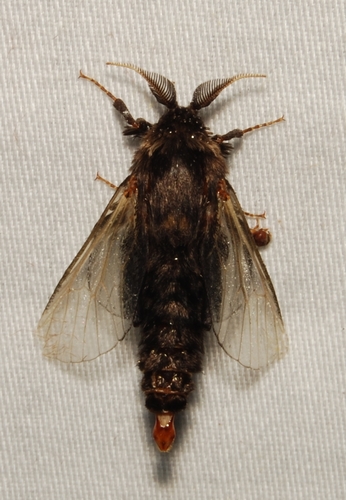
Virginia, US
Hier kann man sehen Evergreen Bagworm Moth, Wild Indigos und Silberahorn.
Führer anzeigen →
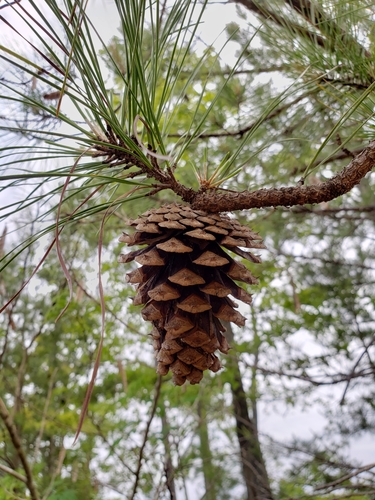
Virginia, US
Hier kann man sehen Loblolly Pine, Fox Grape und Sensitive Fern.
Führer anzeigen →
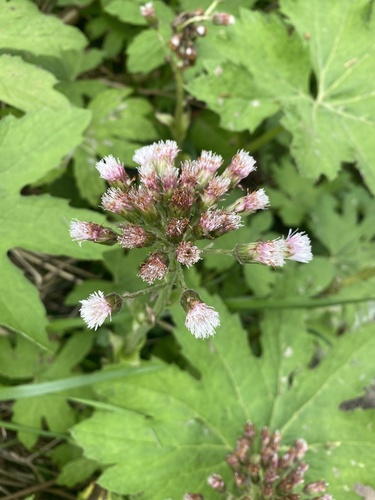
Washington, US
Hier kann man sehen Arctic Butterbur, Red Valerian und American Brooklime.
Führer anzeigen →