






Stilt Sandpiper
Calidris himantopus
The Stilt Sandpiper is a small, elegant bird with long legs and a slender body. It loves to wade in shallow waters, searching for tasty bugs and tiny fish to eat.
Lebensraum: Wetlands
The Stilt Sandpiper has remarkably long, yellowish-green legs, giving it a stilted appearance. Its plumage is mottled brown and streaked above, with a white belly and a distinct white eyebrow stripe. A long, slightly decurved bill helps identify this slender shorebird.
Kategorie
VögelSeltenheit
Common
Gefahr
1/5 · Sehr gering
Snaps
Mach den ersten Snap!
Baby Stilt Sandpipers leave their nest just hours after hatching, ready to explore!
Their name "Stilt" comes from their super-long legs, which look like stilts!
These tiny birds are Olympic flyers, migrating from the Arctic all the way to Chile!
When feeding, they often move their bill back and forth, like a sewing machine!
Stilt Sandpiper can probe deep into soft mud with its long, sensitive bill to find hidden invertebrates in shallow wetlands.
Stilt Sandpiper has super long legs, allowing it to wade into deeper water than other small shorebirds to find hidden food.
Stilt Sandpiper can fly thousands of kilometers between its Arctic breeding grounds and South American wintering areas, finding food.
They eat tiny bugs and other small critters found in mud and shallow water.
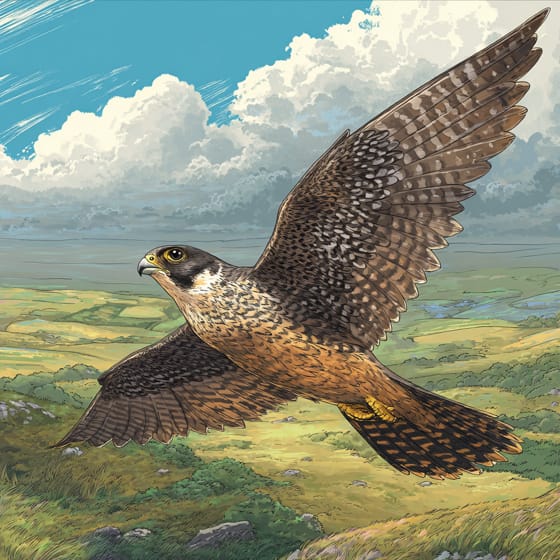
Falco peregrinus
as a migratory prey item
Falco columbarius
predator on smaller birds
Chironomus plumosus
preys on larvae in mud
Artemia salina
filters from saline waters
Gefiedert beschreibt Tiere, hauptsächlich Vögel, die ein Federkleid besitzen.
Dieses Merkmal kennzeichnet Organismen, deren Nahrung hauptsächlich aus Insekten und anderen kleinen Wirbellosen besteht.
Dieses Lebensraummerkmal kennzeichnet Arten, die in Feuchtgebieten vorkommen. Dies sind Landflächen, die dauerhaft oder saisonal mit Wasser gesättigt sind, darunter Marschland, Sümpfe und Moore.
Dieses Merkmal kennzeichnet Organismen, deren Ernährung vollständig oder hauptsächlich aus tierischem Gewebe besteht.

Dieses Merkmal kennzeichnet Lebewesen, die bei der Jagd, Flucht oder Fortbewegung eine außergewöhnliche Schnelligkeit aufweisen.

Wandertiere unternehmen saisonale Wanderungen von einer Region in eine andere, meist als Reaktion auf Klimaänderungen oder Nahrungsverfügbarkeit.
Noch keine Alternativnamen vorhanden.
Gefahr
1/5 · Sehr gering
Always watch birds from a distance and don't try to catch them.
18-23 cm
40-45 cm
0.04-0.07 kg
6-10 Jahre
60 km/h
They eat tiny bugs and other small critters found in mud and shallow water.
Wetlands
Foraging
Zoome hinein, um Cluster aufzulösen und zu sehen, wo dieses Objekt fotografiert wurde.
Neueste Snaps erscheinen hier, wenn neue Beobachtungen hinzukommen.













.jpg&width=800)
