

Sumatran rhinoceros
Dicerorhinus sumatrensis
The Sumatran rhinoceros is the smallest rhino species and has a fuzzy coat! They are very shy and like to hide in the forests where they live.
Lebensraum: Forests
The Sumatran rhinoceros is the smallest and hairiest rhinoceros, covered in reddish-brown fur, especially when young. It has wrinkled, greyish skin and two horns, with the front horn being larger than the rear. Its unique shaggy coat sets it apart from other rhino species.
Kategorie
SäugetiereSeltenheit
Rare
Gefahr
3/5 · Mittel
Snaps
Mach den ersten Snap!
A baby rhino calf can stand and follow its mom just hours after being born!
Each Sumatran rhino has a unique pattern of skin wrinkles, like a fingerprint!
Their long hairs act like sensors, helping them feel their way through dense forest!
They have tiny eyes but amazing hearing and smell to navigate the jungle!
Sumatran rhinoceros can cover themselves in thick mud because it protects their sensitive skin from sun, insects, and parasites.
Sumatran rhinoceros has a range of unique calls, from whistles to snorts, that helps them communicate in dense forests.
Sumatran rhinoceros can efficiently forage in dense undergrowth because of its prehensile upper lip for grabbing plants.
These rhinos munch on leaves, twigs, and fruits found in their dense forest home.
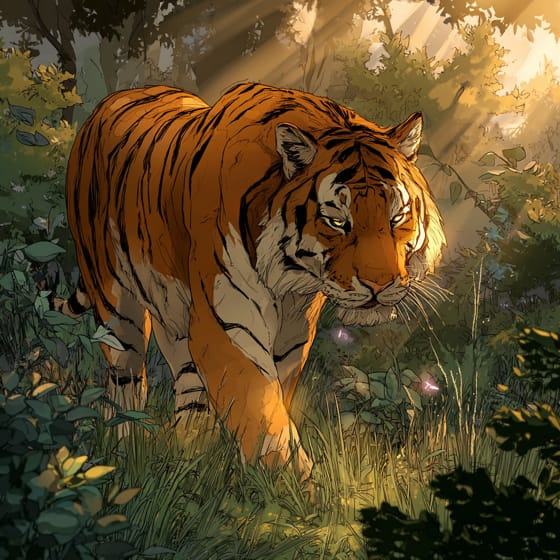
Panthera tigris
Tigers can prey on vulnerable rhino calves.
Ficus racemosa
Eats leaves and fruits of diverse forest trees.
Macaranga gigantea
Browses on young leaves and shoots.
Pelzig beschreibt Tiere, die eine dichte Schicht aus weichen Haaren oder Fell besitzen.
Einzelgänger leben den größten Teil ihres Lebens allein und interagieren mit Artgenossen nur zur Paarung oder zur Aufzucht der Jungen.
Gekennzeichnet durch einen oder mehrere harte, dauerhafte, spitze Fortsätze am Kopf.
Dieses Merkmal kennzeichnet Lebewesen, deren Ernährung vollständig oder hauptsächlich aus pflanzlichem Material besteht.

Waldlebensräume sind terrestrische Lebensräume, die von dichtem Baumbestand dominiert werden und eine große Vielfalt an Pflanzen- und Tierarten beherbergen.

Beschreibt eine Art, deren Anwesenheit und Rolle einen unverhältnismäßig großen Einfluss auf ihre Umwelt haben.

Nachtaktive Tiere sind hauptsächlich in den Nachtstunden aktiv und ruhen oder schlafen normalerweise tagsüber.

Der Status 'Stark gefährdet' bedeutet, dass eine Art in naher Zukunft einem sehr hohen Risiko ausgesetzt ist, in freier Wildbahn auszusterben.
Gefahr
3/5 · Mittel
Sumatran rhinos are wild animals and should be admired from a distance. Never try to touch or feed them.
240-320 cm
600-950 kg
30-45 Jahre
40 km/h
These rhinos munch on leaves, twigs, and fruits found in their dense forest home.
Forests
Foraging
1
Zoome hinein, um Cluster aufzulösen und zu sehen, wo dieses Objekt fotografiert wurde.
Neueste Snaps erscheinen hier, wenn neue Beobachtungen hinzukommen.









.jpg&width=800)