






thimbleberry
Rubus parviflorus
Thimbleberries are sweet, red berries that grow on tall bushes. They are soft and look like little cups, perfect for picking and eating right from the plant!
Lebensraum: Forests
The thimbleberry has large, soft, maple-leaf-shaped leaves and showy white flowers resembling wild roses. Its bright red, cap-like berries, which look like tiny sewing thimbles, easily separate from their core when picked.
Kategorie
PflanzenSeltenheit
Common
Gefahr
1/5 · Sehr gering
Snaps
Mach den ersten Snap!
If you ever get lost, finding thimbleberries might mean you're near water because they love moist soil!
Its extra-large, soft leaves can be used like a natural, biodegradable paper towel in the wilderness!
The thimbleberry's bright red fruit is so delicate, it often falls apart right in your hand!
Unlike many berry bushes, thimbleberry plants do not have thorns, making their fruit easy to pick and enjoy!
Thimbleberry can spread underground with rhizomes that help it quickly colonize new clearings after disturbances.
Thimbleberry produces large, showy white flowers that strongly attract a wide variety of native insects for pollination.
Its juicy, edible berries attract birds and mammals to eat them, which helps to spread its seeds far and wide.
Bombus occidentalis
Feeds on thimbleberry nectar
Ursus americanus
Eats the sweet, ripe berries
Odocoileus hemionus
Browses on leaves and shoots
Turdus migratorius
Consumes the nutritious berries
Blütenpflanzen sind alle Pflanzen, die als Teil ihres Fortpflanzungszyklus Blüten bilden.
Laubabwerfende Pflanzen werfen regelmäßig all ihre Blätter ab, typischerweise im Herbst oder in Trockenzeiten.
Ein Strauch ist eine verholzende Pflanze, die kleiner als ein Baum ist und typischerweise mehrere Stämme hat, die sich ab oder nahe dem Boden verzweigen.
Fruchttragende Pflanzen produzieren Früchte, also die reifen Fruchtknoten von Blütenpflanzen, die Samen enthalten.

Beschreibt Pflanzen, die für eine Vielzahl von bestäubenden Organismen besonders attraktiv und nützlich sind.

Essbare Pflanzen sind diejenigen Pflanzenteile, die für den menschlichen Verzehr als unbedenklich gelten.

Schnellwachsende Pflanzen weisen eine beschleunigte Wachstumsrate auf und nehmen innerhalb kurzer Zeit schnell an Größe und Biomasse zu.

Waldlebensräume sind terrestrische Lebensräume, die von dichtem Baumbestand dominiert werden und eine große Vielfalt an Pflanzen- und Tierarten beherbergen.
Gefahr
1/5 · Sehr gering
Always ask an adult before picking and eating berries in the wild.
100-250 cm
100-300 cm
2-6 cm
Late spring to mid-summer
Ja
Keine
Mehrjährig
Insekten
Zoome hinein, um Cluster aufzulösen und zu sehen, wo dieses Objekt fotografiert wurde.
Neueste Snaps erscheinen hier, wenn neue Beobachtungen hinzukommen.

British Columbia, CA
Hier kann man sehen American Dipper, Rotlachs und Ente.
Führer anzeigen →

British Columbia, CA
Hier kann man sehen Weißkopfseeadler, Ghost Pipe und Salmonberry.
Führer anzeigen →

Washington, US
Hier kann man sehen Westamerikanische Hemlocktanne, Ente und Western Sword Fern.
Führer anzeigen →

British Columbia, CA
Hier kann man sehen Herb Robert, Western Redcedar und Thimbleberry.
Führer anzeigen →
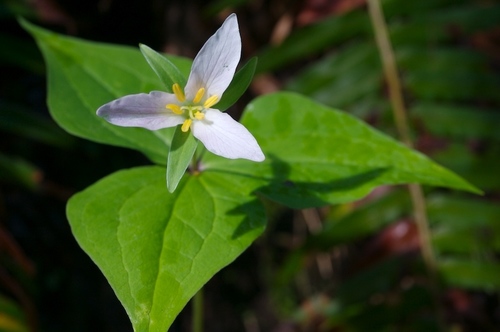
British Columbia, CA
Hier kann man sehen Pacific Trillium, Vanilla Leaf und Japanese Knotweed.
Führer anzeigen →

Washington, US
Hier kann man sehen Prostrate Knotweed, Common Dandelion und Ente.
Führer anzeigen →













_Persicaria_amplexicaulis_Blackfield_-_Les_Martels%2C_Giroussens_Tarn.jpg&width=800)
