.jpg&width=800)




Timber Milkvetch
Astragalus miser
Timber Milkvetch is a special plant that grows in dry places. It has pretty flowers and is great for helping the soil stay healthy.
Lebensraum: Grasslands
The Timber Milkvetch is a low-growing plant with slender stems and clusters of small, pea-like flowers. Its blossoms range from purplish-pink to cream or white, often appearing in dense racemes. The leaves are grayish-green and covered in fine hairs, distinguishing it from other meadow plants.
Kategorie
PflanzenSeltenheit
Common
Gefahr
1/5 · Sehr gering
Snaps
Mach den ersten Snap!
Despite its toxicity to animals, some tiny insects are specially adapted to safely eat this plant.
It's called 'milkvetch' because people once wrongly believed it made cows produce more milk!
Some of its seed pods are so hairy, they look like tiny fuzzy caterpillars hanging from the stem!
This plant is often called a 'locoweed' because it can make animals act dizzy or 'loco'.
Timber Milkvetch can produce powerful toxins that protect it from being eaten by many grazing animals.
Timber Milkvetch can pull nitrogen from the air and enrich the soil, helping itself and other plants grow.
Timber Milkvetch has deep roots and hairy leaves that help it survive and thrive in dry, rocky conditions.
Bombus occidentalis
Main pollinator visiting its flowers
Rhizobium leguminosarum
Forms nodules on roots to fix nitrogen

Bos taurus
Ingesting plant causes 'locoism' toxicity
Ovis aries
Eating the plant can lead to neurological issues
Blütenpflanzen sind alle Pflanzen, die als Teil ihres Fortpflanzungszyklus Blüten bilden.
Beschreibt Organismen, die in der Lage sind, atmosphärischen Stickstoff in für Pflanzen nutzbare Verbindungen umzuwandeln.
Trockenheitstolerante Pflanzen können unter Bedingungen mit begrenzter Wasserverfügbarkeit überleben und gedeihen.
Beschreibt Pflanzen, die für eine Vielzahl von bestäubenden Organismen besonders attraktiv und nützlich sind.

Essbare Pflanzen sind diejenigen Pflanzenteile, die für den menschlichen Verzehr als unbedenklich gelten.

Grasland-Lebensräume sind terrestrische Biome, die von Gräsern und krautigen Pflanzen dominiert werden und einer Vielzahl von Weidetieren als Lebensraum dienen.

Dieses Merkmal kennzeichnet Lebewesen, deren Ernährung vollständig oder hauptsächlich aus pflanzlichem Material besteht.
Noch keine Alternativnamen vorhanden.
Gefahr
1/5 · Sehr gering
Always look but don't touch plants unless you know they are safe.
10-50 cm
15-40 cm
0.5-1.5 cm
Late_spring_to_mid_summer
Nein
Hoch
Mehrjährig
Insekten
Zoome hinein, um Cluster aufzulösen und zu sehen, wo dieses Objekt fotografiert wurde.
Neueste Snaps erscheinen hier, wenn neue Beobachtungen hinzukommen.
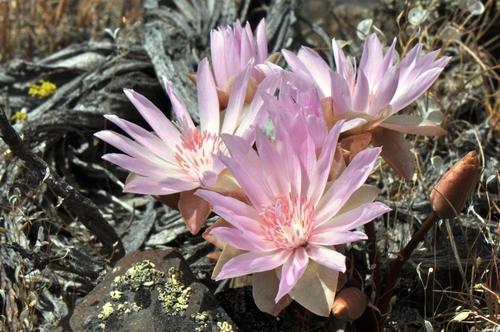
British Columbia, CA
Hier kann man sehen Bitterroot, Arrowleaf Balsamroot und Western Stoneseed.
Führer anzeigen →
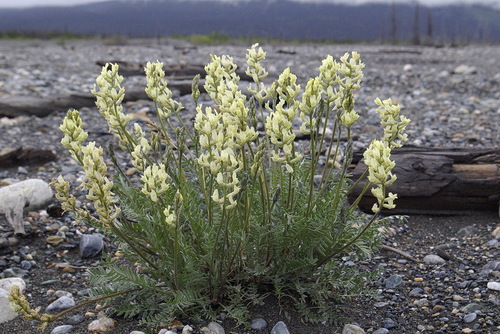
British Columbia, CA
Hier kann man sehen Field Locoweed, Silky Lupine und Wax Currant.
Führer anzeigen →
.jpg)
British Columbia, CA
Hier kann man sehen Oregon Grape, Heartleaf Arnica und Solomon's Plume.
Führer anzeigen →