Trailing African Daisy
dimorphotheca fruticosa
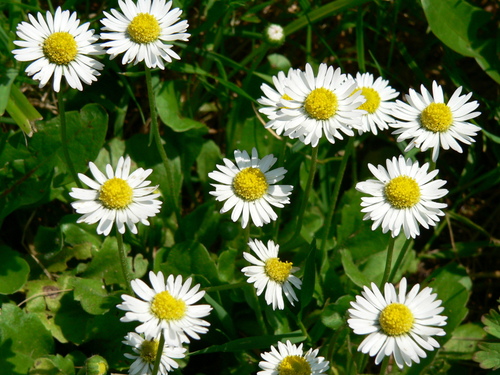
The Trailing African Daisy is a beautiful flower that loves to spread out on the ground. Its bright petals can make any garden look cheerful and happy!
Lebensraum: They thrive in sunny, open areas and can often be found in gardens and along roadsides.
The Trailing African Daisy is a low-growing plant with cheerful, daisy-like flowers. Its vibrant blooms, often white, yellow, orange, or purple, distinctly feature a contrasting dark center. The petals often have a glossy sheen, making them pop against the green foliage.
Kategorie
PflanzenSeltenheit
Common
Gefahr
0/5 · Keine bekannte Gefahr
Snaps
Mach den ersten Snap!
Even after being picked, its flowers can still close up when it gets dark!
Its scientific name, Dimorphotheca, means "two-shaped fruit," describing its unique seeds!
Sometimes the flowers have a ring of one color, and a center of a totally different color!
These cheerful flowers originated from South Africa, bringing sunshine to gardens worldwide!
Trailing African Daisy has succulent-like leaves that store water, helping it survive long dry periods in its native habitat.
Its flowers open widely in the sunshine and close at night or on cloudy days, maximizing light absorption for energy.
This plant quickly spreads over the ground, forming a dense mat that helps prevent soil erosion and outcompete weeds.
Apis mellifera
Collects nectar and pollen, aiding in reproduction.
Vanessa cardui
Visits flowers for nectar, spreading pollen.

Helix aspersa
Feeds on leaves and tender stems.
Myzus persicae
Sucks sap from stems and leaves.
Farbenfroh beschreibt Organismen oder Objekte, die eine große Vielfalt an leuchtenden und deutlich erkennbaren Farben aufweisen.
Dieses Merkmal kennzeichnet Lebewesen, deren Ernährung vollständig oder hauptsächlich aus pflanzlichem Material besteht.
Küstenlebensräume sind dynamische Umgebungen an der Schnittstelle zwischen Land und Meer, die von Gezeiten, Wellen und Salzwasser geprägt sind.
Tagaktive Tiere sind hauptsächlich bei Tageslicht aktiv und ruhen oder schlafen in der Regel nachts.

Beschreibt Organismen, die Pollen übertragen und so die Befruchtung und Fortpflanzung von Pflanzen ermöglichen.
Gefahr
0/5 · Keine bekannte Gefahr
Noch keine besonderen Sicherheitshinweise.
15-30 cm
30-90 cm
3-5 cm
Spring to Fall, year-round in mild climates
Nein
Leicht
Mehrjährig
Insekten
Zoome hinein, um Cluster aufzulösen und zu sehen, wo dieses Objekt fotografiert wurde.
Neueste Snaps erscheinen hier, wenn neue Beobachtungen hinzukommen.




_Sesbania_punicea_-_Les_Martels%2C_Giroussens_Tarn.jpg&width=800)