Tulip-tree Silkmoth
Callosamia angulifera
The Tulip-tree Silkmoth is a beautiful moth with big, soft wings that look like a flower! They are usually found in forests and are known for their fuzzy bodies.
Lebensraum: Forests
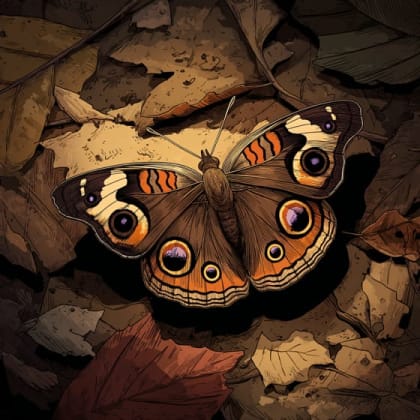
The Tulip-tree Silkmoth has striking reddish-brown wings with a distinctive white, comma-shaped mark on each wing, outlined in black. Its large wings can also feature pinkish-white bands near the edges, making it stand out from plainer moths.
Kategorie
InsektenSeltenheit
Common
Gefahr
1/5 · Sehr gering
Snaps
Mach den ersten Snap!
Adult moths don't eat at all, living only off energy stored as a caterpillar!
Cocoons often hang disguised as dead leaves or bark on tree branches!
Male moths have feathery antennae to smell females from miles away!
Their giant caterpillars can grow as long as your finger!
Tulip-tree Silkmoth can send and receive invisible scent signals over long distances because of special antennae that help them find a mate.
Tulip-tree Silkmoth larvae have a vivid green color and bumpy texture that helps them perfectly blend in with tree leaves.
Tulip-tree Silkmoth can spin a strong, silken cocoon because of specialized glands that help them safely transform into an adult.
Caterpillars munch on tree leaves, but adult moths do not eat at all!
Altersunterschiede: Caterpillars are voracious leaf-eaters, but adult moths do not possess mouthparts for feeding.
Liriodendron tulipifera
larvae feed on leaves

Liquidambar styraciflua
larvae feed on leaves
Cyanocitta cristata
birds prey on larvae and pupae
Myotis lucifugus
bats hunt flying adults
Pelzig beschreibt Tiere, die eine dichte Schicht aus weichen Haaren oder Fell besitzen.
Farbenfroh beschreibt Organismen oder Objekte, die eine große Vielfalt an leuchtenden und deutlich erkennbaren Farben aufweisen.
Dieses Merkmal kennzeichnet Lebewesen, deren Ernährung vollständig oder hauptsächlich aus pflanzlichem Material besteht.
Waldlebensräume sind terrestrische Lebensräume, die von dichtem Baumbestand dominiert werden und eine große Vielfalt an Pflanzen- und Tierarten beherbergen.

Nachtaktive Tiere sind hauptsächlich in den Nachtstunden aktiv und ruhen oder schlafen normalerweise tagsüber.

Beschreibt Organismen, die Pollen übertragen und so die Befruchtung und Fortpflanzung von Pflanzen ermöglichen.
Gefahr
1/5 · Sehr gering
These moths are harmless, but it's best to watch them from a distance.
80-120 mm
30-50 mm
5-10 Tage
Caterpillars munch on tree leaves, but adult moths do not eat at all!
Forests
Foraging
6
Zoome hinein, um Cluster aufzulösen und zu sehen, wo dieses Objekt fotografiert wurde.
Neueste Snaps erscheinen hier, wenn neue Beobachtungen hinzukommen.