Ugandan grey-cheeked mangabey
Lophocebus ugandae
The Ugandan grey-cheeked mangabey is a playful monkey with grey cheeks and a long tail. They live in groups and love to swing through the trees in their forest homes.
Lebensraum: Forests
The Ugandan grey-cheeked mangabey has a distinctive crest of dark hair on its head and very prominent grey cheeks that contrast sharply with its darker face. Its body is covered in dark brown to black fur, and it possesses a long tail, often longer than its body.
Kategorie
SäugetiereSeltenheit
Common
Gefahr
2/5 · Gering
Snaps
Mach den ersten Snap!
Their tail is often longer than their whole body, like a super-long balancing pole!
These mangabeys have special cheek pouches to store yummy snacks for later.
These monkeys are expert at cracking open tough nuts and seeds with their strong jaws.
They use loud 'whoop-gobble' calls that can be heard far through the forest!
Ugandan grey-cheeked mangabeys can swiftly leap and climb through dense trees because of their strong limbs and long tails that help them balance.
Ugandan grey-cheeked mangabeys have a loud 'whoop-gobble' call that helps them communicate territory and warn others of danger.
Ugandan grey-cheeked mangabeys are important seed dispersers that help grow new trees in the forest by spreading seeds after eating fruits.
These monkeys are omnivores, enjoying a mix of fruits, seeds, leaves, and insects!
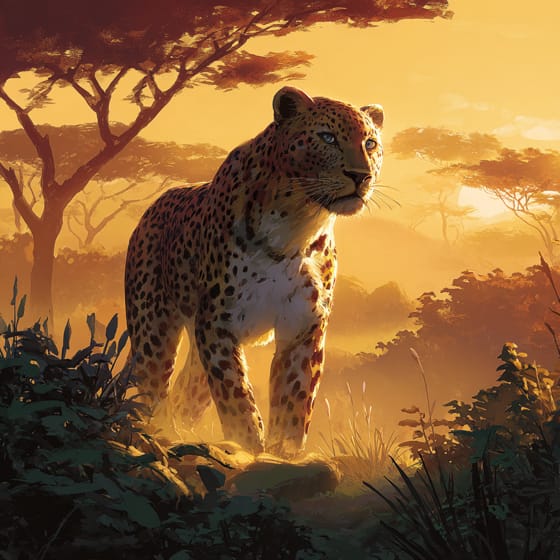
Panthera pardus
Main predator in their forest habitat.
%2C_at_Ndumo_Nature_Reserve%2C_KwaZulu-Natal%2C_South_Africa_(28947411865).jpg&width=800)
Stephanoaetus coronatus
A significant aerial predator of mangabeys.
Ficus natalensis
Feeds on the fruits, dispersing their seeds.
Cola nitida
Consumes the nutritious nuts from this tree.
Pelzig beschreibt Tiere, die eine dichte Schicht aus weichen Haaren oder Fell besitzen.
Soziale Tiere leben in organisierten Gruppen und kooperieren, um ihr Überleben zu sichern, beispielsweise bei der Nahrungssuche, Verteidigung und Aufzucht der Jungen.
Dieses Merkmal kennzeichnet Organismen, deren Ernährung sowohl pflanzliche als auch tierische Bestandteile umfasst.
Baumbewohnende Tiere leben hauptsächlich in Bäumen und nutzen diese als Unterschlupf, Nahrungsquelle und zum Schutz vor Raubtieren.

Waldlebensräume sind terrestrische Lebensräume, die von dichtem Baumbestand dominiert werden und eine große Vielfalt an Pflanzen- und Tierarten beherbergen.

Tagaktive Tiere sind hauptsächlich bei Tageslicht aktiv und ruhen oder schlafen in der Regel nachts.

Der Status 'Stark gefährdet' bedeutet, dass eine Art in naher Zukunft einem sehr hohen Risiko ausgesetzt ist, in freier Wildbahn auszusterben.
Noch keine Alternativnamen vorhanden.
Gefahr
2/5 · Gering
Always watch from a distance and never try to touch wild animals.
40-55 cm
4-9 kg
15-20 Jahre
25 km/h
These monkeys are omnivores, enjoying a mix of fruits, seeds, leaves, and insects!
Forests
Foraging
1
Zoome hinein, um Cluster aufzulösen und zu sehen, wo dieses Objekt fotografiert wurde.
Neueste Snaps erscheinen hier, wenn neue Beobachtungen hinzukommen.