Utah Honeysuckle
Lonicera utahensis
Utah Honeysuckle is a sweet-smelling shrub that grows in the wild. It has beautiful yellow and orange flowers that attract butterflies and hummingbirds, making it a lovely sight in nature.
Lebensraum: Mountain regions
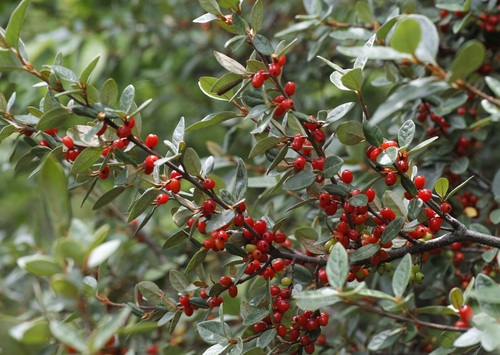
The Utah Honeysuckle is a medium-sized shrub with opposite, oval leaves and pairs of delicate, yellowish-white to pale yellow trumpet-shaped flowers. Its striking red to orange berries develop in autumn, providing a vibrant contrast to its green foliage.
Kategorie
PflanzenSeltenheit
Common
Gefahr
1/5 · Sehr gering
Snaps
Mach den ersten Snap!
Despite its sweet-smelling flowers, the berries have a surprisingly bitter taste to humans!
Indigenous peoples once used its tough, hollow stems for small, intricate craft projects.
Its bell-shaped flowers grow in distinct pairs, earning it the nickname 'twinflower' honeysuckle!
This hardy shrub is a favorite snack for deer and elk, especially during harsh winters!
Utah Honeysuckle's tubular flowers produce sweet nectar to attract hummingbirds and bees for efficient pollination.
This plant has a strong root system helping it survive dry, rocky soils by finding and storing water.
Its bright red berries are eaten by birds, which then scatter the seeds, helping the plant spread.
.jpg&width=800)
Selasphorus rufus
Sips nectar from the tubular flowers.
Bombus occidentalis
Collects nectar and pollen, aiding reproduction.
Odocoileus hemionus
Browses on its leaves and twigs, especially in winter.
Turdus migratorius
Consumes the red berries, helping to disperse seeds.
Aromatische Pflanzen produzieren und verströmen duftende flüchtige organische Verbindungen, oft zur Abwehr oder um Bestäuber anzulocken.
Blütenpflanzen sind alle Pflanzen, die als Teil ihres Fortpflanzungszyklus Blüten bilden.
Laubabwerfende Pflanzen werfen regelmäßig all ihre Blätter ab, typischerweise im Herbst oder in Trockenzeiten.
Ein Strauch ist eine verholzende Pflanze, die kleiner als ein Baum ist und typischerweise mehrere Stämme hat, die sich ab oder nahe dem Boden verzweigen.

Duftende Blüten verströmen ein angenehmes Aroma, oft um Bestäuber anzulocken oder zur Abwehr.

Fruchttragende Pflanzen produzieren Früchte, also die reifen Fruchtknoten von Blütenpflanzen, die Samen enthalten.

Beschreibt Pflanzen, die für eine Vielzahl von bestäubenden Organismen besonders attraktiv und nützlich sind.

Essbare Pflanzen sind diejenigen Pflanzenteile, die für den menschlichen Verzehr als unbedenklich gelten.

Dieses Lebensraummerkmal kennzeichnet Arten, die in Bergregionen vorkommen, welche sich durch große Höhen, steile Hänge und unterschiedliche Klimazonen auszeichnen.
Noch keine Alternativnamen vorhanden.
Gefahr
1/5 · Sehr gering
Always look but don't touch the berries, as they may not be safe to eat.
100-300 cm
100-200 cm
1-2 cm
Spring-early summer
Nein
Leicht
Mehrjährig
Insekten
Zoome hinein, um Cluster aufzulösen und zu sehen, wo dieses Objekt fotografiert wurde.
Neueste Snaps erscheinen hier, wenn neue Beobachtungen hinzukommen.

British Columbia, CA
Hier kann man sehen Shinyleaf Meadowsweet, Northern Checkerspot und Fireweed.
Führer anzeigen →
British Columbia, CA
Hier kann man sehen Canadian Buffalo-Berry, Oregon Boxwood und Pacific Trillium.
Führer anzeigen →

British Columbia, CA
Hier kann man sehen Western Columbine, Mountain Lady's-Slipper und Thimbleberry.
Führer anzeigen →
British Columbia, CA
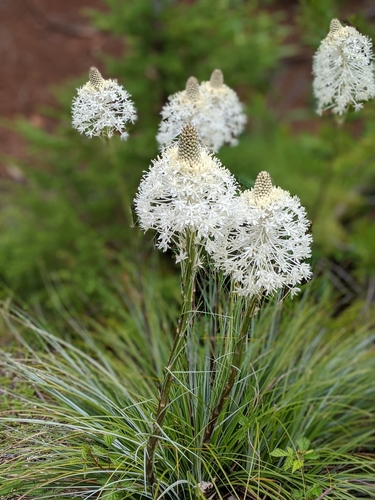
Hier kann man sehen Common Beargrass und White-Flowered Rhododendron.
Führer anzeigen →




.jpg&width=800)