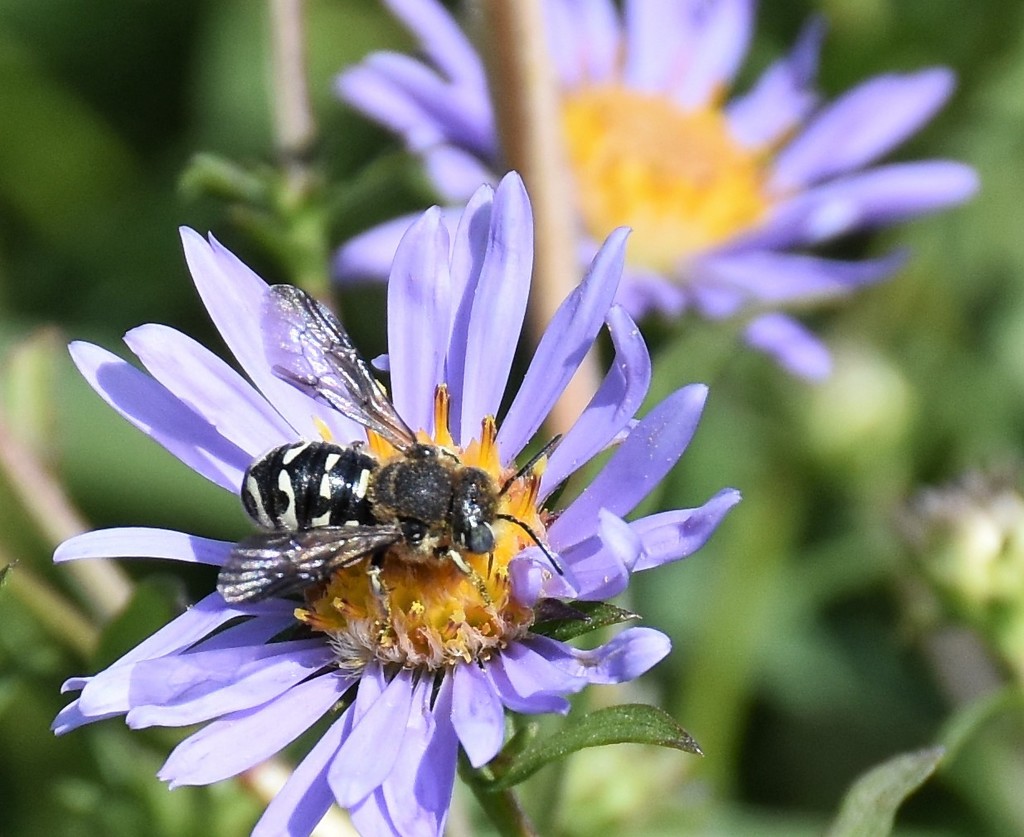





Variable Pebble Bee
Dianthidium subparvum
The Variable Pebble Bee is a small, fuzzy bee that loves to collect pollen from flowers. They are important for helping plants grow by spreading pollen while they visit flowers.
Lebensraum: Grasslands
The Variable Pebble Bee is a small, robust bee with a black body marked with distinct yellow or white bands on its abdomen. Its head and thorax are covered in pale, fuzzy hairs, contrasting with its darker, segmented body. The specific patterns can vary, making each bee subtly unique.
Kategorie
InsektenSeltenheit
Common
Gefahr
2/5 · Gering
Snaps
Mach den ersten Snap!
Each tiny nest cell gets a perfect ball of pollen and nectar for the baby bee to eat.
Their fuzzy bodies accidentally help plants make seeds as they fly from flower to flower.
They are solitary bees, meaning each female builds her own nest all by herself, no queen!
This bee uses tiny pebbles and sticky plant resin to build waterproof nests for its babies!
Variable Pebble Bee can build unique nests from small pebbles and plant resins because of their specialized mandibles that help them create sturdy homes for their young.
Variable Pebble Bee has specialized hairs on its underside that form a 'pollen brush' that helps them efficiently collect and transport pollen for their offspring.
Variable Pebble Bee can blend into its rocky surroundings because of its varied color patterns that help them hide from predators while nesting.
These busy bees sip nectar for energy and gather pollen to feed their growing babies.
Altersunterschiede: Larvae consume a pollen and nectar provision ball left by the mother bee, unlike adults.
.jpg&width=800)
Tyrannus tyrannus
catches flying insects for food
Helianthus annuus
transfers pollen between flowers
Coelioxys coturnix
lays eggs in its nest to steal food
Solidago canadensis
helps plant reproduce by moving pollen
Pelzig beschreibt Tiere, die eine dichte Schicht aus weichen Haaren oder Fell besitzen.
Soziale Tiere leben in organisierten Gruppen und kooperieren, um ihr Überleben zu sichern, beispielsweise bei der Nahrungssuche, Verteidigung und Aufzucht der Jungen.
Beschreibt Pflanzen, die für eine Vielzahl von bestäubenden Organismen besonders attraktiv und nützlich sind.
Farbenfroh beschreibt Organismen oder Objekte, die eine große Vielfalt an leuchtenden und deutlich erkennbaren Farben aufweisen.

Grasland-Lebensräume sind terrestrische Biome, die von Gräsern und krautigen Pflanzen dominiert werden und einer Vielzahl von Weidetieren als Lebensraum dienen.

Dieses Merkmal kennzeichnet Lebewesen, deren Ernährung vollständig oder hauptsächlich aus pflanzlichem Material besteht.

Beschreibt eine Art, deren Anwesenheit und Rolle einen unverhältnismäßig großen Einfluss auf ihre Umwelt haben.

Tagaktive Tiere sind hauptsächlich bei Tageslicht aktiv und ruhen oder schlafen in der Regel nachts.

Beschreibt Organismen, die Pollen übertragen und so die Befruchtung und Fortpflanzung von Pflanzen ermöglichen.
Noch keine Alternativnamen vorhanden.
Gefahr
2/5 · Gering
Stay calm and quiet around bees; they usually won't bother you if you don't bother them.
10-18 mm
6-9 mm
20-60 Tage
12 km/h
These busy bees sip nectar for energy and gather pollen to feed their growing babies.
Grasslands
Foraging
6
Zoome hinein, um Cluster aufzulösen und zu sehen, wo dieses Objekt fotografiert wurde.
Neueste Snaps erscheinen hier, wenn neue Beobachtungen hinzukommen.
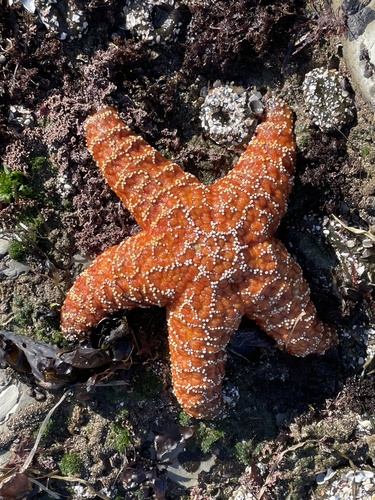
British Columbia, CA
Hier kann man sehen Ochre Sea Star, Fringe Cups und Moonglow Anemone.
Führer anzeigen →
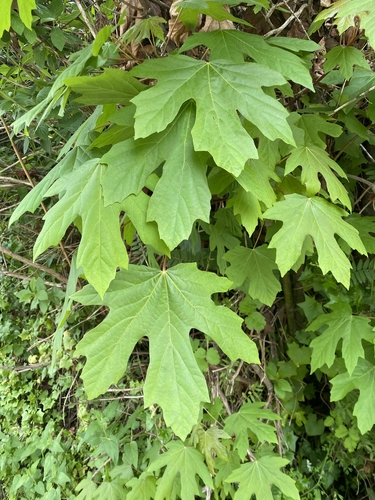
British Columbia, CA
Hier kann man sehen Bigleaf Maple, Western Sword Fern und Vanilla Leaf.
Führer anzeigen →