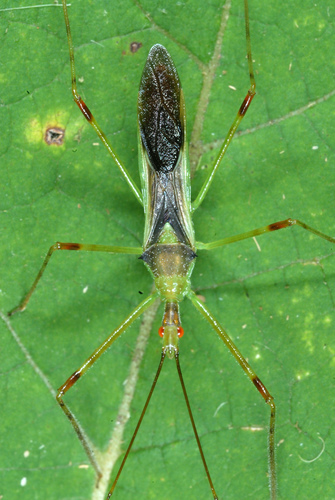
Walnut Lace Bug
corythucha juglandis
The Walnut Lace Bug is a tiny insect that loves to hang out on walnut trees! It has a beautiful lace-like pattern on its wings that makes it look like nature's little artwork.
Lebensraum: Walnut trees and surrounding areas.
The Walnut Lace Bug has a flattened, oval body with intricate, delicate, lace-like wings that are pale, almost transparent, and patterned with dark markings. Its head and thorax are dark, contrasting with the finely veined, reticulated forewings which give it its distinctive appearance.
Kategorie
InsektenSeltenheit
Common
Gefahr
0/5 · Keine bekannte Gefahr
Snaps
Mach den ersten Snap!
Baby lace bugs, called nymphs, look spiky and don't have wings yet!
Their wings look like tiny stained-glass windows under a microscope!
These tiny bugs often leave behind shiny, sticky 'honeydew' on leaves!
They communicate by tapping their bodies on leaves, sending secret messages!
Walnut Lace Bug has exquisite, see-through lace wings that help them glide gracefully and blend into leaf textures.
Walnut Lace Bug can pierce plant tissue with its straw-like mouthparts, allowing them to drink vital sap from walnut leaves.
Walnut Lace Bug has a flat body and muted colors that help them expertly hide on the undersides of walnut leaves from predators.
Feeds exclusively on the sap of walnut tree leaves, sometimes causing minor damage.
Juglans nigra
Feeds on the sap of its leaves, sometimes causing discoloration.
Harmonia axyridis
Adults and larvae prey on soft-bodied insects like lace bugs.
Chrysoperla carnea
Larvae are voracious predators of small insects including lace bugs.
Misumena vatia
Ambushes small insects that visit the leaves for feeding or shelter.
Soziale Tiere leben in organisierten Gruppen und kooperieren, um ihr Überleben zu sichern, beispielsweise bei der Nahrungssuche, Verteidigung und Aufzucht der Jungen.
Baumbewohnende Tiere leben hauptsächlich in Bäumen und nutzen diese als Unterschlupf, Nahrungsquelle und zum Schutz vor Raubtieren.
Farbenfroh beschreibt Organismen oder Objekte, die eine große Vielfalt an leuchtenden und deutlich erkennbaren Farben aufweisen.
Dieses Merkmal kennzeichnet Lebewesen, deren Ernährung vollständig oder hauptsächlich aus pflanzlichem Material besteht.

Tagaktive Tiere sind hauptsächlich bei Tageslicht aktiv und ruhen oder schlafen in der Regel nachts.
Gefahr
0/5 · Keine bekannte Gefahr
Noch keine besonderen Sicherheitshinweise.
6-10 mm
3-5 mm
30-60 Tage
Feeds exclusively on the sap of walnut tree leaves, sometimes causing minor damage.
Walnut trees and surrounding areas.
Foraging
6
10-100
Zoome hinein, um Cluster aufzulösen und zu sehen, wo dieses Objekt fotografiert wurde.
Neueste Snaps erscheinen hier, wenn neue Beobachtungen hinzukommen.