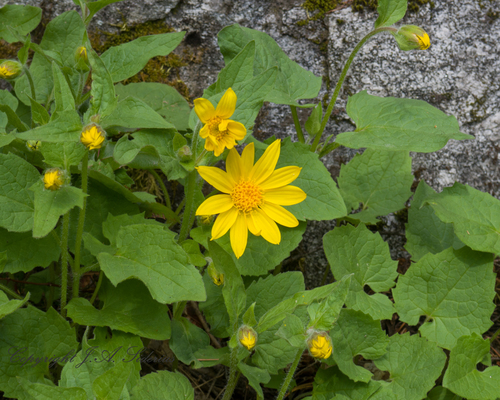
Western Meadow-rue
Thalictrum occidentale
Western Meadow-rue is a lovely plant with delicate, feathery leaves and pretty flowers. It grows in wet meadows and can be found in some forests, adding beauty to nature's garden.
Lebensraum: Wet meadows
The Western Meadow-rue has delicate, fern-like leaves with many small leaflets, giving it an airy appearance. Its tiny flowers, often purplish, greenish-white, or yellowish, hang loosely and lack showy petals, instead displaying long, dangling stamens.
Kategorie
PflanzenSeltenheit
Common
Gefahr
1/5 · Sehr gering
Snaps
Mach den ersten Snap!
Despite its name, it prefers moist woods and shady spots, not always meadows!
Its delicate flowers don't have petals, just showy stamens or pistils!
Some people call it 'feathered columbine' because of its similar leaf shape.
The leaves are so intricate, they look like miniature emerald lace!
Western Meadow-rue's dangling stamens release pollen into the wind, letting the breeze carry its reproductive hopes far and wide.
It has intricately divided, fern-like leaves that help it capture diffuse light in shady forest understories.
Western Meadow-rue grows from underground rhizomes, allowing it to slowly expand its colony year after year.
This plant has separate male and female individuals, needing two different plants for successful seed production.
Dasychira vagans
Larvae munch on its leaves
Uroleucon thalictri
Aphids suck sap from stems

Pyrgus communis
Caterpillars feed on foliage
Blütenpflanzen sind alle Pflanzen, die als Teil ihres Fortpflanzungszyklus Blüten bilden.
Laubabwerfende Pflanzen werfen regelmäßig all ihre Blätter ab, typischerweise im Herbst oder in Trockenzeiten.
Zierpflanzen werden hauptsächlich wegen ihres ästhetischen Reizes angebaut und verschönern Landschaften und Gärten mit ihrem attraktiven Laub, ihren Blüten oder ihrer Form.
Heilpflanzen besitzen chemische Verbindungen, die für therapeutische Zwecke zur Behandlung von Krankheiten oder zur Erhaltung der Gesundheit eingesetzt werden können.

Beschreibt Pflanzen, die für eine Vielzahl von bestäubenden Organismen besonders attraktiv und nützlich sind.

Dieses Lebensraummerkmal kennzeichnet Arten, die in Feuchtgebieten vorkommen. Dies sind Landflächen, die dauerhaft oder saisonal mit Wasser gesättigt sind, darunter Marschland, Sümpfe und Moore.

Waldlebensräume sind terrestrische Lebensräume, die von dichtem Baumbestand dominiert werden und eine große Vielfalt an Pflanzen- und Tierarten beherbergen.
Noch keine Alternativnamen vorhanden.
Gefahr
1/5 · Sehr gering
Always look but don't touch plants unless you know they are safe.
30-120 cm
20-40 cm
0.5-1.5 cm
Spring to early summer
Nein
Keine
Mehrjährig
Wind
Zoome hinein, um Cluster aufzulösen und zu sehen, wo dieses Objekt fotografiert wurde.
Neueste Snaps erscheinen hier, wenn neue Beobachtungen hinzukommen.