
western roseroot
Rhodiola integrifolia
Western roseroot is a special plant that grows in rocky places. It has thick, fleshy leaves and beautiful yellow flowers that bloom in the summer. This plant is tough and can survive in harsh conditions!
Lebensraum: Mountain regions
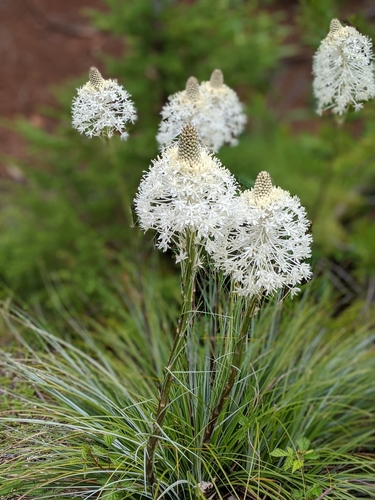
The western roseroot has sturdy stems topped with dense clusters of small, star-like flowers that can be yellow-green or reddish. Its thick, fleshy leaves are blue-green and grow alternately, often appearing like a succulent rosette near the base.
Kategorie
PflanzenSeltenheit
Common
Gefahr
1/5 · Sehr gering
Snaps
Mach den ersten Snap!
Even in harsh environments, it helps prevent soil from washing away with its strong roots!
Its thick root smells like roses when cut, earning its unique name!
Some people traditionally use its roots to boost energy, like a natural pick-me-up!
This hardy plant can grow high up in mountains, often above the tree line!
Western roseroot can thrive in harsh alpine environments because it tolerates freezing temperatures and strong winds, helping it survive.
Western roseroot has fleshy leaves that store water, which helps it endure dry periods common in its high-altitude habitats.
Western roseroot has a thick, aromatic rhizome (underground stem) that anchors it firmly in rocky soils and stores nutrients.
Bombus bifarius
provides nectar and pollen
.jpg&width=800)
Marmota caligata
a food source for marmots
Ochotona princeps
collected and stored for winter
Blütenpflanzen sind alle Pflanzen, die als Teil ihres Fortpflanzungszyklus Blüten bilden.
Sommerblühende Pflanzen bringen ihre Blüten während der Sommersaison hervor und sorgen oft für leuchtende Farben, wenn viele andere Pflanzen bereits verblüht sind.
Heilpflanzen besitzen chemische Verbindungen, die für therapeutische Zwecke zur Behandlung von Krankheiten oder zur Erhaltung der Gesundheit eingesetzt werden können.
Winterharte Pflanzen können niedrigen Temperaturen und Frost ohne nennenswerte Schäden standhalten.

Sukkulente Pflanzen haben verdickte, fleischige Teile, meist Blätter oder Stängel, die an die Speicherung von Wasser in trockenen Klimazonen angepasst sind.

Beschreibt Pflanzen, die für eine Vielzahl von bestäubenden Organismen besonders attraktiv und nützlich sind.

Dieses Lebensraummerkmal kennzeichnet Arten, die in Bergregionen vorkommen, welche sich durch große Höhen, steile Hänge und unterschiedliche Klimazonen auszeichnen.
Noch keine Alternativnamen vorhanden.
Gefahr
1/5 · Sehr gering
Always look but don't touch wild plants unless a grown-up says it's okay.
5-30 cm
10-25 cm
0.5-1.5 cm
Sommer
Ja
Keine
Mehrjährig
Insekten
Zoome hinein, um Cluster aufzulösen und zu sehen, wo dieses Objekt fotografiert wurde.
Neueste Snaps erscheinen hier, wenn neue Beobachtungen hinzukommen.