White-headed Woodpecker
Leuconotopicus albolarvatus
The White-headed Woodpecker is a striking bird with a white head and black body. It loves to peck on trees to find yummy insects and make its home in the forest.
Lebensraum: Forests
The White-headed Woodpecker has a striking appearance with an entirely black body contrasting sharply with its pure white head. Males also boast a distinctive red patch on the back of their neck. White wing patches are visible during flight.
Kategorie
VögelSeltenheit
Common
Gefahr
1/5 · Sehr gering
Snaps
Mach den ersten Snap!
These birds prefer to live in tall, fire-scorched pine forests in the mountains.
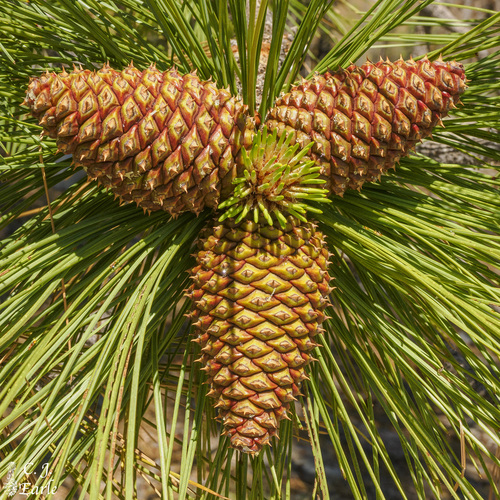
They often get sticky pine pitch on their white faces from digging into cones for food.
This woodpecker loves pine seeds so much, it hardly pecks for insects like other woodpeckers!
Young White-headed Woodpeckers sport a cool red cap on their heads that disappears with age.
White-headed Woodpecker has a strong, wedge-tipped beak to extract nutritious pine seeds directly from tight cones.
White-headed Woodpecker has stiff tail feathers that act like a prop, helping them brace securely against tree trunks while climbing.
White-headed Woodpecker can extend a long, barbed tongue covered in sticky saliva to snatch hidden insects from bark crevices.
They munch on tasty pine seeds and dig out hidden insects from tree bark and wood.
Pinus ponderosa
for seeds, nesting cavities, and insect prey found in its bark.
Dendroctonus ponderosae
as a primary food source, extracting them from beneath pine bark.
Accipiter gentilis
as a potential avian predator in its forested habitat.

Glaucomys sabrinus
by using abandoned woodpecker cavities for nesting and roosting.
Gefiedert beschreibt Tiere, hauptsächlich Vögel, die ein Federkleid besitzen.
Einzelgänger leben den größten Teil ihres Lebens allein und interagieren mit Artgenossen nur zur Paarung oder zur Aufzucht der Jungen.
Baumbewohnende Tiere leben hauptsächlich in Bäumen und nutzen diese als Unterschlupf, Nahrungsquelle und zum Schutz vor Raubtieren.
Dieses Merkmal kennzeichnet Organismen, deren Nahrung hauptsächlich aus Insekten und anderen kleinen Wirbellosen besteht.
Dieses Merkmal beschreibt Organismen, die externe Objekte manipulieren, um ein bestimmtes Ziel zu erreichen.

Waldlebensräume sind terrestrische Lebensräume, die von dichtem Baumbestand dominiert werden und eine große Vielfalt an Pflanzen- und Tierarten beherbergen.

Beschreibt eine Art, deren Anwesenheit und Rolle einen unverhältnismäßig großen Einfluss auf ihre Umwelt haben.

Tagaktive Tiere sind hauptsächlich bei Tageslicht aktiv und ruhen oder schlafen in der Regel nachts.
Noch keine Alternativnamen vorhanden.
Gefahr
1/5 · Sehr gering
Always watch birds from a distance and don't try to touch them.
21-25 cm
43-48 cm
0.05-0.07 kg
4-9 Jahre
45 km/h
They munch on tasty pine seeds and dig out hidden insects from tree bark and wood.
Forests
Foraging
Zoome hinein, um Cluster aufzulösen und zu sehen, wo dieses Objekt fotografiert wurde.
Neueste Snaps erscheinen hier, wenn neue Beobachtungen hinzukommen.