

Whitehead Navarretia
navarretia leucocephala
The Whitehead Navarretia (Navarretia leucocephala) is a resilient, low-growing annual herb native to western North America, particularly specialized for life in the delicate and ephemeral ecosystem of vernal pools. As seasonal winter rains fill these unique depressions and then slowly dry up during the warm spring, this plant undergoes a rapid and highly synchronized life cycle. It starts its growth submerged underwater, quickly transitioning to its terrestrial flowering phase as the pool boundaries recede. This beautiful wildflower plays a crucial role in its local ecosystem, stabilizing muddy soils and providing pollen to specialized native insects. Its existence is tightly linked to the presence of intact, undisturbed seasonal wetlands, making it a key indicator of vernal pool ecosystem health.
Lebensraum: Found in seasonal wetlands, wet meadows, and vernal pools that fill with winter rains and dry completely during the summer.
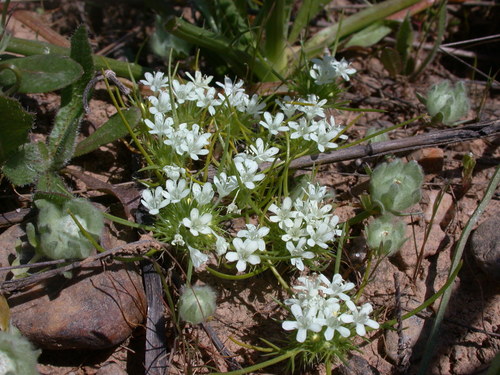
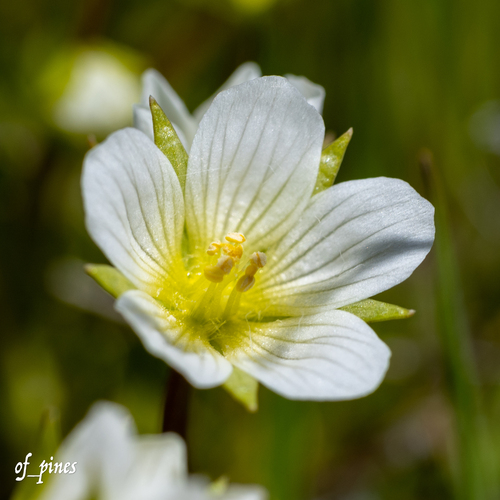
This species typically reaches 5 to 15 centimeters in height, featuring heavily branched, green to reddish-tinted stems. The leaves are deeply divided into needle-like, spine-tipped lobes that form a protective, prickly barrier around the plant. It is easily identified by its dense, spherical, button-like flower heads, which are packed with small, star-shaped flowers that range in color from pristine white to pale ice-blue.
Kategorie
PflanzenSeltenheit
Common
Gefahr
1/5 · Sehr gering
Snaps
Mach den ersten Snap!
Its seeds develop a sticky, mucilaginous coating when wet, helping them adhere to animal fur or muddy ground so they do not wash away.
The genus name Navarretia honors Dr. Francisco Fernandez de Navarrete, an 18th-century Spanish physician and natural philosopher.
Vernal pool plants like the Whitehead Navarretia are master timers, coordinating their bloom perfectly with the evaporation of seasonal pools.
Seeds can germinate underwater in oxygen-poor mud, allowing the plant to establish its root system while the vernal pool is still completely flooded.
Initiates rapid flowering and seed production precisely as water evaporates, completing its life cycle before summer heat sets in.
Sharp, needle-like leaf lobes and floral bracts deter grazing herbivores and protect the delicate developing seeds.
As a photosynthetic plant, it generates its own energy from sunlight, carbon dioxide, and water while absorbing mineral nutrients from the surrounding soil.
Andrena
Provides nectar and pollen to specialized solitary bees that forage exclusively in vernal pool habitats.
Festuca perennis
Competes with invasive grasses for sunlight, space, and moisture in drying vernal pools.
Für dieses Objekt sind noch keine Merkmal-Badges vergeben.
Noch keine Alternativnamen vorhanden.
Sammlungen für dieses Objekt erscheinen hier, wenn weitere Themen hinzugefügt werden.
Gefahr
1/5 · Sehr gering
Noch keine besonderen Sicherheitshinweise.
Der einfachste Weg, Whitehead Navarretia zu bestimmen, ist die Verwendung der Naturführer-App Snappit.
5-15 cm
1 Jahre
As a photosynthetic plant, it generates its own energy from sunlight, carbon dioxide, and water while absorbing mineral nutrients from the surrounding soil.
Found in seasonal wetlands, wet meadows, and vernal pools that fill with winter rains and dry completely during the summer.
Zoome hinein, um Cluster aufzulösen und zu sehen, wo dieses Objekt fotografiert wurde.
Neueste Snaps erscheinen hier, wenn neue Beobachtungen hinzukommen.








.jpg&width=800)


