

Whorled Wood Aster
oclemena acuminata
The Whorled Wood Aster (Oclemena acuminata) is a delightful perennial wildflower native to the cool, moist forests of eastern North America. Rising gently from the forest floor, it brings a touch of starry elegance to the deep shade of coniferous and deciduous woodlands. While it may look delicate, this resilient member of the aster family is perfectly adapted to life under dense tree canopies, spreading via underground rhizomes to establish loose colonies that bloom in late summer when many other woodland plants have already faded. Its unique appearance and ecological value make it a beloved find for hikers and nature enthusiasts exploring mountain trails and quiet woodlands. This plant plays an important role in its forest ecosystem, acting as a crucial late-season food source for various native pollinators, including bees and butterflies, who rely on its nectar and pollen before the onset of autumn and colder temperatures.
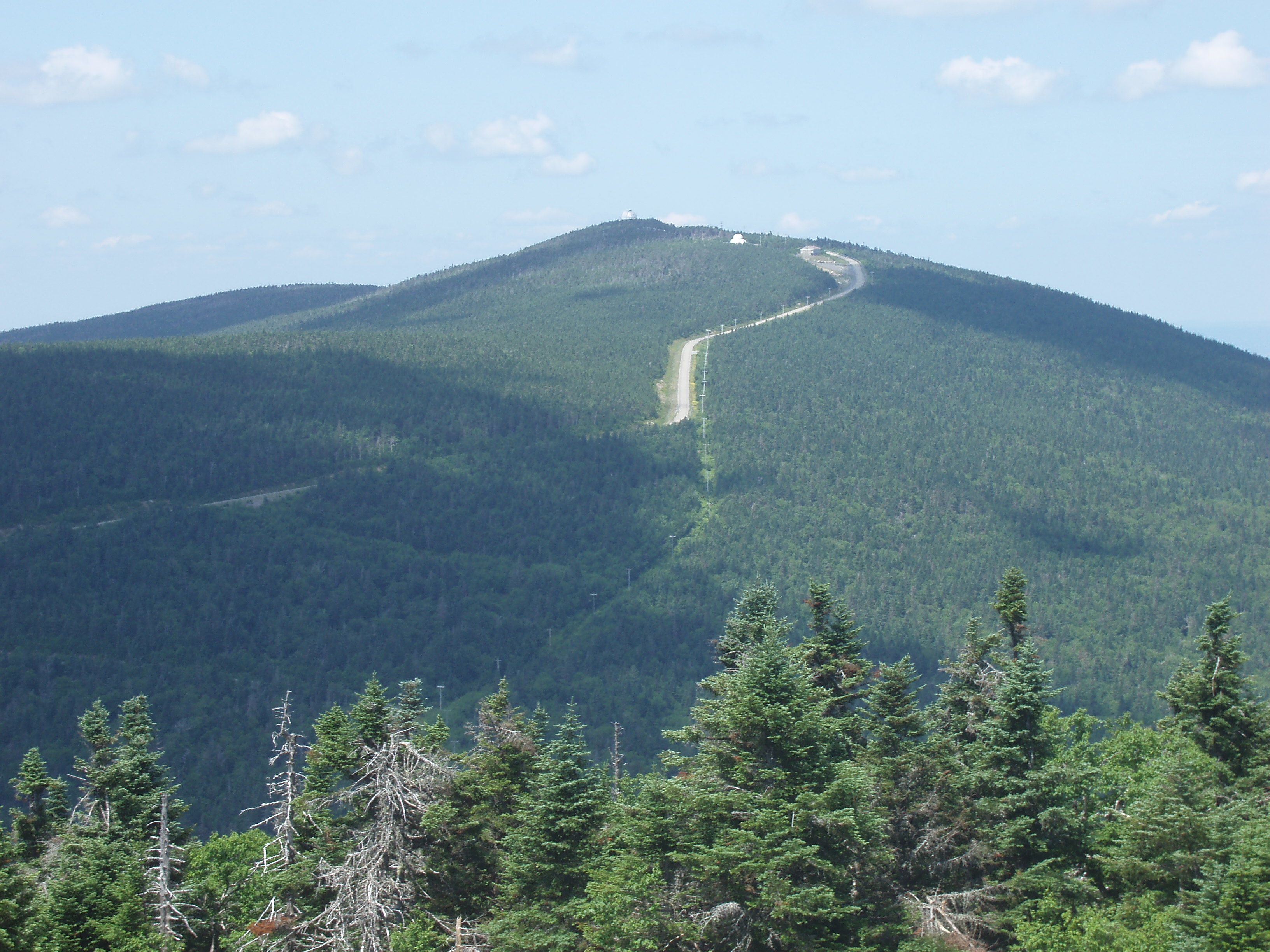
Lebensraum: Found in cool, moist, acidic soils of deciduous, mixed, or coniferous forests, often along shaded woodland borders and trail edges.
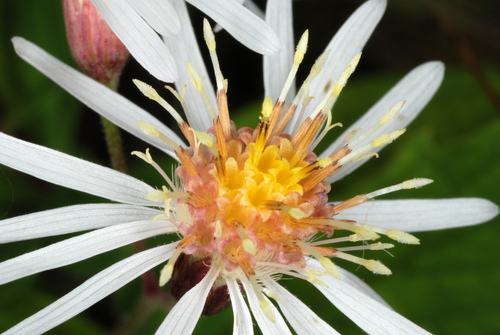
This wildflower typically grows between 30 and 80 centimeters tall on slightly zig-zagging, hairy stems. Its most striking feature is the arrangement of its sharply toothed, egg-shaped leaves, which are crowded together near the top of the stem to create the illusion of a single horizontal whorl. Floating just above this leafy platform are loose clusters of star-like flower heads. Each flower head features 10 to 18 narrow, stringy, white or pale pinkish ray florets surrounding a central disc of tiny tubular florets that start bright yellow and mature to a deep reddish-purple.
Kategorie
PflanzenSeltenheit
Common
Gefahr
1/5 · Sehr gering
Snaps
Mach den ersten Snap!
Although called 'whorled', its leaves actually grow alternately along the stem; they just cluster so tightly at the top that they mimic a whorled pattern.
Its scientific genus name Oclemena is thought to be an anagram of another botanical name, a common historical practice among nineteenth-century botanists.
The transition of its central disk from yellow to purple helps save insect energy by indicating which flowers have already been drained of nectar.
Leaves are tightly clustered near the stem summit to maximize sunlight interception in low-light forest understories.
Spreads efficiently via underground rhizomes to establish persistent colonies in patchy woodland light.
The central disc florets change color from yellow to reddish-purple after pollination, signaling to insects which flowers are still active.
As a primary producer, this plant utilizes photosynthesis to manufacture its own sugars from carbon dioxide, water, and sunlight.
Bombus vagans
Visits the flowers for nectar and pollen, acting as an essential late-season pollinator.
Odocoileus virginianus
Feeds on the leaves and tender stems in forest understories.
Phyciodes tharos
The caterpillars of this butterfly use the foliage as a host plant and food source.
Für dieses Objekt sind noch keine Merkmal-Badges vergeben.
Noch keine Alternativnamen vorhanden.
Sammlungen für dieses Objekt erscheinen hier, wenn weitere Themen hinzugefügt werden.
Gefahr
1/5 · Sehr gering
Noch keine besonderen Sicherheitshinweise.
Der einfachste Weg, Whorled Wood Aster zu bestimmen, ist die Verwendung der Naturführer-App Snappit.
30-80 cm
2-10 Jahre
As a primary producer, this plant utilizes photosynthesis to manufacture its own sugars from carbon dioxide, water, and sunlight.
Found in cool, moist, acidic soils of deciduous, mixed, or coniferous forests, often along shaded woodland borders and trail edges.
Zoome hinein, um Cluster aufzulösen und zu sehen, wo dieses Objekt fotografiert wurde.
Neueste Snaps erscheinen hier, wenn neue Beobachtungen hinzukommen.