

Wolf'S Currant
ribes wolfii
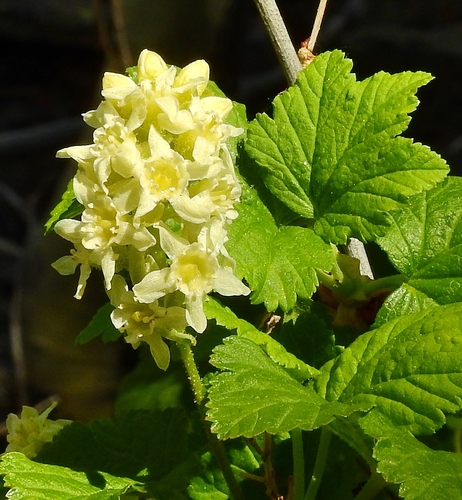
Wolf'S Currant (Ribes wolfii) is a resilient, deciduous shrub native to the mountainous regions of the western United States. Thriving in damp, semi-shaded subalpine forests and rocky creek beds, this species stands out for its ecological value and modest beauty. It is highly adapted to cooler, high-altitude climates, providing essential food and cover for a wide variety of montane wildlife. Unlike some of its cultivated cousins, Wolf'S Currant maintains a wild, rugged charm. Its presence on mountain slopes helps secure fragile soils, making it a critical player in post-fire forest regeneration and watershed health. Hikers and nature lovers frequently encounter this plant along trails in the Rocky Mountains, where its unique sticky, bristly berries offer a sensory treat and a clear marker for identification.
Lebensraum: Found in moist, shaded montane and subalpine forests, rocky slopes, and along stream banks at high elevations.
This erect shrub typically grows between 50 to 150 centimeters tall. It features alternate, maple-like leaves with 3 to 5 distinct lobes, which are often covered in fine, sticky glandular hairs. In early summer, the plant produces dense, upright clusters of small, pale greenish-white or pinkish flowers. These are followed by round, black or dark purple berries that are highly distinctive due to their coverage of sticky, gland-tipped hairs—giving them a bristly appearance—and a slight glaucous waxy bloom.
Kategorie
PflanzenSeltenheit
Common
Gefahr
1/5 · Sehr gering
Snaps
Mach den ersten Snap!
Indigenous peoples historically used the berries of various Ribes species, including Wolf's Currant, as a food source, often mixing them into pemmican.
The berries of Wolf's Currant are covered in small, sticky, gland-tipped hairs, giving them a distinct fuzzy or bristly texture.
The scientific genus name 'Ribes' is derived from a Persian or Arabic word 'ribas', which historically referred to a type of rhubarb.
The leaves, stems, and berries are covered in glandular trichomes that secrete sticky compounds. This defense mechanism deters herbivorous insects and reduces water loss in high-altitude winds.
Highly adapted to extreme alpine and subalpine environments, it can withstand freezing temperatures and heavy winter snowpacks, remaining dormant until spring.
The shrub establishes a dense fibrous root system that anchors firmly in rocky, unstable soils, helping to prevent erosion along steep mountain slopes.
As a photoautotrophic plant, Wolf's Currant synthesizes its own food using sunlight, carbon dioxide, and water through the process of photosynthesis.
Selasphorus platycercus
Feeds on flower nectar and acts as a key pollinator.
Ursus americanus
Consumes the ripe berries to build up fat reserves for the winter.
Cervus canadensis nelsoni
Browses on the leaves and young twigs during the growing season.
Für dieses Objekt sind noch keine Merkmal-Badges vergeben.
Noch keine Alternativnamen vorhanden.
Sammlungen für dieses Objekt erscheinen hier, wenn weitere Themen hinzugefügt werden.
Gefahr
1/5 · Sehr gering
Noch keine besonderen Sicherheitshinweise.
Der einfachste Weg, Wolf'S Currant zu bestimmen, ist die Verwendung der Naturführer-App Snappit.
50+ cm
10+ Jahre
As a photoautotrophic plant, Wolf's Currant synthesizes its own food using sunlight, carbon dioxide, and water through the process of photosynthesis.
Found in moist, shaded montane and subalpine forests, rocky slopes, and along stream banks at high elevations.
Zoome hinein, um Cluster aufzulösen und zu sehen, wo dieses Objekt fotografiert wurde.
Neueste Snaps erscheinen hier, wenn neue Beobachtungen hinzukommen.












