woodland madia
Anisocarpus madioides
Woodland madia is a bright yellow flower that loves to grow in sunny spots. It attracts butterflies and bees, making it a cheerful part of the forest!
Lebensraum: Forests
The woodland madia has bright yellow, daisy-like flowers with many thin petals and a darker yellow center. Its stems and leaves are covered in sticky glandular hairs, giving it a somewhat fuzzy, resinous appearance.
Kategorie
PflanzenSeltenheit
Common
Gefahr
1/5 · Sehr gering
Snaps
Mach den ersten Snap!
Even though it's sticky, many different bees and flies still visit its bright yellow flowers for nectar!
Its name "Madia" comes from a Chilean word for an oily plant, a clue to its sticky feel!
The sticky hairs on its stem can trap tiny insects, like a natural flypaper!
Touch its leaves, and you might get a pleasant, pine-like scent on your fingers!
woodland madia has glandular hairs that create a sticky surface, helping to deter small browsing insects.
woodland madia can produce fragrant, resinous compounds that may protect it from pests and diseases.
woodland madia can complete its life cycle quickly, allowing it to thrive in disturbed areas by producing seeds fast.
Apis mellifera
collecting nectar and pollen from its flowers.
Bombus vosnesenskii
an important native pollinator for its blooms.
Odocoileus hemionus
browsing on its leaves and young stems.
Blütenpflanzen sind alle Pflanzen, die als Teil ihres Fortpflanzungszyklus Blüten bilden.
Laubabwerfende Pflanzen werfen regelmäßig all ihre Blätter ab, typischerweise im Herbst oder in Trockenzeiten.
Sommerblühende Pflanzen bringen ihre Blüten während der Sommersaison hervor und sorgen oft für leuchtende Farben, wenn viele andere Pflanzen bereits verblüht sind.
Beschreibt Pflanzen, die für eine Vielzahl von bestäubenden Organismen besonders attraktiv und nützlich sind.

Farbenfroh beschreibt Organismen oder Objekte, die eine große Vielfalt an leuchtenden und deutlich erkennbaren Farben aufweisen.

Schnellwachsende Pflanzen weisen eine beschleunigte Wachstumsrate auf und nehmen innerhalb kurzer Zeit schnell an Größe und Biomasse zu.

Waldlebensräume sind terrestrische Lebensräume, die von dichtem Baumbestand dominiert werden und eine große Vielfalt an Pflanzen- und Tierarten beherbergen.
Noch keine Alternativnamen vorhanden.
Gefahr
1/5 · Sehr gering
Always look but don't touch plants unless you know they are safe.
30-90 cm
1-2 cm
Late Spring - Fall
Nein
Keine
Einjährig
Insekten
Forests
Zoome hinein, um Cluster aufzulösen und zu sehen, wo dieses Objekt fotografiert wurde.
Neueste Snaps erscheinen hier, wenn neue Beobachtungen hinzukommen.
British Columbia, CA
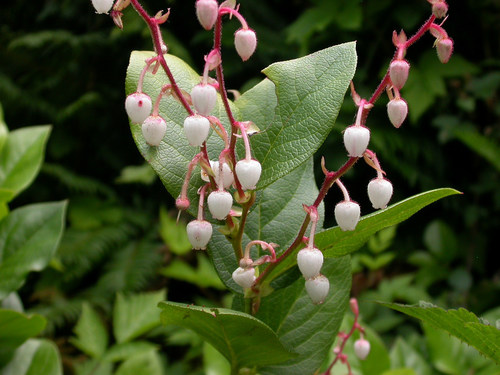
Hier kann man sehen Salal und Western Rattlesnake Plantain.
Führer anzeigen →
British Columbia, CA
Hier kann man sehen Salal, Small Ground-Cone und Evergreen Huckleberry.
Führer anzeigen →