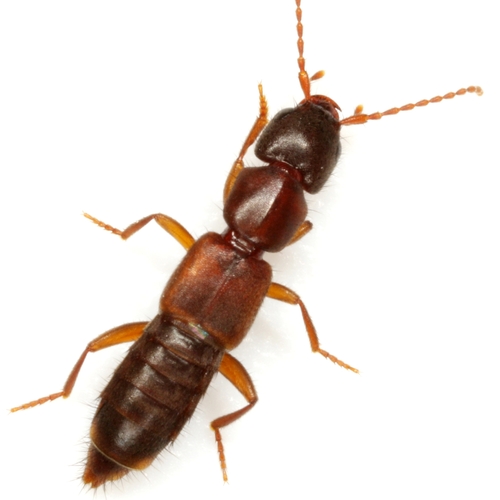


Achenomorphus Corticinus
achenomorphus corticinus
Achenomorphus corticinus es una pequeña y fascinante especie de escarabajo estafilínido perteneciente a la familia Staphylinidae. Como la mayoría de sus parientes, posee una estructura corporal inusual y alargada que lo distingue de los escarabajos típicamente voluminosos. Prefiriendo un estilo de vida críptico, pasa la mayor parte de su vida escondido bajo la corteza de troncos en descomposición y navegando por los intrincados y estrechos ambientes de la hojarasca forestal. Esta existencia oculta lo convierte en un contribuyente crítico, aunque rara vez observado, a los ecosistemas forestales saludables. Al depredar activamente sobre invertebrados más pequeños, ayuda a regular las poblaciones de microinvertebrados y asiste indirectamente en el proceso de descomposición de la materia orgánica en descomposición. Su gracia serpentina y naturaleza activa lo convierten en un notable ejemplo de adaptaciones micropredadoras en hábitats boscosos.
Hábitat: Se encuentra típicamente en ambientes boscosos húmedos, habitando principalmente bajo la corteza suelta de árboles en descomposición o dentro de la hojarasca forestal rica y húmeda.
Este esbelto insecto mide típicamente alrededor de un centímetro de largo, presentando un cuerpo alargado y muy flexible. Su característica más distintiva son sus élitros severamente truncados, que dejan más de la mitad de sus segmentos abdominales completamente expuestos. El exoesqueleto suele exhibir una coloración brillante de color marrón oscuro, marrón rojizo o casi negro con una superficie finamente texturizada. Está equipado con antenas moderadamente largas, parecidas a cuentas, para detectar presas en grietas oscuras, y mandíbulas afiladas adecuadas para su dieta carnívora.
Categoría
InsectosRareza
Common
Peligro
1/5 · Muy bajo
Snaps
1
A pesar de tener élitros increíblemente cortos, estos escarabajos estafilínidos tienen alas completamente funcionales intrincadamente plegadas debajo, lo que les permite volar cuando buscan nuevos hábitats.
El epíteto de la especie 'corticinus' deriva de la palabra latina 'cortex', que significa corteza, describiendo perfectamente su hábitat preferido bajo la corteza de los árboles.
Cuando se sienten amenazados, a menudo levantan la punta de su abdomen en el aire, imitando la postura agresiva de un escorpión, aunque no poseen aguijón.
Es un micropredador activo que caza pequeños invertebrados de cuerpo blando dentro de la madera en descomposición y la hojarasca.
Diferencias por edad: Las larvas también son activamente carnívoras y cazan en los mismos microhábitats, aunque se centran en presas más pequeñas y blandas hasta que sus mandíbulas se desarrollan completamente.
Aún no hay insignias de rasgos asignadas a este objeto.
Todavía no hay alias listados.
Las colecciones para este objeto aparecerán aquí a medida que se añadan más temas.
Peligro
1/5 · Muy bajo
Todavía no hay notas especiales de seguridad.
La forma más fácil de identificar a Achenomorphus Corticinus es usar la aplicación de identificación de naturaleza Snappit.
0-1 cm
1-2 cm
0.00001-0.00005 kg
0-1 años
Es un micropredador activo que caza pequeños invertebrados de cuerpo blando dentro de la madera en descomposición y la hojarasca.
Se encuentra típicamente en ambientes boscosos húmedos, habitando principalmente bajo la corteza suelta de árboles en descomposición o dentro de la hojarasca forestal rica y húmeda.
Forrajeo
Acércate para separar los grupos y explorar dónde se ha fotografiado este objeto.
Llévate el descubrimiento
Haz una foto con Snappit, identifica la especie y guarda el hallazgo en tu colección.











.jpg&width=800)




