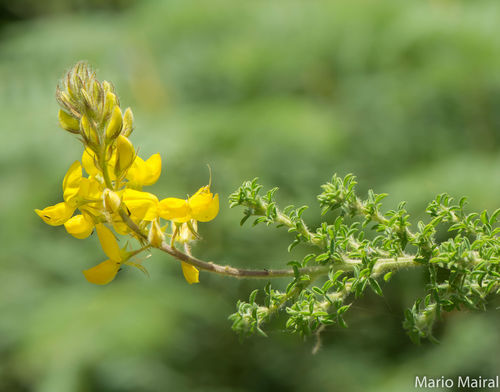


Adenocarpus Foliolosus
adenocarpus foliolosus
Adenocarpus foliolosus, conocido comúnmente como codeso de monte, es un impresionante arbusto de hoja perenne endémico de las Islas Canarias. Perteneciente a la familia de las leguminosas, esta vibrante planta juega un papel ecológico crucial en las zonas de transición entre los bosques de laurisilva húmedos y los pinares más secos. Su estructura densa y frondosa, junto con sus abundantes flores de color amarillo dorado, iluminan las laderas volcánicas de Tenerife, Gran Canaria, La Palma, La Gomera y El Hierro. Altamente adaptado a los microclimas únicos de las medianías canarias, el codeso intercepta con frecuencia la humedad del mar de nubes impulsado por los vientos alisios, canalizando el agua hacia el suelo del bosque. Con su capacidad de fijación de nitrógeno, actúa como una especie pionera que enriquece el suelo y facilita el crecimiento de la flora nativa circundante.
Hábitat: Se encuentra en pinares canarios, zonas de transición de laurisilva y matorrales de montaña soleados sobre suelo volcánico.
Este arbusto leñoso muy ramificado suele medir entre 100 y 300 centímetros de altura. Presenta hojas verdes pequeñas, tripartitas (trifoliadas), densamente agrupadas a lo largo de las ramas, creando una textura suave y plumosa. Desde finales del invierno hasta principios del verano, produce densos racimos erguidos de flores de color amarillo brillante, similares a guisantes. A estas les siguen vainas de semillas verdes, alargadas y aplanadas, distintivamente cubiertas de pelos pegajosos con punta glandular, que se oscurecen a medida que maduran.
Categoría
PlantasRareza
Common
Peligro
1/5 · Muy bajo
Snaps
¡Sé la primera persona en hacer un snap!
Debido a su rápida colonización de paisajes volcánicos degradados, actúa como una planta pionera crucial para la restauración ecológica después de incendios forestales.
Históricamente, los agricultores canarios utilizaban las ramas resistentes y flexibles de este arbusto para construir escobas rústicas tradicionales.
El nombre del género Adenocarpus se traduce directamente como 'fruto glandular', en alusión a las protuberancias pegajosas prominentes en sus vainas de semillas.
Alberga bacterias simbióticas Rhizobium en sus nódulos radiculares, lo que le permite convertir el nitrógeno atmosférico en nutrientes para prosperar en suelos volcánicos pobres en nutrientes.
Su follaje denso y de textura fina es excelente para condensar las gotas de agua de la niebla de montaña que pasa, realizando una forma de precipitación horizontal.
Presenta pelos pegajosos y glandulares en sus vainas que secretan compuestos disuasorios para desalentar a los insectos que comen semillas y a los herbívoros.
Como planta fotosintética, produce su propia energía a partir de la luz solar, el agua y el dióxido de carbono, mientras absorbe minerales esenciales de los suelos volcánicos.
Bombus canariensis
Proporciona abundante néctar y polen a esta especie endémica de abejorro durante la floración primaveral.
Uresiphita gilvata
Las orugas de esta polilla se alimentan extensamente de las hojas del arbusto.
Phylloscopus canariensis
Busca insectos entre el follaje denso y protector del arbusto.
Aún no hay insignias de rasgos asignadas a este objeto.
Todavía no hay alias listados.
Las colecciones para este objeto aparecerán aquí a medida que se añadan más temas.
Peligro
1/5 · Muy bajo
Todavía no hay notas especiales de seguridad.
La forma más fácil de identificar a Adenocarpus Foliolosus es usar la aplicación de identificación de naturaleza Snappit.
100-300 cm
10-30 años
Como planta fotosintética, produce su propia energía a partir de la luz solar, el agua y el dióxido de carbono, mientras absorbe minerales esenciales de los suelos volcánicos.
Se encuentra en pinares canarios, zonas de transición de laurisilva y matorrales de montaña soleados sobre suelo volcánico.
Acércate para separar los grupos y explorar dónde se ha fotografiado este objeto.
Los snaps recientes aparecerán aquí a medida que se añadan nuevas observaciones.
Llévate el descubrimiento
Haz una foto con Snappit, identifica la especie y guarda el hallazgo en tu colección.








.jpg&width=800)



_001.jpg&width=800)




