

Akeake
dodonaea viscosa
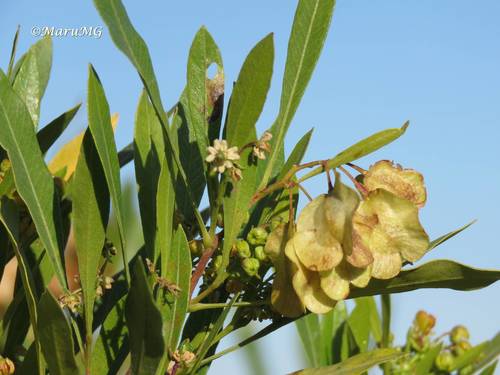
Akeake (Dodonaea viscosa), también conocido como arbusto del lúpulo, es un arbusto o pequeño árbol de hoja perenne, resistente y versátil, nativo de Nueva Zelanda, Australia y otras regiones tropicales y subtropicales. Reconocido por su extrema resiliencia, su nombre maorí 'Akeake' se traduce como 'para siempre y siempre', aludiendo a su naturaleza robusta y su capacidad para sobrevivir en ambientes costeros hostiles, suelos secos y vientos fuertes. Juega un papel importante en la restauración ecológica, colonizando rápidamente terrenos perturbados y proporcionando refugio para que otras plantas nativas se establezcan. En la cultura maorí tradicional, su madera increíblemente densa y pesada era muy valorada para fabricar armas duraderas, palos de excavación y bastones.
Hábitat: Se encuentra típicamente en dunas costeras, bosques de tierras bajas, matorrales abiertos y acantilados rocosos donde tolera vientos salados y suelos pobres.
El Akeake suele crecer como un arbusto multiramificado o un pequeño árbol que alcanza alturas de 2 a 9 metros. Presenta hojas simples, de verde claro a verde bronceado, estrechas y alternas que secretan una sustancia pegajosa y resinosa, dándoles una apariencia ligeramente brillante. En primavera y verano, produce pequeñas e inconspicuas flores de color amarillo verdoso que carecen de pétalos, las cuales se desarrollan en cápsulas de semillas muy distintivas, papiráceas y de dos a cuatro alas. Estas vainas de semillas maduran de un verde pálido o amarillo cremoso a un marrón claro seco, pareciéndose al lúpulo, y se dispersan fácilmente con el viento.
Categoría
PlantasRareza
Common
Peligro
1/5 · Muy bajo
Snaps
1
La madera de Akeake es una de las más densas y pesadas de cualquier árbol nativo de Nueva Zelanda, tan pesada que se hunde en el agua cuando está verde.
Los primeros colonos europeos en Australia y Nueva Zelanda usaron las vainas aladas de las semillas de esta planta como sustituto del lúpulo en la elaboración de cerveza, dándole el nombre común de 'arbusto del lúpulo'.
El nombre maorí 'Akeake' significa 'para siempre y siempre', haciendo referencia a la increíble fuerza y durabilidad de su madera.
Como planta fotosintética, el Akeake genera sus propios nutrientes orgánicos a partir de la luz solar, el dióxido de carbono y el agua, mientras absorbe minerales esenciales a través de su sistema radicular.
Aenetus virescens
Las orugas de esta polilla se alimentan de la madera del Akeake, perforando túneles en los tallos.
Anthornis melanura
Se alimenta del néctar de las flores de Akeake y ayuda en la polinización.
Vitex lucens
El Akeake proporciona refugio y cobertura de dosel, ayudando a la germinación y el crecimiento de árboles de dosel de crecimiento más lento como el Puriri.
Aún no hay insignias de rasgos asignadas a este objeto.
Todavía no hay alias listados.
Las colecciones para este objeto aparecerán aquí a medida que se añadan más temas.
Peligro
1/5 · Muy bajo
Todavía no hay notas especiales de seguridad.
La forma más fácil de identificar a Akeake es usar la aplicación de identificación de naturaleza Snappit.
200-900 cm
15-60 años
Como planta fotosintética, el Akeake genera sus propios nutrientes orgánicos a partir de la luz solar, el dióxido de carbono y el agua, mientras absorbe minerales esenciales a través de su sistema radicular.
Se encuentra típicamente en dunas costeras, bosques de tierras bajas, matorrales abiertos y acantilados rocosos donde tolera vientos salados y suelos pobres.
Acércate para separar los grupos y explorar dónde se ha fotografiado este objeto.
Llévate el descubrimiento
Haz una foto con Snappit, identifica la especie y guarda el hallazgo en tu colección.












.jpg&width=800)



_001.jpg&width=800)




