


alder buckthorn
Frangula alnus
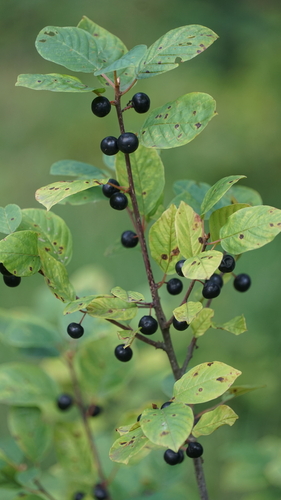
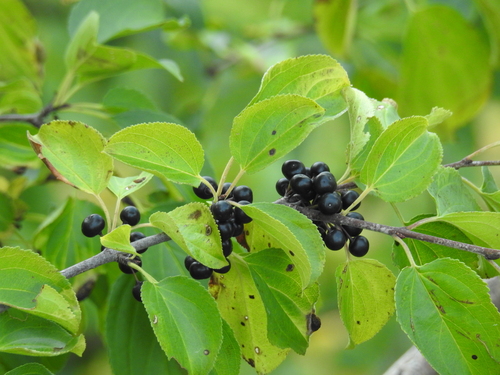
Alder buckthorn is a small shrub that grows in wet places like riverbanks and marshes. It has shiny green leaves and produces small black berries that birds love to eat!
Hábitat: Wetlands
The alder buckthorn is a deciduous shrub or small tree, featuring smooth, dark bark often speckled with light lenticels. Its oval, untoothed leaves are glossy green, turning a bright yellow in autumn. Tiny greenish-white flowers give way to berries that ripen from red to shiny black.
Categoría
PlantasRareza
Common
Peligro
2/5 · Bajo
Snaps
¡Sé la primera persona en hacer un snap!
Wow! Its bark was once dried and used as a key ingredient for making charcoal for gunpowder!
Wow! Some gardeners use it to attract beautiful brimstone butterflies to their yards!
Wow! The berries of this plant dramatically change color from green, to red, then shiny black!
Wow! The wood is incredibly tough and dense, prized for making durable charcoal!
Alder buckthorn has leaves that provide essential food for the caterpillars of the Brimstone butterfly, helping them grow.
Alder buckthorn bark and berries contain compounds that act as a laxative, deterring animals from eating too many.
Alder buckthorn can flower and fruit continuously over several months, offering a steady food source for pollinators and birds.
Gonepteryx rhamni
Caterpillars feed on its leaves.
Turdus philomelos
Feeds on its ripe black berries.
Apis mellifera
Visits its small, nectar-rich flowers.
Las plantas caducifolias pierden periódicamente todas sus hojas, por lo general durante el otoño o las estaciones secas.
Describe a los organismos capaces de convertir el nitrógeno atmosférico en compuestos utilizables por las plantas.
Un arbusto es una planta leñosa más pequeña que un árbol, típicamente con múltiples tallos que se ramifican desde o cerca del suelo.
Las plantas frutales producen frutos, que son los ovarios maduros de las plantas con flores que contienen semillas.

Este rasgo de uso humano indica especies de las cuales se pueden extraer tintes naturales para colorear textiles, alimentos u otros materiales.

Las plantas comestibles son aquellas partes de una planta que se consideran seguras para el consumo humano.

Describe plantas que son particularmente atractivas y beneficiosas para una amplia variedad de organismos polinizadores.

Este rasgo de hábitat identifica especies que se encuentran en humedales, que son áreas de tierra saturadas de agua, ya sea permanente o estacionalmente, e incluyen marismas, pantanos y ciénagas.
Todavía no hay alias listados.
Peligro
2/5 · Bajo
Do not eat the berries without asking an adult, as they can upset your tummy.
300-700 cm
200-500 cm
0.5-1 cm
Late spring to early summer
No
Moderada
Perenne
Insectos
Acércate para separar los grupos y explorar dónde se ha fotografiado este objeto.
Los snaps recientes aparecerán aquí a medida que se añadan nuevas observaciones.