

Alucita Canariensis
alucita canariensis
Meet the Canary Many-plumed Moth (Alucita canariensis), a tiny, marvelous insect endemic to the volcanic archipelago of the Canary Islands. Belonging to the Alucitidae family, this micro-moth stands out due to its extraordinarily modified wings. Instead of the continuous membrane typical of most Lepidoptera, its wings are divided into delicate, brush-like plumes, giving it the appearance of holding miniature paper fans. This striking evolutionary trait makes it a fascinating subject for entomologists and nature enthusiasts visiting the Macaronesian region. Active primarily during the twilight and nighttime hours, this insect leads a secretive life closely tied to its host plants. While easily overlooked due to its minuscule size and drab, cryptic coloration, a closer look reveals an intricate masterpiece of natural engineering.
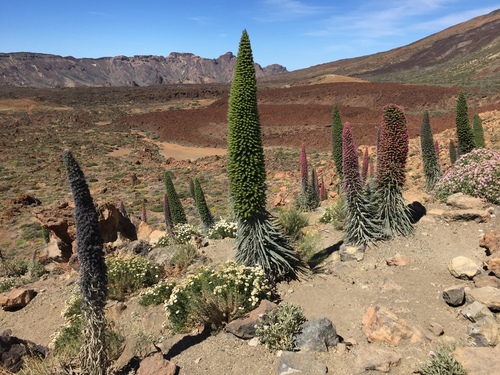
Hábitat: Typically found in the barrancos, rocky ravines, and scrubby thermophilous woodlands of the Canary Islands where its larval host plants grow.
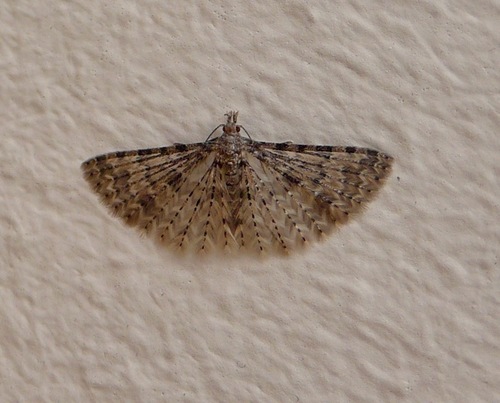
The Canary Many-plumed Moth is a tiny insect with a wingspan of only 12 to 16 millimeters. Its most distinguishing feature is its wings, which are deeply cleft into six separate, hair-fringed plumes on each wing, totaling twenty-four mini-plumes. When resting, it holds these wings completely flat and spread out, creating a distinctive semi-circular, lace-like fan shape. The overall coloration is a cryptic mixture of greyish-brown, tan, and white mottling, which provides excellent camouflage against tree bark and rocky crevices.
Categoría
InsectosRareza
Common
Peligro
1/5 · Muy bajo
Snaps
¡Sé la primera persona en hacer un snap!
Each of its wings is split into six distinct feather-like segments, giving the moth a total of 24 mini-plumes.
It is entirely unique to the Canary Islands, evolved to survive in the islands' diverse microclimates.
Unlike most moths that fold their wings like a tent, the Many-plumed Moth spreads them wide and flat, resembling a tiny open fan.
The divided, feather-like plumes of its wings create a high-drag flight mechanism that allows for highly controlled, hovering maneuvers in tight spaces.
When resting flat against surfaces, its mottled coloration and segmented wing outline mimic dry lichen or rock textures, rendering it nearly invisible to predators.
As caterpillars, they burrow deep inside the stems and buds of host plants, protecting themselves from predators and harsh weather while feeding.
As larvae, they feed internally on the tissues of host plants, while the adults primarily drink nectar from local flowers.
Diferencias por edad: Larvae are strictly internal plant-borers feeding on buds and stems, whereas adults are free-flying nectar feeders.
Lonicera etrusca
The larvae of Alucita canariensis feed internally on the flower buds and stems of this native honeysuckle.
Plecotus teneriffae
This endemic bat species hunts small nocturnal flying insects, including many-plumed moths, using echolocation.
Aún no hay insignias de rasgos asignadas a este objeto.
Todavía no hay alias listados.
Las colecciones para este objeto aparecerán aquí a medida que se añadan más temas.
Peligro
1/5 · Muy bajo
Todavía no hay notas especiales de seguridad.
La forma más fácil de identificar a Alucita Canariensis es usar la aplicación de identificación de naturaleza Snappit.
0 cm
1-2 cm
0.00001-0.00003 kg
4 km/h
As larvae, they feed internally on the tissues of host plants, while the adults primarily drink nectar from local flowers.
Typically found in the barrancos, rocky ravines, and scrubby thermophilous woodlands of the Canary Islands where its larval host plants grow.
Grazing
Acércate para separar los grupos y explorar dónde se ha fotografiado este objeto.
Los snaps recientes aparecerán aquí a medida que se añadan nuevas observaciones.