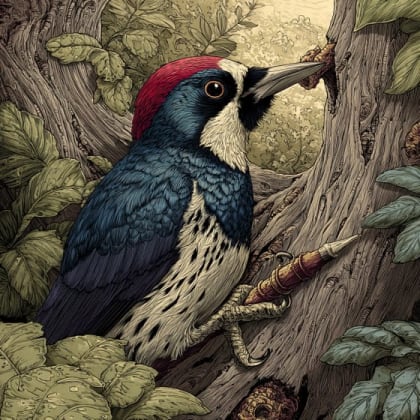



American Dipper
Cinclus mexicanus
The American Dipper is a small bird that loves to dive into rivers and streams. It has a round body and a cheerful song that sounds like bubbling water. These birds are great swimmers and can even walk underwater!
Hábitat: Mountain regions, Wetlands
The American Dipper is a stout, slate-gray bird with a short tail and a plump body. It has distinct white flashes on its eyelids, visible when it blinks. Juveniles often display a browner head and mottled grey plumage.
Categoría
AvesRareza
Common
Peligro
1/5 · Muy bajo
Snaps
¡Sé la primera persona en hacer un snap!
American Dippers sometimes build their dome-shaped nests hidden right behind waterfalls.
Baby dippers are ready to dive and swim for food just a few weeks after hatching!
Their loud, bubbly song can be heard over the rush of even the fastest rivers.
This is the only songbird in North America that dives and swims underwater to hunt!
American Dippers can walk along stream bottoms using strong feet to grip rocks, that helps them forage for food against the current.
American Dippers have a clear nictitating membrane that acts like goggles, helping them see clearly while submerged.
American Dippers can close their nostrils tightly, preventing water from entering their nose while diving for prey.
These amazing birds eat aquatic insects and small fish found in fast-moving rivers.
Hydropsyche californica
Primary food source found clinging to river rocks.
Oncorhynchus clarkii
Consumes small fry and eggs from the riverbed.
Buteo jamaicensis
A common avian predator in their mountainous habitats.
Mustela vison
A stealthy riparian mammal that preys on adults and chicks.
Describe a los animales, principalmente aves, que poseen una cubierta de plumas.
Se caracteriza por tener los dedos conectados por una membrana, lo que generalmente ayuda a nadar.
Los animales sociales viven en grupos organizados, cooperando para obtener beneficios de supervivencia como la búsqueda de alimento, la defensa y la cría de descendencia.
Los animales cantores producen vocalizaciones complejas, a menudo con el propósito de atraer parejas, defender el territorio o comunicarse dentro de su especie.

Este rasgo identifica a los organismos cuya dieta consiste principalmente en insectos y otros pequeños invertebrados.

Este rasgo de hábitat identifica a las especies que se encuentran en regiones montañosas, caracterizadas por su gran altitud, pendientes pronunciadas y zonas climáticas variables.

Los hábitats de agua dulce incluyen entornos acuáticos no salinos como ríos, lagos, estanques y humedales, vitales para numerosas especies.

Los animales diurnos están activos principalmente durante el día y suelen descansar o dormir por la noche.

Describe una especie cuya presencia y papel tienen un efecto desproporcionadamente grande en su entorno.

Los hábitats acuáticos abarcan entornos donde los organismos viven principalmente en el agua, incluidos océanos, ríos, lagos y humedales.
Peligro
1/5 · Muy bajo
Always watch birds from a distance and don't try to touch them.
14-18 cm
23-28 cm
0.045-0.065 kg
5-8 años
40 km/h
These amazing birds eat aquatic insects and small fish found in fast-moving rivers.
Mountain regions, Wetlands
Foraging
Acércate para separar los grupos y explorar dónde se ha fotografiado este objeto.
Los snaps recientes aparecerán aquí a medida que se añadan nuevas observaciones.

British Columbia, CA
Puedes ver American Dipper, Salmón Rojo y Pato.
Ver guía →

Washington, US
Puedes ver Purple Foxglove, Tansy y Broad-Leaved Sweet Pea.
Ver guía →
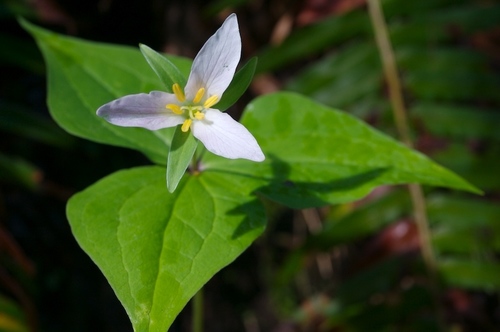
British Columbia, CA
Puedes ver Pacific Trillium, Vanilla Leaf y Japanese Knotweed.
Ver guía →
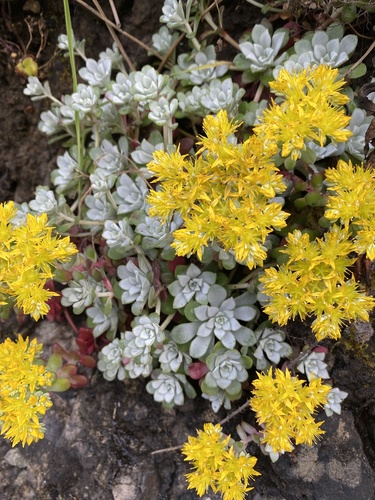
British Columbia, CA
Puedes ver Broad-Leaved Stonecrop y Littleleaf Silverback.
Ver guía →
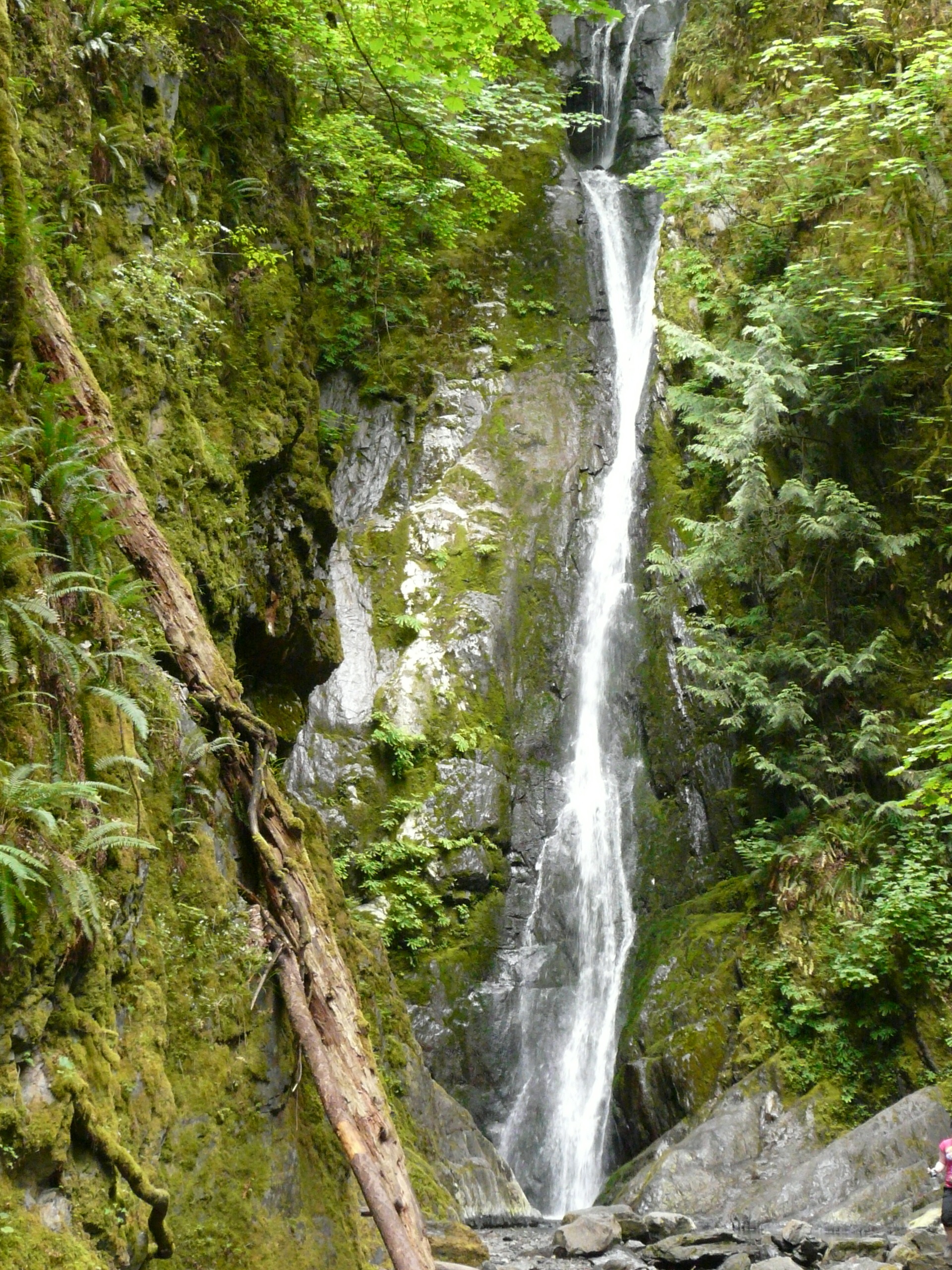
British Columbia, CA
Puedes ver Western Sword Fern, Western Redcedar y Babosa Banana.
Ver guía →

Washington, US
Puedes ver Common Jewelweed, Babosa Banana y Thimbleberry.
Ver guía →