



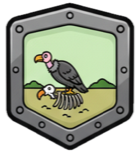


American Herring Gull
Larus smithsonianus
The American Herring Gull is a large bird often seen near oceans and lakes. They have gray wings and a white body, and they love to squawk and search for food.
Hábitat: Coastal areas
The American Herring Gull has a bright white head and body with light gray wings tipped in black. Its stout yellow bill features a distinctive red spot on the lower mandible, making it easily recognizable among other gulls.
Categoría
AvesRareza
Common
Peligro
2/5 · Bajo
Snaps
¡Sé la primera persona en hacer un snap!
A Herring Gull can drink both fresh and saltwater, thanks to special glands!
The oldest recorded American Herring Gull lived for over 30 years!
Their fluffy chicks are camouflaged with brown spots to hide from predators.
They are known to drop hard-shelled food, like clams, from high in the sky to crack them open!
American Herring Gull can crack open tough shells because of its powerful, hooked beak and strong jaw muscles.
American Herring Gull can spot tiny food from high above because of its excellent eyesight that helps them forage efficiently.
American Herring Gull can swallow surprisingly large items whole because of its wide gape and flexible throat muscles.
American Herring Gull has webbed feet that help them paddle and float effortlessly while searching for food on water.
This clever bird eats almost anything it can find, from fish to discarded snacks!
Diferencias por edad: Young gulls are fed by parents and gradually learn to forage on their own for various foods.
Sterna hirundo
Gulls often prey on eggs and chicks from tern colonies.
Vulpes vulpes
Foxes often prey on gull eggs, chicks, or injured adults.
Scomber scombrus
Gulls dive to catch these fish near the water surface.

Crassostrea virginica
Gulls drop these hard-shelled mollusks to break them open.
Describe a los animales, principalmente aves, que poseen una cubierta de plumas.
Los animales sociales viven en grupos organizados, cooperando para obtener beneficios de supervivencia como la búsqueda de alimento, la defensa y la cría de descendencia.
Los carroñeros consumen materia orgánica muerta, ayudando a descomponer los cadáveres y otros desechos en el ecosistema.
Este rasgo identifica organismos cuya dieta incluye tanto materia vegetal como animal.

Los hábitats costeros son entornos dinámicos situados a lo largo de la interfaz entre la tierra y el mar, influenciados por las mareas, las olas y el agua salada.

Los animales diurnos están activos principalmente durante el día y suelen descansar o dormir por la noche.

Este rasgo identifica a los organismos que exhiben una rapidez excepcional en sus movimientos para cazar, escapar o desplazarse.

Los hábitats marinos abarcan todos los entornos de agua salada de los océanos de la Tierra, sustentando una inmensa diversidad de vida acuática.

Los animales migratorios emprenden movimientos estacionales de una región a otra, típicamente en respuesta a cambios en el clima o la disponibilidad de alimentos.
Todavía no hay alias listados.
Peligro
2/5 · Bajo
Don't feed the gulls, as they can become too friendly and might grab your food!
56-66 cm
137-152 cm
0.8-1.5 kg
15-20 años
60 km/h
This clever bird eats almost anything it can find, from fish to discarded snacks!
Coastal areas
Foraging
Acércate para separar los grupos y explorar dónde se ha fotografiado este objeto.
Los snaps recientes aparecerán aquí a medida que se añadan nuevas observaciones.

Connecticut, US
Puedes ver Gorrión Melódico, Sinsonte Norteño y Monarch.
Ver guía →

Virginia, US
Puedes ver Pelícano Pardo, Cormorán Orejudo y Yellow-Crowned Night Heron.
Ver guía →
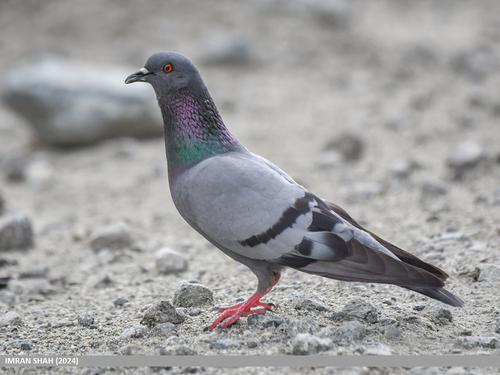
Washington, US
Puedes ver Paloma Bravía, Ardilla Gris Oriental y Gorrión Común.
Ver guía →
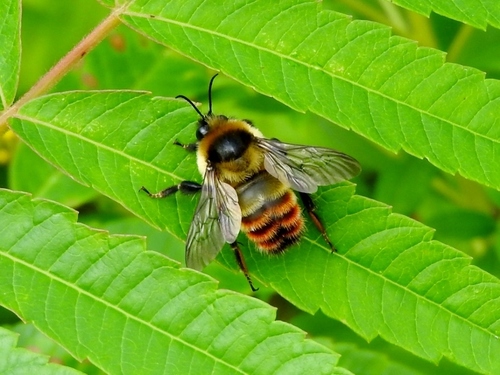
Wisconsin, US
Puedes ver Red-Belted Bumble Bee, Red-Breasted Merganser y Pato.
Ver guía →

Ontario, CA
Puedes ver Monarch, Rana Leopardo y Cisne Vulgar.
Ver guía →
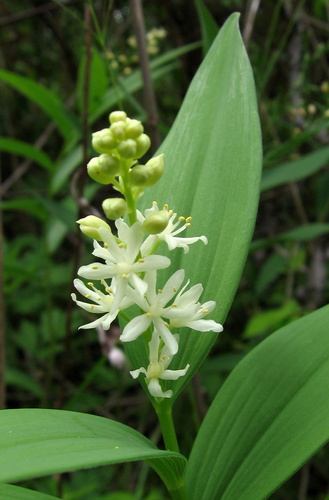
Michigan, US
Puedes ver Star-Flowered Lily-Of-The-Valley y Common Silverweed.
Ver guía →










_(30117012420).jpg&width=800)



